
Orlat: Churches, Customs and Routes between Mountains and Plain
Accommodation in Orlat
Orlat is located at the transition from the mountains to the plain. The combination of local history, regional customs and routes designed in different ways makes the municipality a clearly identifiable travel destination.
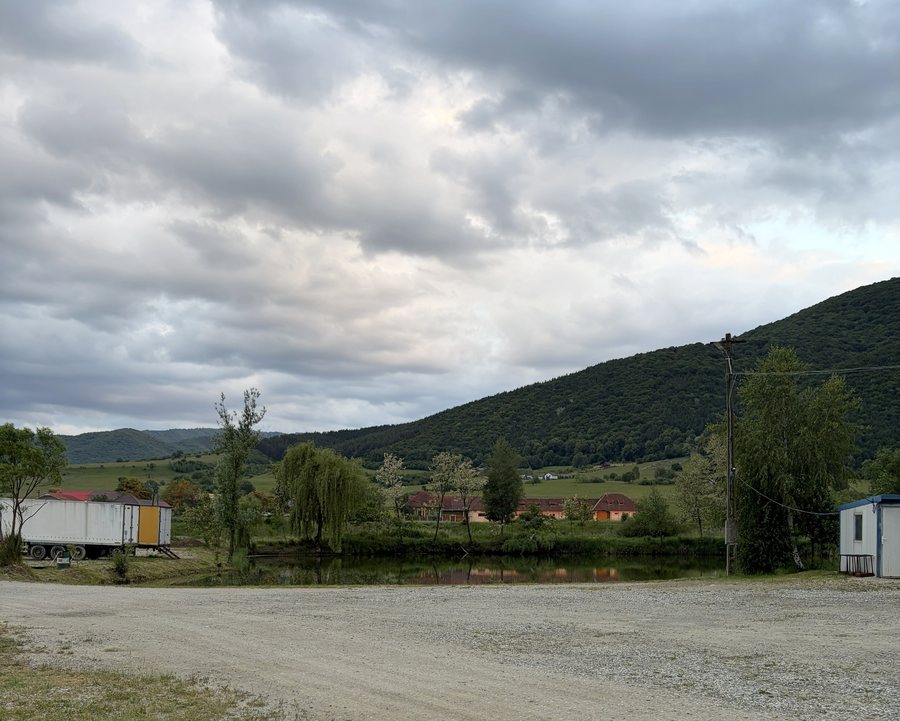
Geographical Setting
County Route 003 connects Sibiu, Orlat and Gura Râului. The “Porţile Transilvaniei” route also passes through Orlat; the “Drumul transhumanţei” route runs from Fântânele via Orlat to Cristian. For personal planning, visits to local sights and route itineraries can be considered as separate topics.
Culture and History
Today’s Orlat Community Museum is housed in the former school of the 1st Romanian Border Regiment, dating from 1764–1851. The “Sfântul Nicolae” Church was built between 1792 and 1796. The “Sf. Nicolae” Church is a historic monument; it was built in 1794 in the Byzantine style and decorated with frescoes by Simion Zugravul in 1800.
On the terrace of Cetatea Scurtă Hill, there was an ancient wooden fortress fortified with earthworks belonging to local knyazes, dating from the 9th–13th centuries. The “Sf. Treime” Monastery in Orlat was built between 1993 and 2000 in the Neo-Byzantine style. “Tereza de Avilla“ in Orlat was built for the Roman Catholic officers of the Border Regiment.
Literary references are also part of the local history: in Orlat, the writer Liviu Rebreanu wrote “Ciuleandra”, “Crăişorul” and part of the novel “Ion”.
Customs
The Junii tradition is maintained in Orlat during the Christmas and New Year holidays. The Junii costume is specific to Orlat; in terms of costume, dances and Christmas carols, the tradition differs from that of neighbouring Gura Râului.
On Maundy Thursday (“Joia Verde”), eggs in Orlat are dyed red using onion skins instead of synthetic dyes. The “Călușerul” ensemble is intended to showcase the community’s customs and traditions through song. Seasonal events and cultural forms therefore provide distinct points of reference alongside the routes and buildings.
Nature and Routes
The “Orlat–Poiana Godea–Sibiel–Orlat” cycling loop starts in the centre of Orlat and follows the Orlățel River in a southwesterly direction for approximately 9 km; the river runs to the left of the forest track. A walk on Dealul Platoul Cetăţii offers panoramic views of the entire municipality of Orlat and its surroundings.
For day planning, you can compare the approximately nine-kilometre cycling loop and the walk with panoramic views as different activity formats. The route length, type of activity and views remain clearly distinguishable.
If you are comparing hotels in Orlat, travel dates, room category and cancellation policies can be considered side by side. On the respective offer page, this information can be viewed separately from local history, dates of customs and route itineraries. For a cost-conscious comparison, these three details can be read independently of one another: the travel dates, room category and cancellation policies each constitute separate comparison points, without mixing in local history or route descriptions.
Further local pages for orientation: Heltau, Gunzendorf, Boiţa, Ocna Sibiului, Mediasch, Șura Mică, Tălmaciu, Porumbacu De Jos.
For the overarching travel overview: Hermannstadt.

.jpg)