
Discover Vaslui
Accommodation in Vaslui
Vaslui can be explored through museum collections, medieval architectural history, memorial sites and public urban green spaces. For planning purposes, these focal points can be considered separately, without combining the cultural sites into a single program.
 File:Zona curților domnești din Vaslui.JPG
Photo: Remus Adrian Mustatea via Wikimedia Commons, CC BY-SA 3.0 ro
File:Zona curților domnești din Vaslui.JPG
Photo: Remus Adrian Mustatea via Wikimedia Commons, CC BY-SA 3.0 ro
Culture
The departments of the “Ștefan cel Mare” County Museum range from archaeology and medieval and contemporary history to ethnography and fine art. The museum also includes a humor salon named after “Constantin Tănase”.
The “Dr. Constantin Teodorescu” contemporary art collection comprises 170 paintings, graphic works and sculptures. These works are displayed in five museum halls.
The museum collections also include Cucuteni pottery and the medieval Schinetea treasure. Travel planning can therefore incorporate archaeological, historical, ethnographic, artistic and humorous themes in different forms alongside one another.
History
Curtea Domnească in Vaslui is a medieval complex that developed in three phases. The first phase dates from the time of Alexandru cel Bun in the first half of the 15th century.
The second phase falls within the era of Ștefan cel Mare, who built the Orthodox Church of the Beheading of Saint John the Baptist during this period; as ruler, he founded it in 1490. The church is also known as Biserica Domnească of Vaslui.
The third development phase of Curtea Domnească began no earlier than the middle of the 16th century. This chronological sequence makes the three construction phases readable as separate historical reference points.
Casa Ghica is the oldest secular building in Vaslui. The house was built before 1818 by the logothete Constantin Ghica and his daughter Elena Șubin.
Russian and Polish architects built Casa Ghica in the Neoclassical style. Today, the building serves as a kindergarten; its address is Strada Ștefan cel Mare 60.
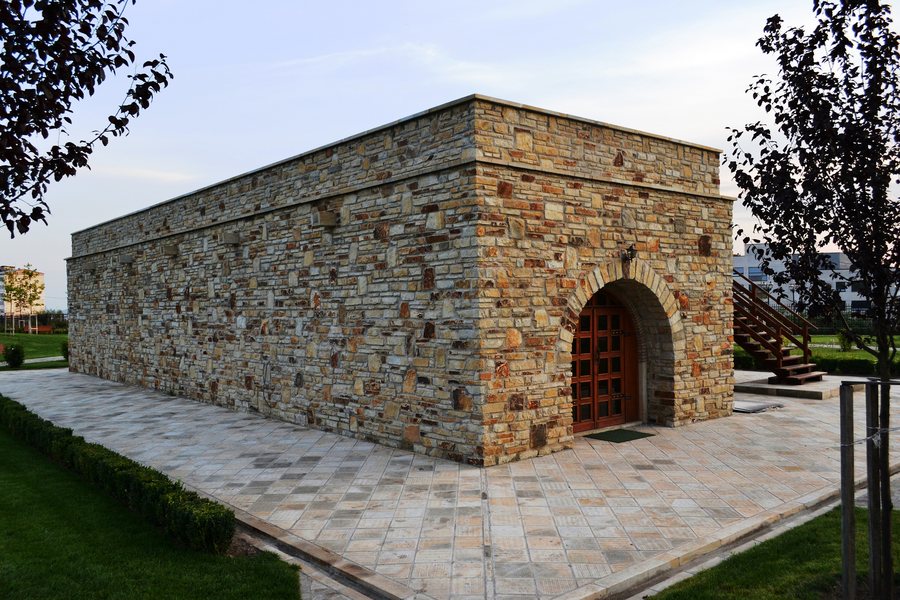
Between 2011 and 2014, one of the Ștefanian houses was reconstructed at its original location after the site had been uncovered through archaeological excavations.
If you would like to open pages for other places besides Vaslui, the links lead to Negrești, Balteni and Valeni.
City
Copou Park, also known as the Copou dendrological park, is a public dendrological garden in the north of Vaslui. It covers approximately 11 hectares, creating a clear distinction for day planning between the historic interiors and the public garden.
Curtea Domnească, Casa Ghica, Copou Park and the Heroes’ Cemetery represent different historical periods and building types: a medieval complex, a secular house, a dendrological garden and a memorial site. The museums complement this series with collections ranging from archaeology to contemporary art, as well as ethnography and humor.
History
The Heroes’ Cemetery of Vaslui commemorates the War of Independence and the First World War, comprises 70 individual graves and a central monument with an ossuary, and is also known as the Peneș Curcanul Mausoleum. It is located in Vaslui, Strada Eternității 42.
The Heroes’ Cemetery and the central monument with ossuary are listed in the updated Romanian List of Historic Monuments.
For the higher-level travel overview: Wassluy.

