
Panjakent: Ancient City and Mountain Lakes
Accommodation in Panjakent
Panjakent and its surrounding area are home to Sarazm, the ancient city of Panjakent, several museums, and destinations in the Fann Mountains. For planning your trip, this means you can focus your stay on historical sites and museums or choose landscapes where route length, altitude and physical exertion play a greater role.
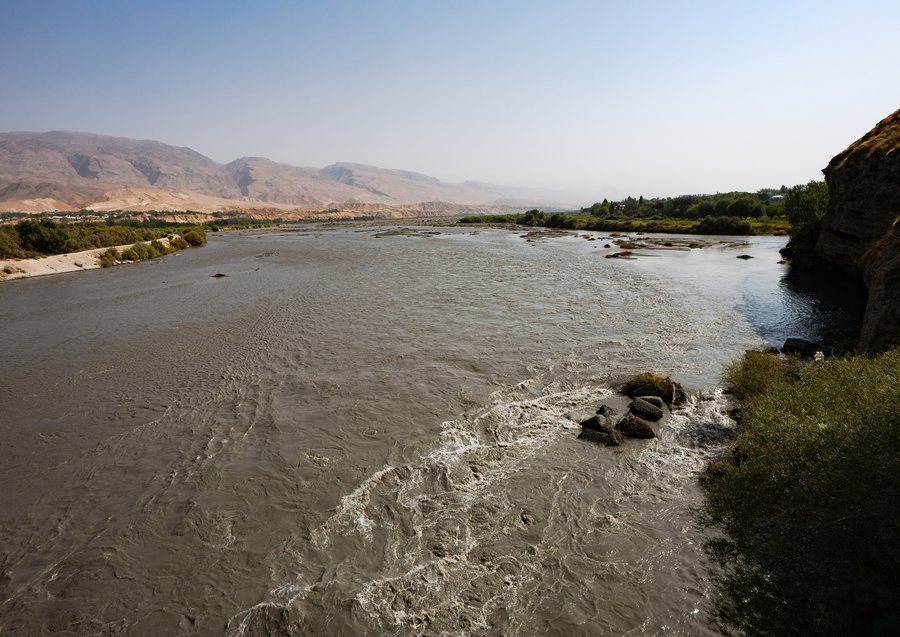 File:Река Зеравшан возле города Пенджикент (river Zarafshon by Panjakent).jpg
Photo: Photo: Petar Milošević
File:Река Зеравшан возле города Пенджикент (river Zarafshon by Panjakent).jpg
Photo: Photo: Petar Milošević
The ancient city of Panjakent dates from the 5th to the 8th century. It is located on the southeastern edge of modern Panjakent, on the left bank of the Zaravshon River.
Panjakent can be reached from Dushanbe by bus or car. The Zarafshan–Karakum Corridor is also relevant for understanding the wider regional context: along a 866-kilometre section of the Silk Roads, it follows the Zarafshan River. If you are looking for a hotel in Panjakent, you can therefore first decide whether the city itself or a longer landscape route should be the focus of your trip.
Key facts about Panjakent
The Seven Lakes are located in the gorge of the Shing River in the Fann Mountains; the lowest lake is at an altitude of 1,640 metres and the last one at 2,400 metres. The city can be reached from Dushanbe by bus or car; Sarazm, the Seven Lakes and the museums offer different focuses for planning your trip.
Which historical sites and museums are there around Panjakent?
Sarazm is one of the most important historical sites. The settlement can be traced back to between the 4th millennium BC and the end of the 3rd millennium BC. Sarazm illustrates the early development of proto-urbanisation in Central Asia and provides evidence of long-distance trade and cultural exchange across Central Asia. For visitors, this history is visible in the remains: at Sarazm, you can explore residential buildings, workshops, temples and defensive structures.
A museum on the Sarazm site displays an extensive collection of archaeological finds. These include ceramics, tools, jewellery and household items. The combination of preserved architectural remains and exhibits makes Sarazm particularly interesting if you want to understand historical development not only through dates, but also through specific areas of daily life.
The ancient city of Panjakent itself also offers a different cultural and historical focus. The Rudaki Mausoleum has a polygonal structure, a hemispherical dome, red brick walls, blue tiles and a marble sarcophagus. The building was completely reconstructed and restored in 2008. Its design can therefore be considered from both architectural and restoration perspectives.
Traditional handicraft techniques are at the centre of the Artisan Center in Panjakent. There you can see Susani embroidery, decorative embroidery, traditional hat-making, tailoring, Chakan embroidery and weaving. Visitors can buy the displayed handicrafts at the Artisan Center.
Which museums complement a city tour?
The Rudaki Historical Museum in Panjakent is named after the Persian poet Abu Abdullah Rudaki. It displays traditional clothing, handicrafts, musical instruments, ceramics, frescoes and artefacts from ancient Penjikent.
Panjakent therefore offers different starting points for choosing between a more culture-focused stay and a trip centred on landscapes. A hotel in Panjakent may suit your plans if you want to organise the museums, the Artisan Center, the mausoleum and Sarazm as separate highlights of your visit. The specific accommodation can be considered separately from the characteristics of the sights.
Which mountain landscapes are part of the region?
The Artuch mountaineering and tourism centre is located in the Urej Gorge of the Fann Mountains at an altitude of 2,200 metres. Near the Artuch Camp at Lake Chukurak, there is a natural climbing area where climbers of different ages can train. Every year, Artuch Camp accommodates families, tourists and athletes. This combination appeals to different travel interests, from spending time together in the mountains to focused rock-climbing training.
Lake Chukurak itself is located at an altitude of 2,455 metres in the Fann Mountains and is glacial in origin. A mountain trail leads from the village of Artuch to the lake. There are no shops in the mountains around Lake Chukurak.
The Seven Lakes are another focal point. This natural complex is located near Penjikent and is also known as Haftkul and the Marguzor Lakes. The lakes are situated in the gorge of the Shing River in the Fann Mountains. The lowest lake is at an altitude of 1,640 metres and the last one at 2,400 metres. An unpaved road passes all seven lakes; the ascent along the hairpin bends takes no more than one hour without breaks.
From the southern end of Lake Marguzor, a trail leads to the Tavassang Pass at an altitude of 3,307 metres and onward to mountain excursions in the Fann Mountains. This means the area can be viewed not only as a succession of viewpoints, but also as access to activities at higher elevations.
Which lakes are suitable for nature and trekking interests?
The Kulikalon Lakes were formed by melting glaciers and are part of a unique ecosystem. This lake system also includes the Dushokha Lakes, which lie below the Maria Glacier. They are high-altitude glacial lakes and are also known as Maria’s Eyes. At the same time, the Dushokha Lakes are incorporated into trekking routes through the Kulikalon Basin.
Lake Bolshoe Allo lies at approximately 3,150 metres and is surrounded by glaciated mountains and alpine meadows. The nearby Lake Maloye Allo has a characteristic green colour because the water is filtered through a five-kilometre-long rockslide. This rockslide lies between Maloye Allo and Bolshoe Allo and explains the visual difference described, without requiring any additional characteristics of the lake to be assumed.
The route to the Seven Lakes includes trekking of varying difficulty, crossings of mountain rivers and ascents over passes. Voru offers opportunities for trekking, mountaineering and cycling. Visitors can also learn about local customs and sample traditional cuisine there. Thus, the regional travel experience includes not only elevation gains and trails, but also everyday culture and food as distinct interests.
If you would like to compare other destinations in addition to Panjakent, you can also view the pages on Shughnon and Ghafurov. When choosing accommodation, the central question remains whether the planned days will be devoted mainly to the cultural sites in and around Panjakent or to the higher-altitude lakes and mountain trails.
For the overarching travel overview: Sughd.
FAQ
Who is the Rudaki Historical Museum named after?
The Persian poet Abu Abdullah Rudaki; guided tours are available at the museum.
What should you take with you to Lake Chukurak?
Make sure to bring enough water and food for this section.
How can Maloye Allo and Bibijanat be reached?
Lake Maloye Allo can only be reached on foot via a potentially challenging route through mountain valleys and forests. Lake Bibijanat can also only be reached on foot and is usually visited as part of multi-day trekking tours through the Fann Mountains.
