
Andijan Province: Culture, Nature and History
Accommodation in Andijan Province
Historical buildings, archaeological sites and mountain landscapes shape Andijan Province. When planning your trip, it is worth distinguishing between the cultural sites in and around Andijan and the nature and cultural experiences in Imam Ota.
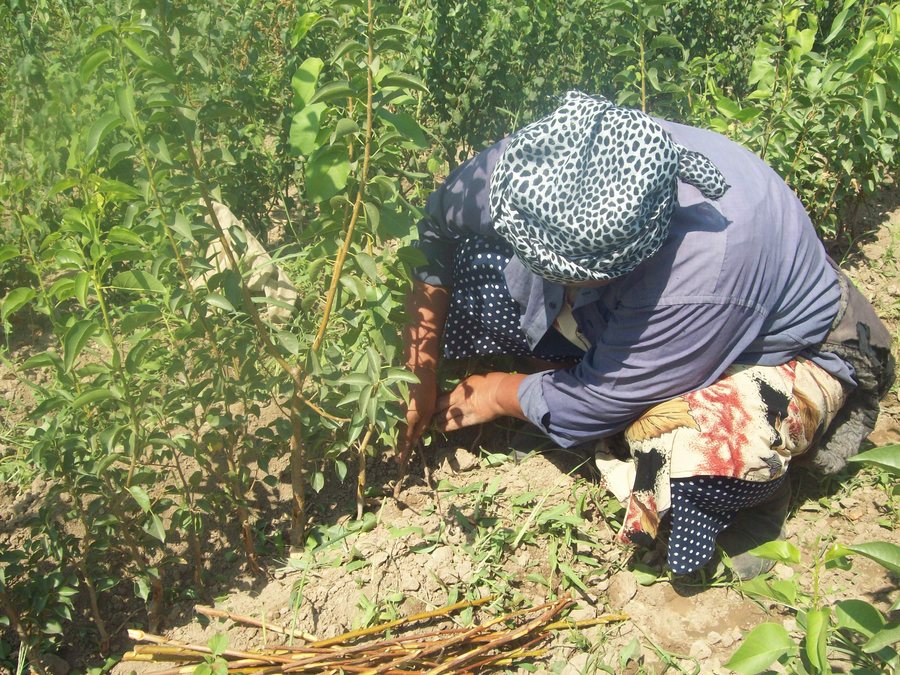 File:Grafting process (Uzbekistan, Andijan province).JPG
Photo: Shuhrataxmedov via Wikimedia Commons, CC BY-SA 3.0
File:Grafting process (Uzbekistan, Andijan province).JPG
Photo: Shuhrataxmedov via Wikimedia Commons, CC BY-SA 3.0
Andijan Province at a glance
The region brings together traces of different eras and places such as Imam Ota and Khanabad. In Andijan, the Jome Complex and Babur Memorial Park are among the main highlights. Imam Ota lies at the foot of the Chilustun Range at an elevation of about 1,100 metres; Khanabad lies in the east of the region, on the Karadarya River, at 850 metres.
What can you experience in Imam Ota?
The tourist village of Imam Ota is in Khojaabad District. Green landscapes, fertile orchards, mountain springs and fresh mountain air define the area. The Shahrikhansay River is another natural attraction that draws visitors. Those interested in religious history can visit the mausoleum of Imam Muhammad Hanafiya, also known as Imam Ota. He was the son of the fourth Rightly Guided Caliph, Ali ibn Abu Talib, and is regarded as the village’s most important historical and religious site.
A staircase in the Imam Ota gorge leads to the sacred site of Orzu gori. The area also hosts regular domestic tourism fairs featuring local artisans’ work and exhibitions. Cultural programmes include folk performances, handicraft workshops and tastings of regional cuisine. At the Yunusali-Ota Gaziev National House, an Uzbek house in the national style converted into a rest home, visitors can enjoy tightrope-walking performances and handicrafts.
What cultural sites and buildings are there?
The Jome Complex is in the old part of Andijan. Ruler Muhammadalibay had it built between 1885 and 1892; it consists of a madrasa, a minaret and a khanaka. Today, it also houses the Andijan Region Museum of Literature and Art. The Sayyid Muhyiddin Makhdum Madrasa was founded in 1992 in honour of Andijan educator Sayyid Muhyiddin Makhdum. It is in the village of Jalabek in Altynkul District and is an Islamic religious and educational institution.
Other historical sites reflect different periods: the Honako Mosque is a monument of Islamic architecture, with its founding dated to 1560. It is in Jalabek District, five kilometres from the centre of Andijan. The ancient archaeological site of Kush-Tepa, dating from the 3rd to 8th centuries BC, is also in Jalabek District. In Pakhtaabad District, the Otakuzi Madrasa stands above a canal that runs beneath its walls.
At Mingtepa, the ruins of six-metre-high walls and towers with loopholes remain. The city consisted of an outer area, an inner area and a citadel. Sarbon-tepa dates from the beginning of the Iron Age, the 6th to 4th centuries BC, and is one of the region’s specially protected areas of ancient history. In Andijan, the old Kala Fortress recalls its construction as a defensive stronghold for the troops of the Russian Empire in 1880–1881. The Akhmadbekkhodji Hotel, built in 1905–1907, is also a testament to the region’s architectural history: it preserves interior ornamentation in the style typical of the Fergana Valley.
How do trips to Andijan and Khanabad differ?
A visit to Babur Memorial Park combines time in green surroundings with views over the city and park from above. The park is on Bagishamol Hill, seven kilometres from Andijan. A cable car in the park takes visitors to Bogishamol Hill, offering a panorama of the park and the city. The house museum in Babur Park displays rare exhibits connected with Babur and the Baburids.
Khanabad has a different focus: Khanabad Sanatorium is a climatic health resort specialising in treatments with oxygen-rich, ionised air. Together with its location on the Karadarya River and its elevation of 850 metres, this gives the area a different setting for trip planning than Andijan’s historical buildings. A regional tourism programme envisages guests arriving in Andijan by train from Tashkent.
The attractions are spread across Andijan, Imam Ota, Khanabad and several districts. Visit the regional subpage via Andijan District. For comparison, you can also explore Jizzakh Province, Khorezm, Navoiy Province, Tashkent, Qashqadaryo Province, Navoiy Province and Bukhara.
FAQ
Which religious sites are there in Imam Ota?
The mausoleum of Imam Muhammad Hanafiya is regarded as the village’s most important historical and religious site. A staircase in the gorge also leads to the sacred site of Orzu gori.
What does Babur Memorial Park offer?
The park has a house museum with rare exhibits related to Babur and the Baburids. The cable car goes to Bogishamol Hill, from where there is a panorama of the park and the city.
Which historical buildings are in the old part of Andijan?
The Jome Complex, with its madrasa, minaret and khanaka, is in the old part of the city. Today, it also houses the Andijan Region Museum of Literature and Art.
For the broader travel overview: Uzbekistan.

.JPG)