
Bukhara: Cultural Heritage and Desert Landscape
Accommodation in Bukhara
Bukhara combines significant Islamic architecture with archaeological sites and a landscape shaped in many places by the Kyzylkum Desert. When planning your trip, it is worth considering which cultural highlights and regional characteristics interest you most.
Bukhara at a glance
- The historic center of Bukhara is more than 2,000 years old and is one of the best-preserved examples of Islamic cities in Central Asia from the 10th to the 17th century.
- More than 140 monuments from different eras have been preserved in Bukhara.
- Most of the territory of Bukhara Region is covered by the sands of the Kyzylkum Desert.
- The region offers cultural themes ranging from Islamic architecture and pilgrimage sites to historic settlements and traditional crafts.
Which buildings shape a cultural trip?
The Ismail Samani Mausoleum is considered the best-preserved example of 10th-century architecture in the entire Muslim world. The Samanid Mausoleum is also a Muslim pilgrimage site. Magoki Attori is one of Uzbekistan’s oldest mosques. These buildings offer different points of interest for a cultural trip: the mausoleum for its architecture and pilgrimage traditions, and the mosque for the history of Islamic religious buildings.
Another highlight is the Poi-Kalon architectural ensemble. It consists of two madrasas, the Kalon Minaret, and a mosque of the same name. The Kalon Minaret was built in 1127 by Arslankhan, ruler of the Kara-Khanid state. The Vobkent Minaret offers a point of comparison in terms of size: it is 40.3 meters tall and was built in the 12th century during the Kara-Khanid period. The Chashma-Ayub Mausoleum is also architecturally significant.
Which historic sites are outside the city center?
The region’s history is also reflected in its earlier settlements. Paykend developed into a major center of trade and crafts during the rule of the Samanids. Remains of an 11th-century Friday mosque were discovered in the ruins of the medieval settlement. The desert preserved the ruins for thousands of years; archaeologists called Paykend the “Pompeii of Asia.” The nickname refers to the site’s archaeological significance, not to a present-day urban structure.
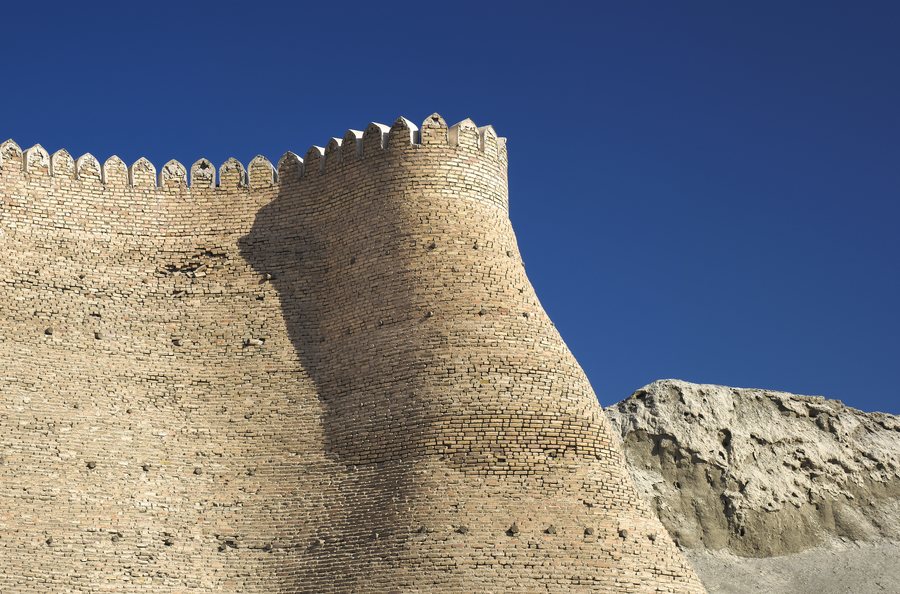
Varakhsha also offers a concrete insight into the construction of a historic fortress. Its core is divided into two sections and characterized by massive mud-brick walls. The western section is almost square and about 26 meters wide. Gijduvan Kurgan is home to cultural and heritage sites prepared for tourist visits, including the Old Stone Bathhouse. Those interested in crafts can see Gijduvan embroidery at craft centers and home workshops in Gijduvan.
How do the residence, desert, and regional cuisine differ?
The former residence of Sitorai Mohi-khosa is now a museum of decorative and applied arts. Its grounds combine an old section in the Oriental style with a new section in the European style. The contrast between the two offers a different perspective on Bukhara’s cultural history than its mosques, minarets, and archaeological settlements. Kurgan was granted the status of a tourist mahalla in November 2024.
The desert is more than a landscape feature: the “Bukhara Desert Oasis & Spa” tourism cluster is located in the desert area of Romitan District in Bukhara Region. A regional specialty is Bukhara’s Osh-Sophie plov. It is not stirred and is cooked exclusively in a copper cauldron.
Which other regions can you compare?
For a broader overview of the catalog, you can also consult the pages for Bukhara Province, Republic Of Karakalpakstan, Ferghana Province and Qashqadaryo Province. Within the region, you can also find Shafirkan District. Murshid Khaji Mukhammad Arif Rivgari was buried in the village of Shafirkan; his mausoleum commemorates his burial site.
FAQ
Which buildings are known for Islamic architecture?
Notable examples include the Samanid Mausoleum, Magoki Attori, and the Poi-Kalon ensemble with its two madrasas, Kalon Minaret, and mosque.
Which archaeological sites are associated with the region?
Paykend is known for its medieval settlement ruins and the discovered remains of an 11th-century Friday mosque. Varakhsha preserves a two-part fortress with massive mud-brick walls.
What pilgrimage traditions are there in Bukhara?
The Samanid Mausoleum is a Muslim pilgrimage site. The official travel program for Bukhara also includes the “Seven Pirs of Bukhara” pilgrimage route with ziyarat rituals.
What is special about Bukhara’s Osh-Sophie plov?
The plov is not stirred and is cooked exclusively in a copper cauldron.
For the broader travel overview: Uzbekistan.
More about the destination
Useful information for planning your trip:

.jpg)