
Bukhara Province
Accommodation in Bukhara Province
Bukhara Province brings together the vast sandy expanses of the Kyzylkum Desert and Bukhara, the region’s center and a place with a significant historical heritage.
Bukhara Province at a glance
- The region lies in southwestern Uzbekistan and borders Turkmenistan as well as other Uzbek regions.
- Most of the region is covered by the sandy expanses of the Kyzylkum Desert.
- The historic center of Bukhara was added to the World Heritage List in 1993.
- The Afrosiyob high-speed train takes approximately four hours to travel from Tashkent to Bukhara.
What defines the landscape and the region?
The Kyzylkum sands define the character of large parts of the province. At the same time, Bukhara is the regional center in this vast landscape. When planning a trip, you can therefore choose between focusing on the city’s culture and taking a broader look at the region, without conflating the two perspectives.
One specific example of nature and species conservation is the specialized “Jeyran” breeding station. It is located in Bukhara District in Bukhara Region, between Kogon and Karaulbazar on the A-380. Jeyrans are bred there under special conditions.
What historic sites does Bukhara offer?
More than 140 monuments in Bukhara, dating back over a century and representing different eras, have been preserved. The historic city center is a UNESCO World Heritage Site. Its buildings include the Poi-Kalon ensemble on Registan Square, at the foot of the Kalon Minaret. It comprises the Miri-Arab and Amir-Alimkhan madrasas, the Kalon Minaret, and a mosque of the same name. The minaret was built in 1127 and is 45.6 meters tall.
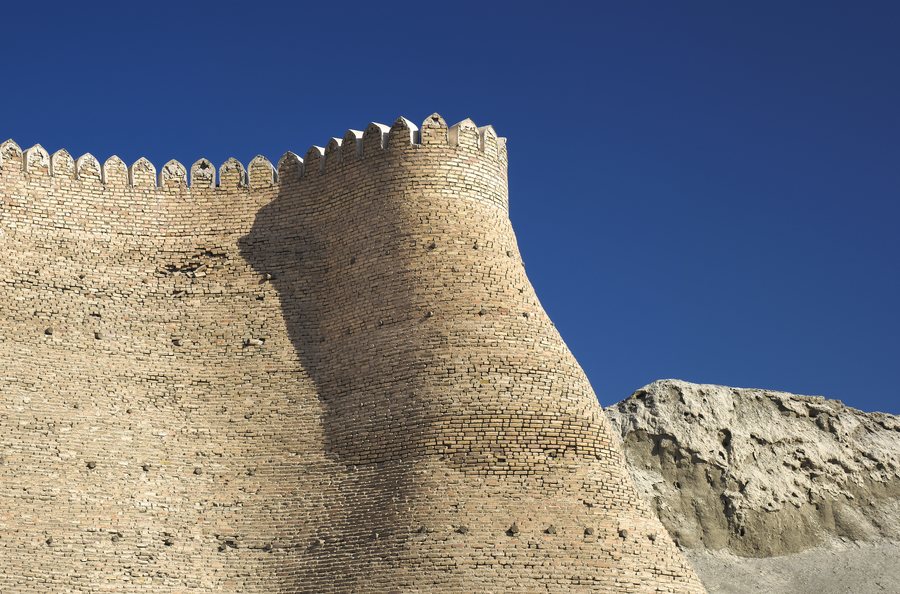
The Ark Fortress also tells the story of the city’s long history: it served as the residence of Bukhara’s rulers for almost one and a half millennia. The Samanid Mausoleum was built between 892 and 907 and added to the UNESCO World Heritage List in 1993. The Magoki-Attori Mosque is part of the historic center and is considered the oldest mosque in Bukhara. The Lyabi-Hauz ensemble is also one of the central monuments of old Bukhara.
The Sitorai-Mohi-Khosa Palace offers a different architectural combination: its complex was built in the European style, while its interiors are designed in an Oriental style. It is divided into a men’s section and a women’s section. Today, it houses a museum of decorative and applied arts. At the Tim Abdullah Khan trading dome, built in the 16th century in the historic center, visitors can buy Bukhara carpets, handicrafts, paintings, and musical instruments.
What experiences are available outside the city center?
Gijduvan and Paykend also appeal to different cultural interests. Gijduvan embroidery is made entirely by hand using silk threads. At the ceramics museum and workshop, visitors can watch the production process and buy a souvenir. Gijduvan shashlik is a well-known local grilled or kebab specialty associated with the town.
The grounds of the ancient Gijduvan Kurgan fortress contain cultural and historical sites prepared for tourist visits. These include the Old Stone Hammam and the Bozori Qaymoq, Boloyi Kassobon, and Boborakhimboy mosques. In the tourist mahalla of Kurgan, craft workshops offer visitors the chance to experience local hospitality and traditional ways of life.
At Paykend, the ruins of the medieval settlement were buried beneath desert sand for millennia, preserving them to this day. These remains can be viewed at the settlement’s history museum. Those interested in religious history will also find the Chor Bakr Memorial Complex on the official travel program of pilgrimage rituals. The Bakhautdin Naqshbandi Complex is located 12 kilometers from Bukhara and includes a museum with exhibits and information about his life and work.
How do you choose a base for your stay?
For a trip focused mainly on the historic city center, its monuments, and museums, you can search specifically for a hotel in Bukhara. If you also want to include destinations such as Gijduvan or Paykend, compare accommodation options for your planned trip across the region. The Afrosiyob takes approximately four hours to travel from Tashkent to Bukhara; this estimated train journey time can help with your travel planning.
To explore a subregion, you can also visit Kagan District. Other regional pages to compare: Ferghana Province, Khorezm, Jizzakh Province, Navoiy Province, Surxondaryo Province, Samarkand Province, Andijan Province.
FAQ
Where is Bukhara Province?
It lies in southwestern Uzbekistan and borders Turkmenistan as well as other Uzbek regions. Bukhara is the region’s center.
What does the Poi-Kalon ensemble include?
The ensemble comprises the Miri-Arab and Amir-Alimkhan madrasas, the Kalon Minaret, and a mosque of the same name.
How long does the train journey from Tashkent to Bukhara take?
The Afrosiyob high-speed train takes approximately four hours.
What local specialty is associated with Gijduvan?
Gijduvan shashlik is a well-known local grilled or kebab specialty.
For the broader travel overview: Uzbekistan.

.jpg)