
Kyiv: Ukraine’s capital on the Dnipro
Accommodation in Kiev, Ukraine
Kyiv (Kiev) lies on the Dnipro and brings together the historic Podil district, central hills, monasteries, museums and parks. Civilian airspace is closed; travel to and from the city is by land.
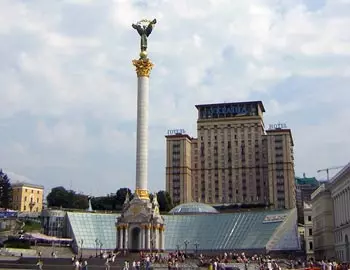 Kiew: Der Platz der Unabhängigkeit rund um die Siegessäule
Photo: Daddy
Kyiv at a glance
- Kyiv is the capital of Ukraine and lies on both banks of the Dnipro.
- Podil stretches between the riverbank and the city hills; squares, churches and markets define the district.
- Saint Sophia’s Cathedral, the Cave Monastery, Maidan and the Andriyivskyy Descent are among the city’s best-known historic landmarks.
- Civilian air traffic has been suspended; international entry and exit are by land.
The Dnipro, Podil and the central hills
The Dnipro divides Kyiv into eastern and western parts. Podil lies between the riverbank and the hills of the city centre; its squares, churches and market streets give the historic district a character of its own. For walks along the Dnipro, the stretch of riverbank and access point matter, as routes up to the central districts vary in steepness and length.
The river connects the capital with other places along its course. To the southeast lies the Dnipro region as a destination in its own right; the Dnipro is thus both part of the cityscape and a geographic corridor extending beyond the region. Ukraine also encompasses a variety of landscapes and urban areas. Kharkiv (Kharkov) lies farther east, while Odesa (Odessa) is on the Black Sea.
Historic sites and green spaces
Saint Sophia’s Cathedral, the Kyiv Cave Monastery, Maidan and the Andriyivskyy Descent offer different ways to connect with the city’s history and everyday life. Together with the Golden Gate and Kyiv’s parks, these attractions are spread across several parts of the capital. Focusing on one area at a time helps keep journeys between the city centre, hills and river manageable.
The Crimea is part of Ukraine and is under Russian control. The peninsula forms a distinct southern part of the country and has special entry requirements. Entry from mainland Ukraine requires a Ukrainian permit to visit; entering via Russian territory violates Ukrainian law and can result in an entry ban and criminal prosecution. Travel conditions in Crimea are therefore fundamentally different from those for a stay in Kyiv.
Regional location and getting there
Ukraine borders Belarus to the north and Russia to the east; Lithuania lies farther northwest in the Baltic region. When travelling to Kyiv, the border crossings and land connections actually available are what matter. Civilian airspace remains closed; Kyiv’s airports currently handle no civilian flights.
Entry and exit are by land.
Accommodation and getting around the city
Podil lies below the city hills on the Dnipro, while central cultural attractions and parks are spread across other districts. Staying close to the main destinations for the day shortens journeys; choosing accommodation by location and travel plans offers criteria for making this comparison. Focusing on a smaller number of nearby attractions leaves more time for getting around, changing routes and returning.
If travel is necessary, plan each day around local alerts, access restrictions and instructions from authorities on the ground. Information on staying safe while travelling, getting there and transport and travel planning helps put the practical considerations in context. Curfews may be adjusted at short notice.
Frequently asked questions about Kyiv
What rules apply to Ukrainian men leaving the country?
Ukrainian men aged 23 to 60 are generally prohibited from leaving the country, even if they hold another nationality.
