
Ukraine: Regions and Cultural History
Accommodation in Ukraine
Ukraine has a layered history shaped by Kyivan Rus, Black Sea trade, western Ukrainian cities, and Carpathian culture. Its regions differ in architecture, landscape, and historical influences.
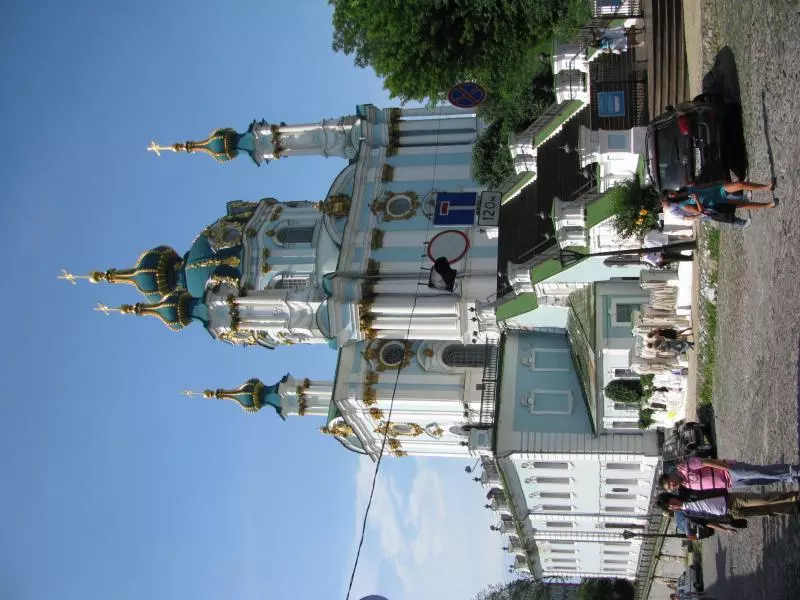 Stadtansicht mit Kirche in Kiew.
Photo: Ilya
Ukraine at a glance
- Geographic features: The Dnipro, the Black Sea, the forest-steppe, and the Carpathians shape distinct landscapes and settlement areas.
- Cultural history: Kyiv is closely associated with the history of Kyivan Rus and Orthodox sacred architecture; the west shows stronger Central European urban traditions.
- Air travel: Ukrainian airspace is closed. According to the German Federal Foreign Office, entry to and exit from the country are possible only by land.
- Crimea: Under international law, the peninsula belongs to Ukraine and is de facto controlled by Russia; entering via Russian territory violates Ukrainian law.
- Currency: The hryvnia is the national currency; according to the German Federal Foreign Office, cash withdrawals and card payments are possible in many places.
A country shaped by several historical regions
Ukraine is shaped not only by its size, but also by its position at the crossroads of different historical connections. The Dnipro links the northern woodland with the southern steppe and the Black Sea. In the west, landscapes range from wooded foothills to the Carpathians. These north–south and east–west connections help explain the country’s varied cityscapes, regional traditions, and economic centers.
Kyiv, still often called Kiew in German, was an important center of Kyivan Rus. The city on the Dnipro brings together political history and religious architecture: Saint Sophia Cathedral and the Kyiv Pechersk Lavra combine 11th-century mosaics and frescoes with Ukrainian Baroque elements from the 17th and 18th centuries. Saint Sophia Cathedral was designed as a counterpart to Hagia Sophia in Constantinople and represents Kyiv as a Christian center of Kyivan Rus. Its mosaics include the Pantocrator, the Orans Madonna, and the Communion of the Apostles. Its position on the hills above the river shapes the city skyline. The capital Kyiv, in Ukrainian Kyiv, lies on the middle Dnipro; the urban area developed across several hills along the river.
Lviv was founded in the late Middle Ages and developed over the centuries as an administrative, religious, and commercial center. Its historic center preserves the medieval urban layout as well as Renaissance and Baroque buildings. A mosque, a synagogue, and Orthodox, Armenian, and Catholic churches bear witness to the history of different communities. The UNESCO site comprises two separate parts: the oldest city center around High Castle Hill and the city below it, as well as St. George’s Hill, with its cathedral, the former center of the Halych Metropolia. A settlement existed on the hill as early as the 5th and 6th centuries; the streets and squares of the later Lower Town developed between the 13th and 17th centuries. The architecture combines Eastern European traditions with influences from Italy and Germany. The city center developed from the 14th century onward, with monasteries and Renaissance and Baroque residences; some parks occupy the sites of former fortifications. The historic pattern of plots survived the major city fires of 1527 and 1571. In the mountainous region of the Ukrainian Carpathians, by contrast, distinctive architectural forms and local traditions developed, shaped by valleys and elevation.
River landscapes, port cities, and mountains
The Dnipro connects cities and landscapes from the northern woodland to the southern steppe. Dnipro developed on the river as an industrial and transport center; its more recent urban history differs markedly from Kyiv’s medieval and religious significance. The industrial and transport history of the city of Dnipro developed in close connection with the river. Comparing it with the medieval cities of the Golden Ring shows how differently centers in Eastern Europe developed; the broader Eastern European region encompasses its own distinct landscapes and political histories.
Odesa, the port city of Odesa, was founded in 1794 as a Black Sea port. The city center of Odesa, laid out on a plateau, follows a rectangular street grid; wide, tree-lined streets run parallel and perpendicular to the coast. Prymorsky Boulevard and the Potemkin Stairs connect the upper city with the port. Theaters, religious buildings, warehouses, and palaces reflect the port city’s 19th-century trade and diverse communities.
The Carpathian landscape is characterized by elevation zones, forests, river valleys, and scattered settlements. The UNESCO-listed wooden tserkvas comprise 16 churches in Poland and Ukraine. Built between the 16th and 19th centuries from horizontally stacked logs, they combine a three-part floor plan and open square or octagonal domes with local traditions of Orthodox architecture. Hutsul, Halych, and Boyko types reflect different regional craft traditions. The Carpathians differ markedly in landscape from the lowlands. Crimea, by contrast, is a Black Sea peninsula with coastal and steppe landscapes.
The Black Sea region and territorial status
Russia lies east of Ukraine, and Belarus to its north. Historical ties and shifting borders have shaped interaction, but both are independent neighboring states with internationally recognized present-day borders.
Getting there and practical conditionsUnderstanding entry requirements, money, and accommodation
entry and documents depend on nationality and the purpose of the stay; appropriate preparations also include the required insurance.
The national currency is the hryvnia. According to the German Federal Foreign Office, card payments and cash withdrawals are possible in many places; acceptance may vary by location and provider. These conditions are relevant tomoney and payments.
In Kyiv, the best location for accommodation depends on your daily plans and proximity to the Dnipro: central cultural sites are spread across several hills and both sides of the river. When choosingaccommodation in Eastern Europe, location, transport hubs, and routes to planned destinations are key.
Language, memory, and regional identityThe regions of Ukraine stretch from the middle Dnipro through Black Sea ports to the Western Carpathians. The Golden Ring refers to medieval centers northeast of Moscow and offers a cultural-historical comparison, not a neighboring region of Ukraine. The broader Eastern European region encompasses several states and diverse urban and landscape traditions.
The Kyiv Pechersk Lavra combines churches above ground with an underground cave system more than 600 meters long. The monastery was founded in the 11th century and developed over the centuries into an important spiritual and cultural center. Its churches and cave complexes date from the 11th to the 19th centuries; the monastery buildings acquired their present form mainly during the Ukrainian Baroque period of the 17th and 18th centuries. The complex stands on a plateau above the right bank of the Dnipro and forms a distinctive part of Kyiv’s river landscape. From the 17th to the 19th centuries, the Lavra helped spread Orthodox teaching and culture throughout the Russian world. Its founding tradition links the monastery to Saints Anthony and Theodosius; the nearby and distant cave complexes bear their names.Frequently asked questions about UkraineThe German Federal Foreign Office specifies a valid passport and visa-free stays of up to 90 days within any 180-day period. Travelers are also required to have health insurance.
Can you fly to Ukraine?
No. Ukrainian airspace is closed. According to the German Federal Foreign Office, entry to and exit from the country are possible only by land.
What special permit is required for Crimea?
Since June 2015, entering the peninsula from mainland Ukraine has required a visitor permit issued by the relevant Ukrainian authority. Entering via Russian territory violates Ukrainian law.
What is special about the Carpathian tserkvas?
Of the wooden churches listed by UNESCO, 13 are still used as churches. Three—Rohatyn, Drohobych, and Radruż—are preserved as museums. Almost all retain their original doors and fastenings; some lintels bear the year of construction and the names of the carpenters.
