
Deribasovskaya in Odesa: History and City Garden
Deribasovskaya is a historic central street in Odesa. Its name commemorates José de Ribas; right next to it is the historic City Garden, with sculptures including the bronze “12th Chair.”
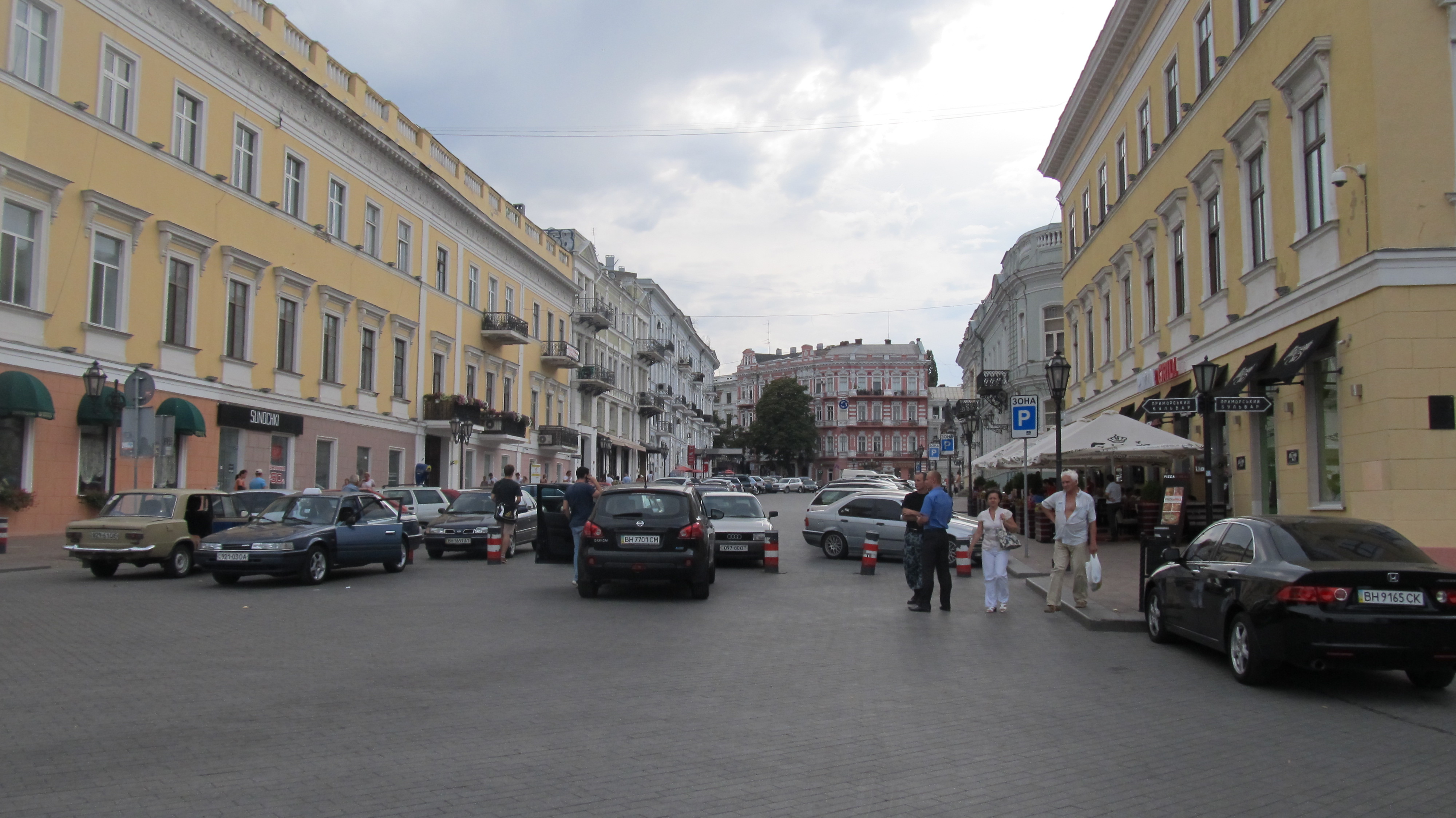 Historische Straße mit repräsentativen Fassaden, Geschäften und Gastronomie in einer ukrainischen Innenstadt.
Photo: daddy
Deribasovskaya at a glance
- The street is in Odesa’s historic center.
- It is named after José de Ribas, an early founder of the city and one of its first mayors.
- The City Garden adjoins the street and is one of Odesa’s oldest public green spaces.
- Sculptures in the garden include “Lion and Lioness,” a statue of José de Ribas, and the “12th Chair.”
The city’s history along the street
Deribasovskaya is named after José de Ribas, one of Odesa’s early founders and its first city leaders. Before it acquired its present name, the street was called Gymnasna after the commercial school located there. Its changing name reflects the city’s development and the institutions that shaped its early streets.
In the 19th century, Deribasovskaya developed into a major shopping and entertainment street. Much of it was closed to car traffic in the 1980s and turned into a pedestrian zone. Its historic façades and the nearby City Garden represent different aspects of the city center: a built-up commercial street and a public green space with monuments.
The City Garden and its monuments
The City Garden lies right beside Deribasovskaya. Felix de Ribas provided land for the garden in the early 19th century. Today, it features, among other things, the “Lion and Lioness” sculpture, a monument to José de Ribas, and the bronze “12th Chair.” The latter recalls the novels “The Twelve Chairs” and “The Golden Calf” by Ilf and Petrov. The green space complements the street with a distinct place for culture and recreation.
Deribasovskaya is part of Odesa’s historic center. The city of Odesa and the broader context of Ukraine locate the street in the south of the country. Restaurants shape its character as a commercial street; Odesa’s dining scene and restaurants in Odesa provide its urban and culinary context.
Conditions may change. Ukrainian airspace is closed, and entry to and exit from the country are possible only by land.
For essential travel, flexible scheduling and offline-accessible contact details go hand in hand. A schedule and travel checklist account for travel time and contingency buffers throughout the day; documents saved offline keep addresses and return-trip information accessible even without a connection. An alternative in case of traffic disruptions can be planned in concrete terms with a Plan B and backup contacts.
Travel planning should include transport and the return journey: arrival and transport need to be planned around overland routes because airspace is closed. The schedule should also allow time for border crossings, traffic changes, and a return-trip buffer; the travel checklist helps make these parts visible.
Accommodation contact details, booking confirmations, and return-trip options remain accessible without internet with travel documents saved offline. If traffic disruptions arise at short notice, a saved alternative contact and backup routes and a Plan B can help. Accommodation should be located in a way that suits routes that are actually accessible; choosing accommodation based on location and destination is a planning step in its own right.
If connections change, keep contingency plans and alternative contacts close at hand.
Frequently asked questions about Deribasovskaya
Who is Deribasovskaya named after?
The street is named after José de Ribas, one of Odesa’s early founders and its first city leaders.
Which monuments are in the City Garden?
They include “Lion and Lioness,” a monument to José de Ribas, and the bronze “12th Chair,” inspired by the novels of Ilf and Petrov.
Who created the bronze “12th Chair,” and when?
Ukrainian sculptor Mykhailo Reva created the sculpture; it was installed in the City Garden in 1999.
Because airspace is closed, entry to and exit from the country are by land.
