
The Urals: The divide between Europe and Asia
The Urals are more than a mountain range: they symbolically mark the transition between Europe and Asia and shape many routes through Russia. To get your bearings in the Urals, first consider their location, distances and the purpose of your trip. A practical itinerary takes all three into account.
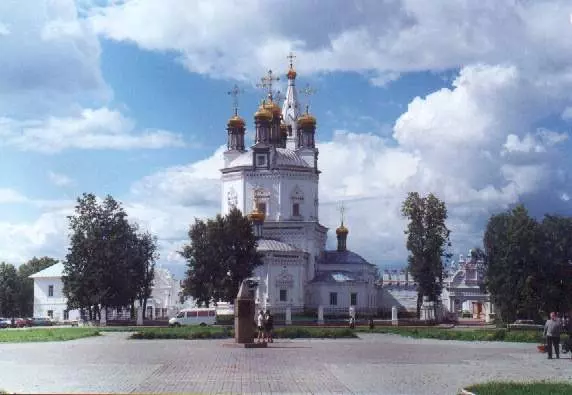 Jekaterinburg ist die Hauptstadt des Ural. Auf den Spuren der Romanows wandelt man beim Besuch der Blutkathedrale.
Photo: gemeinfrei
Jekaterinburg ist die Hauptstadt des Ural. Auf den Spuren der Romanows wandelt man beim Besuch der Blutkathedrale.
Photo: gemeinfrei
Mountain landscapes, forests, industrial cities, a history of mining and engineering, rivers and long-distance rail links define the region. Depending on your plans, the Urals can be a destination in their own right, a stop along the way or a theme within a larger trip. Travel time, season, available connections and whether nature, city life or history is your main focus are especially important.
Getting your bearings
Yekaterinburg, Perm, Ufa, Chelyabinsk, smaller mountain towns and natural areas reveal different sides of the Urals. These places are not meant to form a rigid itinerary. Rather, they provide a starting point for planning a stay that does not involve too many scattered destinations. Especially in lesser-known regions, it is worth checking routes, opening hours and local advice in advance.
A simple structure is helpful when planning your trip: choose an arrival point, map out the main routes, pick one or two priorities and leave enough time for getting between them. If you are visiting the Urals briefly, focus on a few easy-to-reach places. Longer stays allow more room for excursions and regional contrasts.
Travel style and planning
The Urals make the most sense when their landscapes, history and present-day infrastructure are considered together. Some destinations are best explored on city walks; others are known for their rivers or mountains, or for museums, markets, monasteries, railway stations or quiet villages. A good itinerary brings these differences to life.
The season can change a lot: journeys may take longer, natural attractions may not always be equally accessible, and cities feel different in summer than in winter. Check the current situation as well when visiting border areas, mountain landscapes or politically sensitive places. The same applies to timetables, entry requirements and local transport. In the Urals, departure points, transfers and return journeys should therefore be planned around the day’s specific itinerary.
Connections and suitable combinations
The Urals fit into Russian itineraries linking Moscow, the Volga region, Siberia and longer rail journeys east. It is usually more practical to combine them with nearby or thematically related destinations than to link far-flung places just because they look close on a map. Good connections, overnight stops and realistic daily distances matter more than the longest possible list of place names.
To explore further, start with related pages: Perm Ufa Russia. These connections help you see the Urals in the context of a wider itinerary rather than in isolation. Choose stops so that there is still time for breaks, changes in weather and local experiences.
Practical tips
It is best to plan a trip to the Urals in small steps. First, work out how you will get there and where you will be based. Then choose sights, natural areas or city neighborhoods. For longer journeys, build in some flexibility rather than tying every leg to a fixed onward connection.
Your choice of accommodation also affects your stay. In cities, a location near the center, railway station or major transport links is convenient. In natural areas, it is more important to have easy access to trailheads, routes and return transport. If you are traveling by public transport, check timetables and return options especially carefully. In the Urals, match the location of your accommodation to your main day trips and realistic breaks.
Who is this destination for?
The Urals are well suited to travelers who want to understand a region in greater depth rather than simply tick off famous capitals. Depending on the place, the focus may be on urban history, landscapes, regional culture, rivers, mountains or border regions. Allowing enough time gives you a clearer picture than a very brief stopover.
Families, independent travelers and visitors interested in culture have quite different needs. Families need short journeys and dependable breaks; independent travelers tend to prioritize connections and flexibility; and cultural travelers look for museums, historic sites and a well-organized itinerary. Your plans for the Urals should always match your own pace.
Planning a trip to the Urals: nature and city life
The Urals are an interesting place to travel because mountains, industrial history, cities and the region’s familiar association with the Europe–Asia divide all overlap here. An itinerary should go beyond seeking out the symbolic boundary and bring together specific places, landscapes and routes. Yekaterinburg, smaller mountain regions and rail connections can each offer a different focus. It is a good idea to check the weather, distances, local transport and current travel advice in advance. If you are continuing on to Siberia, you can think of the Urals as a transition, but leave enough time to explore the region itself.
Planning a trip to the Urals in detail
The Urals are a vast transitional region, with cities, mountain landscapes and long distances between destinations. The order of stops depends on your available time, transport, season and interests.
Plan each leg at your own pace
A solid itinerary starts with asking what you can realistically reach in a day. Maps show distances, but not necessarily transfers, walking routes, luggage, waiting times or finding your way around an unfamiliar station. Group nearby destinations together and treat longer excursions as separate legs. Allowing extra time for weather, delays and changes makes decisions on the ground easier. In the Urals, departure points, transfers and return journeys should therefore be planned around the day’s specific itinerary.
Before making a firm booking, check the latest information with official agencies, transport operators, accommodation providers and attractions. A travel article can explain the context, but it cannot replace advice on entry, safety, opening hours, permits or timetables. This information can change. In the Urals, match the location of your accommodation to your main day trips and realistic breaks.
Combine cities, landscapes and culture
You can organize a city visit by neighborhood: a historic district, a museum or viewpoint, and a quiet place to take a break. For natural attractions, consider the weather, trail conditions, supplies and how you will get back to your accommodation. Historic buildings, religious sites and museums may have their own visitor rules. Photos do not guarantee access. In the Urals, match the location of your accommodation to your main day trips and realistic breaks.
Families, older travelers and people with limited mobility benefit from short distances, places to sit, accessible toilets and good transport links. For natural areas and rivers, include water, suitable clothing, medication and an offline alternative in your daily plans. In the Urals, plan routes and breaks with the needs and stamina of everyone in your group in mind.
Assess transport realistically
For trains, buses, cars and excursion boats, check departure points, transfers, luggage rules and return options together. For long journeys, it makes sense to stay overnight somewhere reachable along the way. If you are renting a car, check your documents, insurance, local traffic rules, fuel availability and road conditions. In the Urals, departure points, transfers and return journeys should therefore be planned around the day’s specific itinerary.
Even within a city, straight-line distance is not a reliable guide to travel time. Stations, bridges, waterfronts, pedestrian areas and changes in elevation can make journeys longer. One main attraction, one additional stop and a break often make for a better day than a long list. Check reservations and opening hours directly with the provider. In the Urals, departure points, transfers and return journeys should therefore be planned around the day’s specific itinerary.
Travel respectfully and stay informed
Language, mealtimes, payment options and customs can vary from one region to another. Ask before taking photographs in religious or private spaces. Approach historical and political topics in a factual, considered way. When information conflicts, official institutions, museums, local communities and reputable specialist sources are a better basis for decisions. In the Urals, plan indoor visits, access and travel between the different areas of interest separately.
Practical checklist
- Check the latest entry, transport, weather and health advice.
- Plan each leg according to actual travel time, not straight-line distance.
- Plan your accommodation, return journey, breaks and an alternative.
- Check opening hours, reservations and visitor rules directly.
- Bring your documents, medication, payment methods and offline information.
- When information is uncertain, do not make decisions based on unverified claims.
Plan a trip to the Urals around your main interests: a city visit, mountains, river landscapes or a longer journey through the region each calls for different stages. Looking at the Urals in relation to Russia, nature and landscapes and culture and history helps with comparisons, without losing sight of the distances between the different areas.
For a workable itinerary, combine arrival and transport, trip preparation and staying safe while traveling with daylight hours, weather and breaks. If you are continuing your journey, make sure to check entry requirements and documents as well as money and payments. A fixed base with accessible day trips may be more comfortable than long transfers every day.
Conclusion
The Urals are best understood as one part of a thoughtfully planned trip. Clarifying the location, distances, season and main interests in advance makes it easier to plan a more relaxed stay and avoid overloading your days. That way, individual place names become a coherent itinerary with realistic travel legs.
Frequently asked questions
How many places can you visit in one day?
It depends on the distance, transport, opening hours and your pace. A few nearby places are usually more realistic.
What should you check shortly before traveling?
Entry requirements, transport, opening hours, weather, health advice and local rules can all change.
How can you keep an itinerary flexible?
Choose one main destination, one reachable addition, breaks and an alternative in case of bad weather or transport disruptions.
When choosing destinations, also consider your available time, distances, current transport routes and a realistic return journey.
