
Hotels in Shkodër between culture and Lake Shkodra
Accommodation in Shkodër
Shkodër lies near Lake Shkodra and combines a rich urban history with nature and cultural experiences. The lake is suitable for fishing, canoeing and kayaking, birdwatching, and walks along the shore. The Albanian part of nearby Lake Shkodra is designated as a managed nature reserve and has been listed as a Ramsar site since 2005.
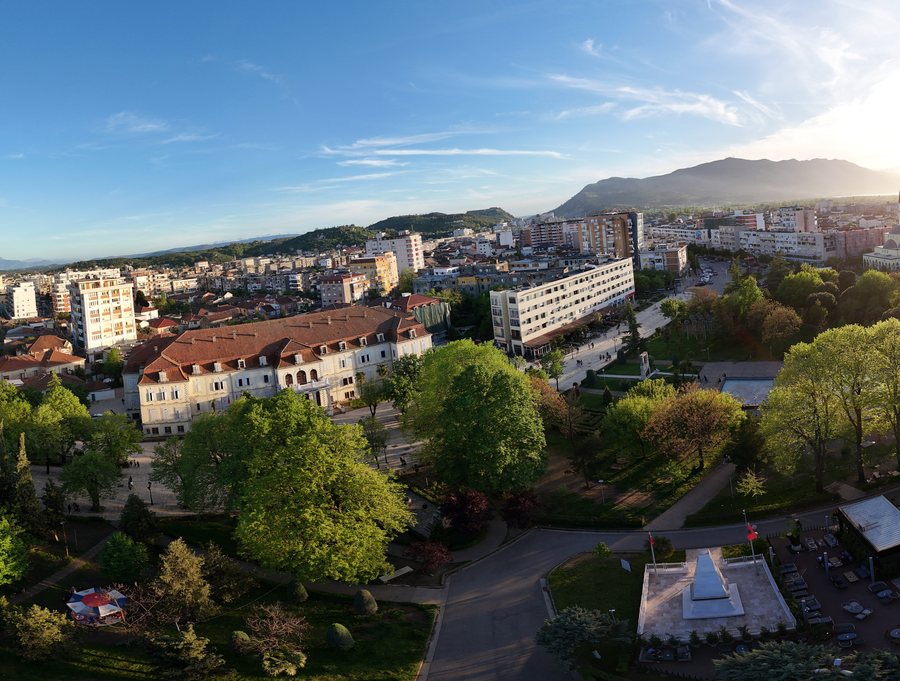
Nature and history
Rozafa Castle stands on a strategic hill at the entrance to Shkodër. Its history dates back to the Illyrian period; during the Roman, Byzantine, Venetian and Ottoman eras, it underwent numerous construction phases. From the castle, visitors can enjoy panoramic views over Lake Shkodra. The complex also houses the Castle Museum, which displays evidence of Shkodër's settlement from various historical periods.
At the southeastern entrance to the city lies the Archaeological Park of Shkodra. It preserves evidence of Illyrian, Roman and medieval settlement and fortification. The park is visited for its historical, archaeological and natural values.
Culture and museums
The Marubi National Museum of Photography dedicates its permanent exhibition to three thematic rooms. Each room is dedicated to a generation of the Marubi dynasty: Pietro Marubbi, Kel Marubi and Gegë Marubi. The Marubi archive includes 493,819 negatives, 246 letters and telegrams, and 219 cameras.
The Historical Museum of Shkodër is housed in the monumental Oso Kuka building, a characteristic urban residence from the 19th century. It displays archaeological, ethnographic, historical and artistic objects that illustrate the city's development. The Museum of Testimony and Memory documents the period of Albania's communist totalitarian regime.
At the Venetian Mask Workshop, unique masks are made according to an old Venetian tradition. Visitors can watch the production process up close and paint their own mask in creative workshops.
Historic cityscape
Gjuhadol is a historic district of Shkodër with cobbled lanes and buildings featuring Venetian architecture. The main part of the district is pedestrianised and includes small cafés, arts and crafts galleries and cultural spaces. Kole Idromeno Street complements this cityscape as a cobbled pedestrian boulevard with historic buildings in Venetian and Austro-Hungarian styles, as well as arts and crafts shops.
The Lead Mosque was built in 1773–1774 and is considered a representative example of Ottoman architecture in Albania. Due to its outstanding historical and architectural values, it was declared a cultural monument in 1948.
The Diocesan Museum presents works of art, sacred objects, personal utilitarian and religious objects, document fragments and other artefacts in several thematic areas. It is located on the southern side of the cathedral below the distinctive bell tower.
Cycling and walking
Shkodër is widely known as the “city of bicycles”. The use of bicycles has been part of daily life and urban culture there for decades. The Shiroka–Zogaj–Koplik route runs around Lake Shkodra to the west and north of Shkodër.
The Shkoder City Tour is a leisurely guided walking tour designed to last approximately 2 to 3 hours. The Shkodra City Tour takes place entirely within walking distance.
Urban cultural life
Cultural life in Shkodër includes artistic activities, exhibitions, concerts and events throughout the year. These promote Shkodër's traditions and urban music.
Compare hotels in Shkodër
Included services, individual price components, and booking and cancellation conditions should also be taken into account. This keeps the differences between the offers comprehensible, while the specific features of each accommodation remain reserved for the respective offer pages.
Further direct destinations in the catalogue can be found under Qerret and Theth. Other location pages in this catalogue section: Molle, Baks-Rrjollë, Koman.
For the higher-level travel overview: Shkodër.

