
Armavir: Culture, Nature and History
Accommodation in Armavir
Armavir combines early Christian architecture and historical museums with the largely flat landscape of the Ararat Valley. The region offers a range of options to consider when planning your trip, from churches and memorials to orchards, nature conservation and cycling routes.
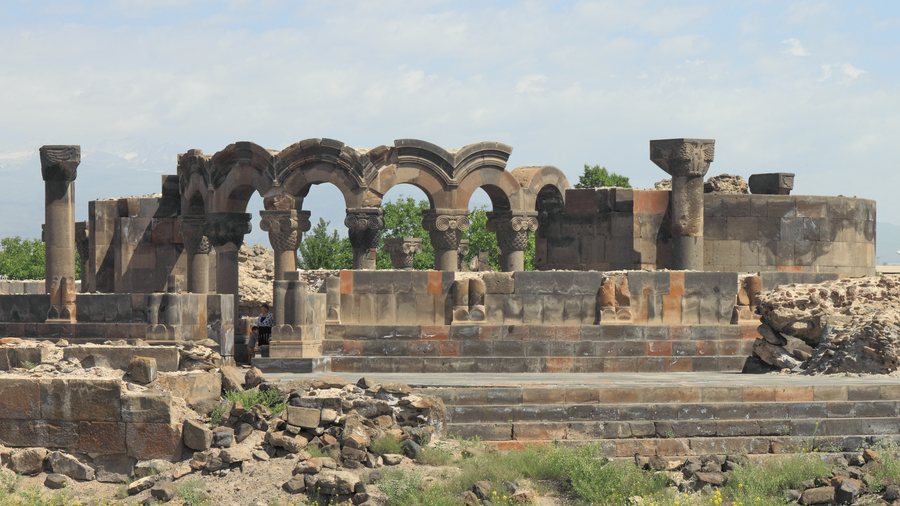 File:2014 Prowincja Armawir, Zwartnoc, Ruiny katedry Zwartnoc 14.JPG
Photo: Marcin Konsek via Wikimedia Commons, CC BY-SA 4.0
Armavir at a glance
- The landscape is part of the Ararat Valley and includes extensive orchards and greenhouses.
- Churches and the UNESCO World Heritage ensemble of Etchmiadzin and Zvartnots illustrate the region’s long architectural history.
- The Vordan Karmir Nature Reserve was established in 1987 to protect salt habitats.
- Recurring culinary traditions include the Tolma Festival and Harissa Day in Musaler.
Which cultural sites define Armavir?
The Mother Cathedral of Holy Etchmiadzin in Vagharshapat was built between 301 and 303 AD by King Trdat III and Gregory the Illuminator. It is the spiritual and administrative center of the Armenian Apostolic Church. The UNESCO World Heritage ensemble of Etchmiadzin and Zvartnots illustrates the development of Armenian central-domed, cross-hall churches and their influence on the region’s architecture and art.
The churches also tell different chapters of this history. The Church of Saint Gayane dates from 630 and combines a three-nave basilica with a central dome. The Church of Saint Hripsime is considered one of the oldest surviving churches in Armenia. The Church of Saint Shoghakat was built in 1694 in honor of unnamed nuns who died as martyrs during the Christianization of Armenia. Zvartnots Cathedral stood for 320 years before probably collapsing in an earthquake in the 10th century.
Near the town of Metsamor, the Metsamor Historical and Archaeological Museum-Reserve contains the ruins of a Bronze Age settlement. The museum features exhibitions on ancient metallurgy, including bronze and iron tools and weapons made using techniques developed in Metsamor. Other exhibits include ceramics, metalwork, jewelry and tools. Founded in 1964, the Vagharshapat Historical and Ethnographic Museum also belongs to the Holy See of Vagharshapat and houses more than 15,000 religious and historical artifacts from the Stone Age and later periods.
The Sardarapat Memorial Complex allegorically depicts the 1918 Armenian-Turkish War and commemorates the Armenian victory. An avenue lined with five eagles leads to the Ethnographic Museum, whose exhibitions cover Armenian culture, trades and crafts.
What defines the landscape and nature?
The landscape of the Ararat Valley in Armavir is mostly flat and considered suitable for agriculture and road trips. Extensive orchards of apricots, apples, pears, plums and peaches are part of the landscape, along with greenhouses where vegetables are grown during the cold winter months.
Established in 1987, the Vordan Karmir Nature Reserve protects salt habitats and sites where salt-loving plants grow and the endangered Armenian cochineal thrives. Nature enthusiasts will find a different focus here than at the churches and museums: the habitats of a rare species and the area’s distinctive plant life.
What experiences does Armavir offer?
Cyclists can follow the road through the region from Yerevan via Vagharshapat to Sardarapat, with views of the surrounding landscape along the route. The road between Yerevan and Metsamor is recommended for motorcycle tours. At Lake Metsamor, you can catch local fish and may also meet local fishers and learn about traditional fishing practices.
Culinary traditions also shape the year. Armavir hosts an annual Tolma Festival, where cooks from across the country exchange recipes and compete to make the tastiest tolma. On Harissa Day, residents gather in the village of Musaler every third Sunday in September to prepare harissa in large pots and remember Musaler’s resistance during the Armenian Genocide.
For more regional information, you can also visit the destinations of Etchmiadzin, Parakar and Musaler.
How should you plan your accommodation search?
First, consider which places are important to your trip: churches and museums, the landscape and cycling routes, or a particular festival. Then compare the specific locations of hotels with your planned destinations. This lets you tailor your search to your travel interests without treating cultural, nature and event itineraries as interchangeable.
Discover more destinations: Shirak, Yerevan, Syunik, Aragatsotn, Gegharkunik.
FAQ
Which church in Armavir was built particularly early?
The Mother Cathedral of Holy Etchmiadzin was built between 301 and 303 AD. The Church of Saint Hripsime is considered one of the oldest surviving churches in Armenia.
What can you see at the Metsamor Museum-Reserve?
Exhibitions on ancient metallurgy feature bronze and iron tools and weapons. The collection also includes ceramics, metalwork, jewelry and tools.
When is Harissa Day held in Musaler?
Residents gather for it in the village of Musaler every third Sunday in September. They prepare harissa in large pots and remember Musaler’s resistance during the Armenian Genocide.
What options are there for cyclists and nature enthusiasts?
Cyclists can follow the road from Yerevan via Vagharshapat to Sardarapat. It is possible to catch local fish at Lake Metsamor; encounters with local fishers and insights into traditional practices are also possible.
For the main travel overview: Armenia.

