
Yerevan
Accommodation in Yerevan
Yerevan combines urban life with museums dedicated to Armenia’s history, art, and manuscript culture.
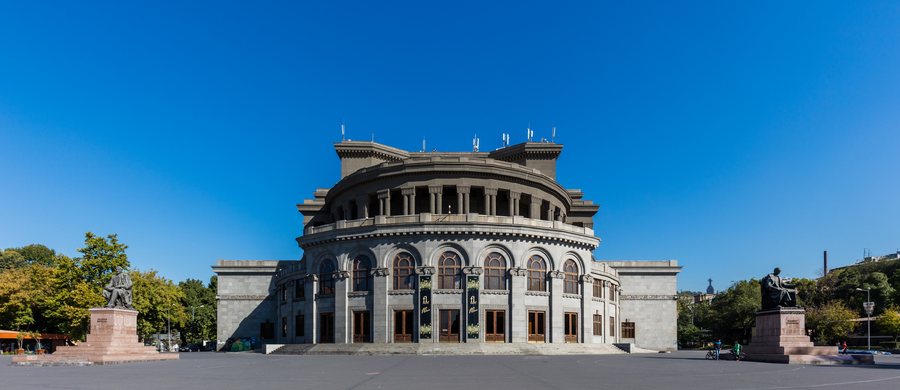 File:Ópera, Ereván, Armenia, 2016-10-03, DD 13.jpg
Photo: Diego Delso via Wikimedia Commons, CC BY-SA 4.0
File:Ópera, Ereván, Armenia, 2016-10-03, DD 13.jpg
Photo: Diego Delso via Wikimedia Commons, CC BY-SA 4.0
Yerevan facts at a glance
Key themes for visitors include the history of Urartu, Armenian manuscripts, city history, and art. Important museums, parks, cafés, and cultural centers are located in the center, making the city especially easy to explore on foot. Tourist information and citizen service centers also provide free multilingual maps, guidebooks, and information.
How can you experience Yerevan in the city?
The Cascade brings together art, architecture, urban life, and green spaces. The Cafesjian Sculpture Garden in the Cascade complex features works by renowned artists. If you are interested in public art, it offers a different way to experience the city than a museum with a collection organized by theme.
You can use the tourist information and citizen service centers to find your way around. Visitors can get free multilingual maps and guidebooks there, as well as information about museums, excursion programs, the Yerevan City Tour, and municipal services. The 90-minute Yerevan City Tour introduces the city’s history, culture, and architecture, as well as its historical and cultural monuments and attractions. It provides an overview of several aspects of the city, while a museum visit explores one topic in greater depth.
Which museums match your interests?
The Armenian Genocide Museum offers guided tours in Armenian, Russian, English, and French. The tour covers the entire exhibition, which comprises 12 halls, and lasts from 40 minutes to one hour. This gives you a clear timeframe for your museum visit. The rooftop terrace of the Armenian Genocide Museum-Institute also offers a viewpoint with panoramic views of Mount Ararat and Yerevan.
The Erebuni Museum focuses on the history of Urartu. Its permanent exhibition covers architecture, fine art, irrigation and fortification systems, murals, and ceramics. If you are interested in historical architecture and ways of life, you can explore different aspects of a culture in one collection.
The Yerevan History Museum explores the city’s development from antiquity to the present day. Its collection comprises around 100,000 archaeological, ethnographic, numismatic, handicraft, applied art, and documentary works. The Matenadaran, meanwhile, is dedicated to Armenian manuscript culture and its development from the early Middle Ages to the modern era. The Cartography Hall displays cartographic and geographic materials relating to the history of Armenia and the wider region.
Where can you encounter art and the history of printing?
The Cafesjian Center for the Arts offers a diverse range of exhibitions, including significant works from the Cafesjian Art Trust. The Yerevan Museum of Modern Art has a different focus: it displays significant works by prominent Armenian artists from the 1960s and was the first modern art museum in the former Soviet Union.
The Museum of Printing traces the history of the printed word through individual works. On display is the first book printed in Armenian, “Urbatagirk” (“The Friday Book”), printed in Venice in 1512. Other exhibits include the Voskanyan Bible, printed in Amsterdam in 1666–1668, and the first printed map, “Hamatarats Ashkharhatsoyts” (“General Geographic Atlas”), also printed in Amsterdam in 1695. The first printed magazine, “Azdarar,” published in Madras from 1794 to 1796, is also among the works on display.
What role do events and wine play?
The Fridtjof Nansen Museum regularly hosts events, book discussions, presentations, conferences, and film screenings, and offers educational programs. The Golden Apricot Yerevan International Film Festival was founded in Yerevan in 2004. Its pan-Armenian competition section, Armenian Panorama, is dedicated to films by filmmakers of Armenian descent. These offerings give culture enthusiasts a range of ways to engage: a museum program, discussions and presentations, or film.
The Yerevan Wine Days are also part of city life: the festival has been held in Yerevan since 2017, and visitors can taste wines made from local grapes.
For additional information, you can also visit the page about Yerevan. Other regional pages cover Shirak, Tavush, Ararat, Lori, Vayots Dzor, Gegharkunik, and Armavir.
FAQ
How long is the guided tour at the Armenian Genocide Museum?
The tour of the entire exhibition, which comprises 12 halls, lasts from 40 minutes to one hour.
In which languages are guided tours offered at the Armenian Genocide Museum?
Guided tours are offered in Armenian, Russian, English, and French.
Since when have the Yerevan Wine Days been held?
The festival has been held in Yerevan since 2017. At the Yerevan Wine Days, visitors can taste wines made from local grapes.
For the main travel overview: Armenia.
More destinations in Yerevan
More places to help plan your trip:
More destinations
More places within the same destination:

