
Ganja: Culture, Parks and Regional Cuisine
Accommodation in Ganja
Ganja combines historic buildings and museums with parks, cycling routes and a distinctive food culture.
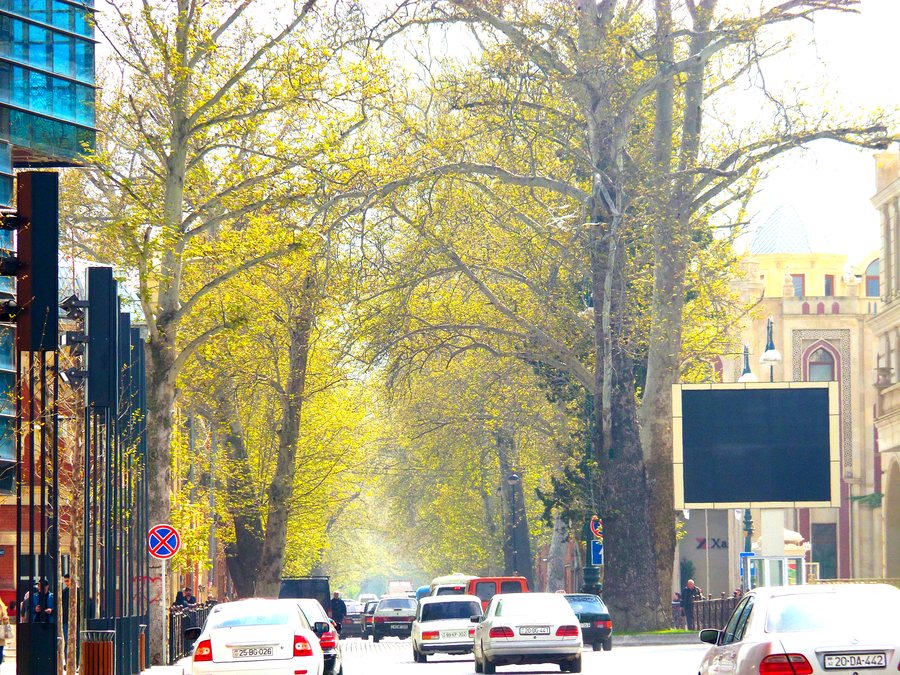
Ganja at a glance
Ganja lies on the railway line and highway between Baku and Tbilisi and has an international airport. Its defining historic buildings include mosques, churches and mausoleums; museums, parks, and leisure and craft activities add to the picture. The cuisine also has regional specialties: Ganja pakhlava and dovga, a yogurt-based soup, are two examples.
Which historic sites can you discover?
The Shah Abbas Mosque, also known as the Juma Mosque, was built in 1606 at the behest of the Safavid ruler Shah Abbas. Designed by the architect Sheikh Baha' al-Din al-Amili, it was built from red bricks in the style of the Aran school of architecture. Chokek Hamam, also built in 1606 at the behest of Shah Abbas I, stands nearby in the center of Ganja. The bathhouse offers full-body scrubs, massages, broom treatments, a steam bath, a sauna and Turkish baths.
The Bottle House tells a different architectural story: this unusual two-story building was completed in 1967 by Ibrahim Jafarov as a shrine to his brother, who went missing during World War II. It is considered worth seeing and makes a popular subject for photographs. The Alexander Nevsky Church was built in 1887 on the site of an old cemetery, using donations from local Orthodox Christians and Muslims. Its red brickwork and Byzantine style define the building; it is considered one of Azerbaijan's oldest surviving Orthodox churches.
The mausoleums also reflect different historical periods. The Imamzadeh complex was built in several phases from the 14th century onward around the tomb of a son of the fifth Shia Imam, Muhammad al-Baqir. The Javad Khan Mausoleum was built in 2005 over the tomb of Javad Khan, using fired red bricks in the Aran architectural style. The Nizami Ganjavi Mausoleum was restored in 1990–1991 and has protected-complex status.
Which museums, parks and activities suit your interests?
Located in front of the Nizami Ganjavi Mausoleum, the Nizami Ganjavi Museum displays rare manuscripts and miniatures from Nizami's Khamsa. The museum also has a conference hall open to visitors interested in cultural and scientific activities in Ganja. The Mahsati Ganjavi Center contains books about the poet's life and work, as well as electronic materials on her literary heritage in Azerbaijani, Russian and English. It also features publications on national music and folk art.
There are several options for spending time outdoors. Khan Baghi Park is considered one of the first parks in the Caucasus and serves as a place of recreation for Ganja's residents. The park is also home to the open-air Yashil Theatre, a venue for various cultural events. The modern Ganjachay Park and Boulevard complex in the city center combines recreation with a range of activities; its cycling route is 1.7 kilometers long. The Heydar Aliyev Park complex offers walks among green spaces and a 7-kilometer cycling route. Its attractions appeal to both children and adults.
The GanjLand leisure and entertainment complex features attractions from different countries, a giant chessboard, and 7D and 8D cinemas. It also has the Mustang riding club and football pitches that meet AFFA standards. This makes it possible to plan a trip around a wide range of interests, from cycling and park visits to entertainment and sport.
What defines the local cuisine and crafts?
Ganja pakhlava differs from the Baku version: it is lighter in color and baked on a copper sheet over coals. Ganja dovga is a yogurt-based soup made with at least seven different herbs. Shops, cafés, restaurants and traditional teahouses line central, lengthy Javad Khan Street. The street is also home to carpet-weaving and painting associations; traditionally brewed tea and Ganja pakhlava are among the treats on offer there.
Ganjasenet, a monthly crafts fair, offers another opportunity to discover local crafts. Visitors can browse and buy handmade items and speak directly with local artists and craftspeople. The fair takes place on the first Saturday of each month from 11:00 a.m. to 6:00 p.m. at the Urban Centre of the Ganja State Philharmonic Hall; admission is free.
How do you get to Ganja, and which destinations can you compare?
An express train runs daily between Baku and Ganja. In the wider region, buses also run regularly from Baku International Bus Terminal to cities and towns in the area.
For more information about this subregion, see Ganja. If you would like to compare other destinations, overviews are also available for Baku, Siazan, Shaki, Oghuz, Masally and Lankaran City.
FAQ
When does Ganjasenet take place?
The crafts fair takes place on the first Saturday of each month from 11:00 a.m. to 6:00 p.m. at the Urban Centre of the Ganja State Philharmonic Hall. Admission is free.
How long are the cycling routes in the park complexes?
The cycling route in the Ganjachay Park and Boulevard complex is 1.7 kilometers long; the route in the Heydar Aliyev Park complex is 7 kilometers long.
What are the ingredients that define Ganja dovga?
Ganja dovga is a yogurt-based soup made with at least seven different herbs.
How can you get to Ganja by train?
An express train connects Baku and Ganja daily.
For the main travel overview: Azerbaijan.
More about the destination
Useful information for planning your trip:

