
Sozopol – Old Town, Coastal Landscapes and Culture
Accommodation in Sozopol
Sozopol brings together a rocky peninsula, a historic Old Town and protected coastal landscapes. If you want to focus on culture and nature during your trip, museums, historic houses and varied landscapes provide a practical guide to choosing your destination.
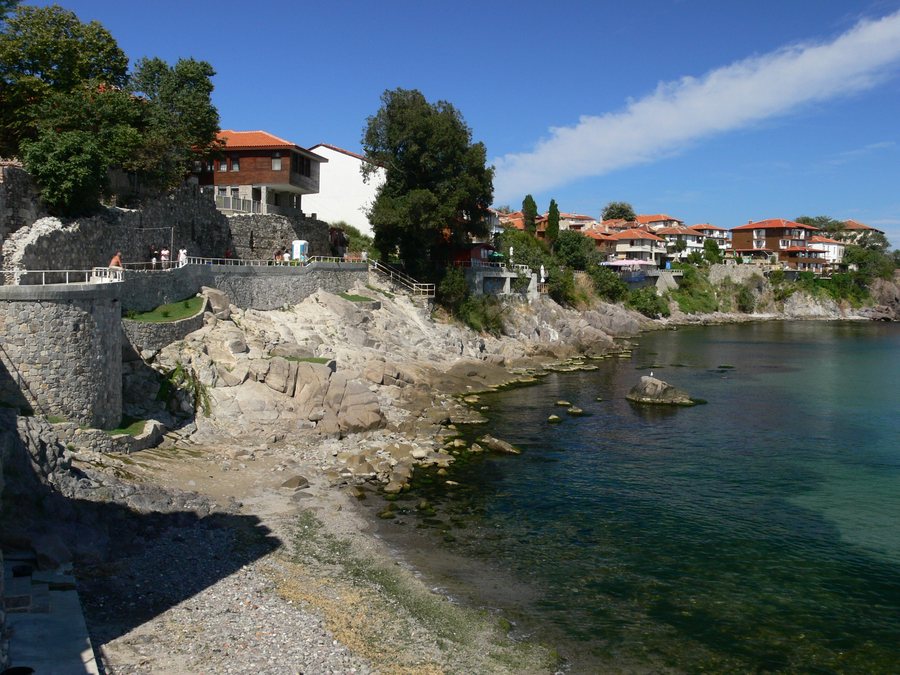
Sozopol at a glance
Sozopol is situated on a rocky peninsula surrounded by sea and land. The Archaeological Museum is listed as Bulgarian National Tourist Site No. 8 and displays more than 1,000 exhibits. The Old Town has more than 180 houses dating from the Bulgarian National Revival period. The region’s natural features include rocky coastlines, fjords, a lagoon and dune landscapes.
What do the Old Town and museums tell us about Sozopol?
The Old Town’s more than 180 houses were built between the mid-18th and early 19th centuries. They date from the Bulgarian National Revival period and give the historic townscape a clear timeframe. Restored remains of the southern fortress wall, including a rectangular tower, are also visible.
More than 1,000 exhibits at the Archaeological Museum illustrate the history of the city and region from the late 6th millennium BC to the 18th century. They include a marble reliquary that contained the relics of John the Baptist. It was discovered in 2010 during excavations at the medieval monastery on St. Ivan Island. The Church of Sts. Cyril and Methodius in the Old Town also preserves relics discovered on the island in 2010.
Two different museum buildings offer further insights: the art gallery is housed in the “Old Schoolhouse,” a cultural monument in the northern part of the peninsula. The Ethnographic Museum is located in the “Kurdilis” house, a local architectural cultural monument. Its exhibitions showcase traditional activities and crafts such as farming, fishing, winemaking and weaving.
Which natural areas define the surroundings?
The Kolokita protected area in Sozopol includes rocky coastlines and fjords, as well as sea waters and cultivated land. South of Sozopol, in the Kavatsi area, the Sand Lily protected area preserves one of the largest populations of sand lilies. The Kavatsi sand dunes lie about 3 km south of the city. The 24-hectare protected area safeguards characteristic psammophytic vegetation; the dunes reach a height of 5 to 6 m.
Other landscape types can be found elsewhere in the region: the Alepu wetland by Alepu Bay is a lagoon separated from the sea by a strip of beach with dune formations. In Chernomorets, the natural monument Cape Agalina is characterized by rocky coastlines, fjords and high biological diversity. Near Ravadinovo, the Bakarlaka protected area preserves the habitat of Hager’s tulip (Tulipa hageri Heldr., T. thracica), as well as communities of other protected and rare plant species.
What cultural experiences can complement your stay?
The annual Apollonia Arts Festival features dozens of theatre performances, exhibitions, open-air concerts, literary evenings, film screenings, and chamber and jazz concerts with internationally renowned artists and ensembles. The art gallery also organizes a sculpture plein-air event and annual international plein-air events for marine painters. At the Fig Festival, local residents show guests how to make preserves from green figs; tastings include sweet and savory fig specialties, fig brandy, fig wine and tea.
What should you consider when choosing a destination and accommodation?
Sozopol is about 35 km by road from Burgas. You can take this approximate distance into account when planning your route. When choosing a hotel or other accommodation in Sozopol, the first thing to consider is whether you want to combine your stay with the historic townscape, museums and the coastal and natural areas described above.
If you’d like to explore more destination pages, you can find Chernomorets, Sosopol, Ravadinovo, Djuni, Varshilo and Pomorie here.
FAQ
What period do the Archaeological Museum’s exhibits cover?
They illustrate the history of the city and region from the late 6th millennium BC to the 18th century.
What can you see in Sozopol’s Old Town?
It has more than 180 houses dating from the Bulgarian National Revival period, as well as restored remains of the southern fortress wall with a rectangular tower.
How far south of Sozopol are the Kavatsi sand dunes?
The protected area lies about 3 km south of Sozopol, covers 24 hectares and includes dunes that reach a height of 5 to 6 m.
For the broader travel overview: Burgas Province.
More about the destination
Relevant information for planning your trip:

