
Orebić
Accommodation in Orebić
Orebić combines a striking setting between mountain and water with places of historical and cultural interest and wine-related experiences. When planning your trip, it helps to consider the differences: Nakovanj focuses on archaeological history and protected cultural heritage, while hiking trails to Sv. Ilija offer a distinct focus.
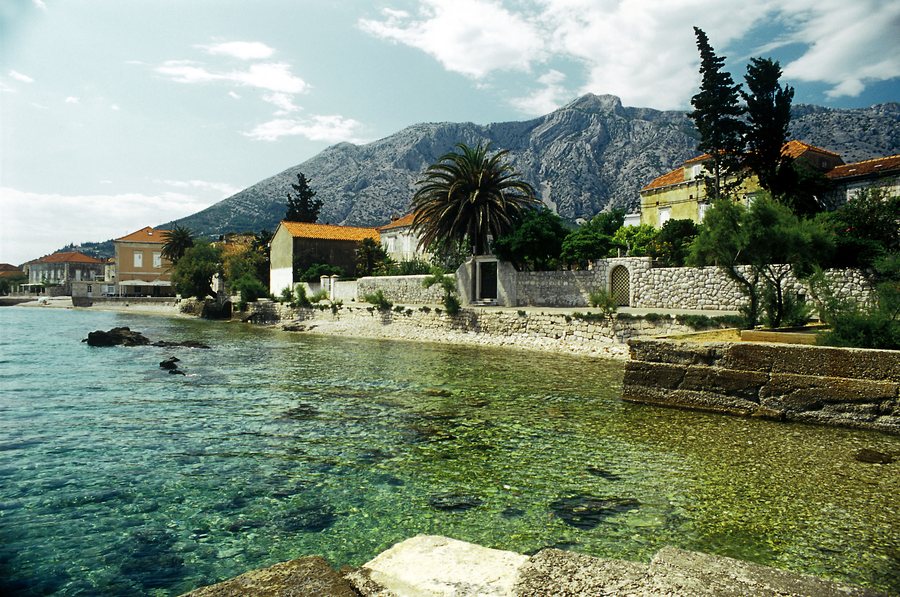
Orebić at a glance
Orebić lies between Mount Sv. Ilija on one side and the Pelješac Channel on the other. The archaeological site of Špilja Spila Nakovana in Nakovanj is a protected cultural heritage site. Spila Nakovana Cave was used as an Illyrian sanctuary during the Iron Age, in the 3rd to 4th centuries BC. Four of the six hiking trails on the Pelješac Peninsula lead to the highest peak of Sv. Ilija above Orebić.
Which cultural sites can you explore in Orebić and Nakovanj?
Nakovanj brings together two aspects of history: the protected archaeological site of Špilja Spila Nakovana and the cave’s former religious use as an Illyrian sanctuary. Dating from the 3rd to 4th centuries BC places it in the Iron Age. The protected cultural and historical complex “Povijesni prostor Nakovana” also encompasses Gornja and Donja Nakovana. The archaeological site and the larger complex are distinct, separately named cultural heritage sites.
Viganj also has a protected cultural and historical complex: “Povijesna ruralna cjelina Viganj” is located there. The Church of Gospe od Loreta – Delorita stands in Kuna Pelješka. It was built in 1681 in honor of the Blessed Virgin Mary of Loreto and is locally known as Gospa od Delorite.
Another cultural highlight is the Franciscan monastery, built in the 15th century on Mount Sv. Ilija at an elevation of 150 meters. It houses the Votive Museum, which contains a painting of the Virgin Mary that is said to have washed ashore in Orebić in the 15th century. The captains’ cemetery, with the Mimbelli family mausoleum, is located behind the Franciscan church. The monastery’s history, the painting, and the cemetery appeal to different interests in religious and local history.
Which nature and cultural themes can add to your trip?
The Pomorski muzej Orebić preserves the memory of captains and sailors and has archaeological, maritime, and historical book collections. As a cultural highlight, it complements the sites mentioned above with a focus on seafaring.
Wine tours to Orebić’s wineries and wine cellars are also available to visitors. They offer a different focus from the museum, church, and archaeological site. When planning, you can weigh up whether cultural history, maritime collections, wine, or nature is of particular interest to you. For hiking, one specific route detail is available: the steepest trail to Sv. Ilija, Ruskovići (04), starts in Orebić. On the Pelješac Peninsula, four of the six hiking trails lead to the highest peak of Sv. Ilija above Orebić.
Which places can you explore elsewhere in the municipality?
If you would like to extend your search beyond Orebić to other places in the municipality, you can find dedicated pages for Kuna Pelješka, Oskorušno, Nakovanj, Kuciste, Potomje, Donja Banda, Trstenik, Podobuce, Orebic and Loviste. You can use each place name as a further point of reference when planning your regional trip.
FAQ
Where is Orebić located between mountain and water?
Orebić lies between Mount Sv. Ilija on one side and the Pelješac Channel on the other.
What is the historical significance of Spila Nakovana Cave?
It was used as an Illyrian sanctuary during the Iron Age, in the 3rd to 4th centuries BC.
Where does the steepest hiking trail to Sv. Ilija begin?
The steepest hiking trail, Ruskovići (04), begins in Orebić.
For the broader travel overview: Peljesac.

