
Šibenik-Knin County
Accommodation in Šibenik-Knin County
Between the Kornati archipelago, Krka National Park and Venetian fortresses, Šibenik-Knin County offers a variety of starting points for nature and cultural trips.
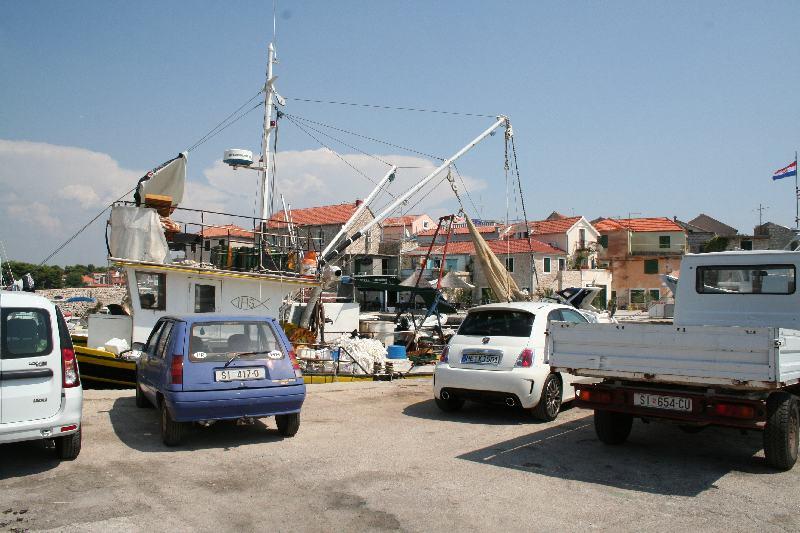
Šibenik-Knin County at a glance
Kornati National Park comprises a group of 125 islands, islets and reefs rising above the sea. A valid ticket for travel through the national park is required for the described sailing route through 89 islands, islets and reefs. The deeply incised canyons of the Krka and Čikola rivers, Lake Prukljan and the Šibenik Channel physically divide the county into two parts. The cuisine also varies by region: there is a cuisine typical of the coastal and island areas and another typical of the inland part.
What nature experiences do Kornati and Krka offer?
In Kornati National Park, daily tours are organized by shipowners and boat operators who are authorized to carry passengers and have a contract with the national park for these activities. Sailing is one of the visitor activities described; a ticket for travel through the national park is required. Visitors who would rather explore the archipelago on foot can go for walks, hikes or sightseeing tours in the park with a professional guide. Swimming and diving are also among the activities available to visitors.
Krka National Park has different access options: the park can be entered on foot, by bicycle, by boat or on a national park bus. This distinction is useful when planning a trip that compares a visit to Krka with activities in the Kornati area. The county also offers very good conditions for activities such as walking, hiking, cycling and scuba diving.
Which fortresses and cultural sites define the region?
Barone Fortress presents the history of Šibenik using augmented-reality technology, computer-generated images and sounds. This presentation combines historical themes with digital elements, offering a different way to engage with history than the fortresses’ architecture.
At the entrance to the St. Anthony Channel in Šibenik stands St. Nicholas Fortress, a Renaissance structure of Venetian military architecture and an outstanding World Heritage monument. In 2017, it was inscribed on the UNESCO World Heritage List as part of the nomination “Venetian Defence System between the 16th and 17th centuries.” St. Michael’s Fortress has a north entrance near the fire station. Its south entrance is reached by climbing up from the historic old town.
What makes the regional cuisine distinctive?
The cuisine of the coastal and island areas differs from that of the inland part of the county. In coastal areas, ingredients such as fish, shellfish and various seafood are the main staples. The region therefore offers not only a variety of landscapes, but also two distinct culinary traditions.
How is the county connected?
The Adriatic Highway connects the county with the coastal region. A main road connects it with Knin and Bosnia and Herzegovina, while a motorway links it with the Croatian interior. One of the county’s major railway lines runs in the direction of Zagreb and Split.
Which subregions can you compare next?
For your next regional comparison, you can browse overviews of individual subregions: Tisno Municipality, Vodice Municipality, Kistanje Municipality, Šibenik Municipality, Rogoznica Municipality, Skradin Municipality, Ervenik Municipality, Biskupija Municipality, Drniš Municipality, Knin Municipality, Primošten Municipality, Ružić Municipality, Zirje, Promina Municipality, Kornati, Unešić Municipality, Kijevo Municipality and Civljane Municipality.
FAQ
How many islands, islets and reefs does Kornati National Park comprise?
The national park comprises a group of 125 islands, islets and reefs rising above the sea.
Do you need a ticket to travel through Kornati National Park?
Yes. A valid ticket for travel through the national park is required to sail through the 89 islands, islets and reefs.
How can you enter Krka National Park?
On foot, by bicycle, by boat or on a Krka National Park bus.
Which ingredients define the cuisine of coastal areas?
Mainly fish, shellfish and various seafood.
Back to the main travel overview: Croatia.
