
Discover the Municipality of Cista Provo
Accommodation in Municipality of Cista Provo
The Municipality of Cista Provo brings together archaeological evidence from different periods, historic churches, and protected wild orchids. This gives you a clear theme for planning your trip: culture and history, complemented by a few natural features.
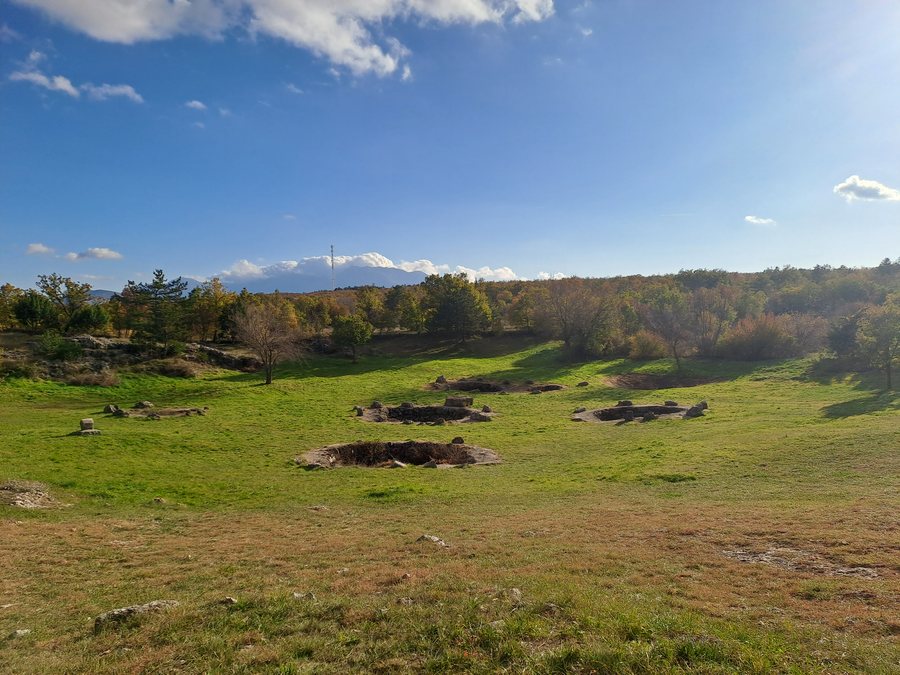
Key facts about the Municipality of Cista Provo
- Cista Provo lies on the western edge of the Imotska krajina region.
- The Cista Velika – Velika and Mala Crljivica site is one of two Croatian components of the UNESCO World Heritage property “Stećci – Medieval Tombstone Graveyards.”
- Several legally protected species of wild orchids grow in the Cista Provo area.
Which archaeological sites shape the region?
In Cista Velika, the Crljivica archaeological zone lies right beside the main Trilj–Imotski road. It extends for about 200 metres and includes the route of the ancient Salona–Tilurij–Nove–Narona road. This connects the area with several historical periods: alongside the UNESCO component, the story of an ancient transport route is also part of its archaeological character.
Another archaeological site, Crkvine, lies in the west of Cista Velika, about 100 metres south of the Trilj–Imotski road. Its features include an early Christian baptistery and two ancient cisterns. On Osoje Hill, the Osoje-Mandarića strana zone includes a prehistoric hillfort. Its plateau measures about 170 × 160 metres, and visible remains of megalithic walls have been preserved. The hillfort may date to the Iron Age, but this is not certain.
Biorine also has evidence from different periods: the archaeological site includes a prehistoric tumulus and a medieval cemetery with stećci, which developed in the 14th and 15th centuries. The Lazine site in Biorine is a medieval cemetery with thirteen stećci. A dry-stone wall divides the tombstones into two groups; they date from the 14th and 15th centuries.
What churches and historic architectural forms are there?
In Dobranje, the old Church of St John the Baptist was built in 1740. It is considered an example of 18th-century folk architecture. Also in Dobranje is the Sklop Vuletić building complex, with the Chapel of St John of Nepomuk. The complex was built in the 18th century with pronounced defensive features. Vuletića staje in Dobranje offers another glimpse of local building and settlement patterns: this distinctive secondary settlement structure provided shelter for people and livestock during the summer grazing season.
In Svib, the old Church of St Anthony of Padua was built in 1747; it is also an example of 18th-century folk architecture. The parish Church of St Peter the Apostle in Cista Provo is different: it was built of dressed stone in 1914. Their different construction dates and functions make churches and chapels a distinct way to explore local history.
What landscape and nature themes can you include?
South of the centre of Cista Velika, Gradina Vitrenik stands at an elevation of 650 metres. Its stone defensive ring is very well preserved and was built using dry-stone construction. Vitrenik is also home to Ilkovaća Cave. Finds from the cave provide evidence of settlement since the Neolithic period. Alongside its archaeological sites, the landscape therefore also has a long history of settlement.
Another hillfort in Cista Velika directly overlooked the old route leading east from the Cetina Valley, which is still in use today. It is therefore a different historical reference point from Gradina Vitrenik. If you are interested in historic routes, you can consider this connection alongside the ancient route at Crljivica without treating the two routes as the same.
If you would like to focus on archaeological sites, stećci, and historic buildings when planning your trip, the Municipality of Cista Provo offers several specific themes to explore. The pages for Dobranje, Biorine, Svib, Cista Provo, and Cista Velika can help you learn about each place individually. To compare a wider range of destinations, you can also consider the Municipality of Zadvarje, the Municipality of Imotski, and the Municipality of Proložac.
FAQ
Which UNESCO site is associated with Cista Velika?
The Cista Velika – Velika and Mala Crljivica site is one of two Croatian components of the UNESCO World Heritage property “Stećci – Medieval Tombstone Graveyards.”
How many stećci are at the Lazine site?
Thirteen stećci have been preserved at Lazine. A dry-stone wall divides them into two groups; the tombstones date from the 14th and 15th centuries.
What natural feature is found in the Municipality of Cista Provo?
Several legally protected species of wild orchids grow there.
For the broader travel overview: Split-Dalmatia.

