
Šolta: Cycling Routes, Coves and Culture
Accommodation in Šolta
Šolta combines a direct ferry connection with a selection of cycling routes, coves and cultural sites. The island’s different sides can be seen in specific contrasts: from a flat coastal route to a climb to 170 metres above sea level.
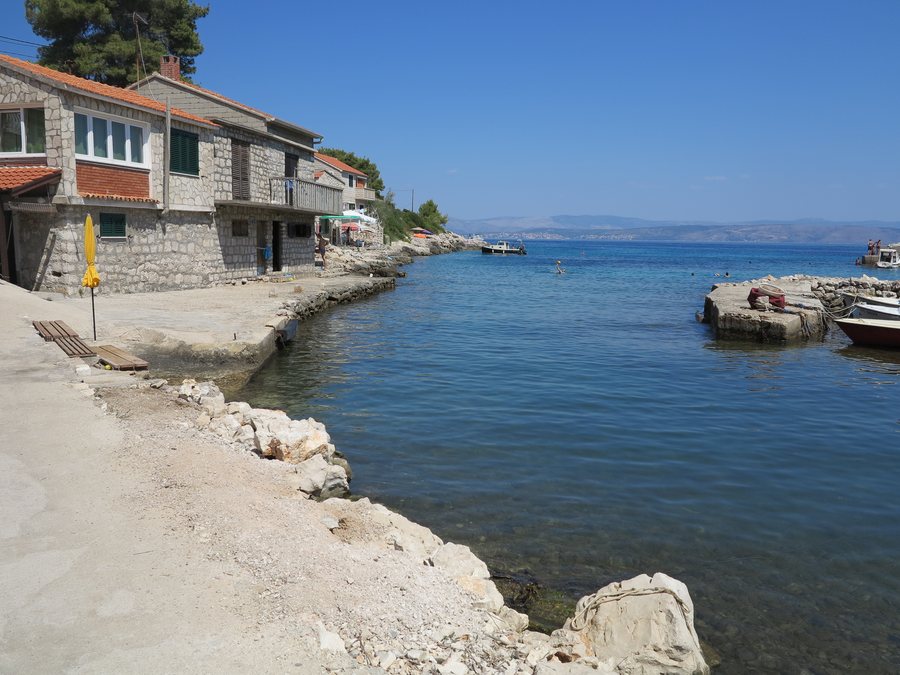
Šolta at a glance
Jadrolinija ferry line 636 connects Split with Rogač on Šolta. Cyclists can choose from flat and more challenging routes, as well as paved and unpaved paths. Coves on the island’s southern side are suitable for bathing, swimming and fishing; there are also diving sites there. Those interested in culture can visit, among other places, a gallery, churches and historic buildings.
How do you get to Šolta?
Jadrolinija ferry line 636 connects Split with Rogač. This makes Rogač a specific arrival point from which to plan your onward journey on Šolta. If you want to explore by bicycle, there are alternative cycling routes between the settlements. These include the paved road between Stomorska and Maslinica, as well as well-maintained unpaved paths. The differences in surface are useful to keep in mind when choosing your route.
The coastal settlements also each have their own historical connections. Stomorska is considered the oldest coastal settlement on Šolta and has a long seafaring tradition. The ferry, however, takes you to Rogač. Both details can help you find your way around the island, but neither implies a particular location for accommodation.
Which cycling routes suit your plans?
The “Slatki Rogač” route runs flat along the promenade and is suitable for cyclists of all ages and all types of bicycle. If you’re specifically looking for a level route, this is a clearly described option. “Staza sutona nad 7 otočića” has a different character: it climbs to 170 metres above sea level, where it offers numerous views.
“Tragovima kraljice Teute” has a low to moderate physical difficulty level; a mountain bike is recommended. These details help distinguish routes by their level of challenge without treating them as equivalent. Alternative cycling routes connect the island’s settlements, and the surfaces vary between paved roads and unpaved paths.
Which coves and activities are there?
The coves on the southern side of Šolta are suitable for bathing, swimming and fishing. There are also diving sites with caves, corals and abundant flora and fauna. Šešula Cove can be reached from land on foot, by car or by bicycle. Tatinja Cove has several small beaches. From Grohote, a gravel path leads there on foot; it is also accessible by bicycle.
Nečujam has beaches on both sides of the bay and a long promenade. The bay comprises eight smaller coves: Bok Supetra, Šumpjivina, Podkamenica, Maslinica, Tiha, Bok od rata, Piškera and Supetar. Sea kayak trips can start at Nečujam’s main beach and explore the smaller coves. The remains of an ancient fishpond are visible underwater in Piškera. A 400-metre-long promenade was also built around the bay to improve access to the ancient archaeological site.
Where can you experience culture and local products?
In Grohote, the Buktenica & Buktenica Gallery permanently exhibits works by Eugen Buktenica and his successor, Vicko Buktenica. Also in Grohote, the Church of Saint Stephen the Protomartyr stands beside the ruins of an early Christian basilica dating from the 5th century. Mosaics and numerous sarcophagi have been preserved. In the past, Slavića Tower Fortress served as a refuge during pirate attacks; its courtyard is used as a venue for numerous cultural events during the summer months.
In Maslinica, the Marchi family built the castle in 1708 as a defence against pirate attacks. In Gornje Selo, visitors can sample oils, wines, olives and herbal liqueurs at family farms and an oil mill. The OPG Tvrdić honey business offers the opportunity to learn more about the world of bees. Šolta olive oil is made from Šoltanka and Oblica olives; Šoltanka is also known as Levantinka. The oil has a protected designation of origin and has been awarded gold medals.
The settlement pages on Šolta include Gornje SeloGornje Selo, RogačRogač, Donje SeloDonje Selo, GrohoteGrohote, NečujamNečujam, MaslinicaMaslinica and StomorskaStomorska. You can also visit the page for Općina ZadvarjeOpćina Zadvarje as another destination.
FAQ
How do you get to Šolta from Split?
Jadrolinija ferry line 636 connects Split with Rogač on Šolta.
Which cycling route is flat?
“Slatki Rogač” runs flat along the promenade and is suitable for cyclists of all ages and all types of bicycle.
What can you see in Piškera Cove?
The remains of an ancient fishpond are visible underwater there. A 400-metre-long promenade runs around the bay; it was built to improve access to the archaeological site.
For the broader travel overview: Split-Dalmatia.

