
Horní Alberice: Hotels and Accommodations
Accommodation in Horní Alberice
Horní Albeřice is one of the oldest settlements in the Krkonoše Mountains; the village was first mentioned as early as the end of the 13th century. In the 19th century, limestone quarrying and lime burning made a significant contribution to people's livelihoods.
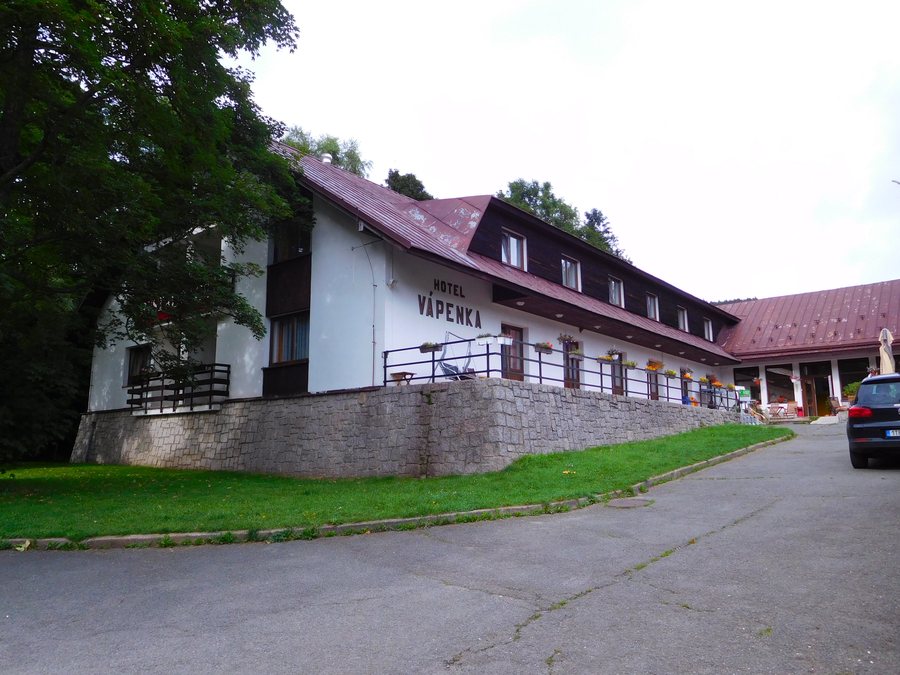
Culture and History
This history is told at the Muzeum Vápenka through short stories and extensive photographic material covering seven centuries of life in the Albeřice Valley. The museum is housed in an octagonal stone tower of a shaft lime kiln dating from the 19th century in Horní Albeřice. It is also the only place in the Krkonoše Mountains where the so-called lánové hospodářství has been preserved.
The Muzeum Vápenka
The Muzeum Vápenka is located in Zone I of Krkonoše National Park in the Horní Albeřice district. The keys to the exhibition can be borrowed daily from 9 a.m. to 5 p.m. at the reception desk of Penzion Vápenka, Horní Albeřice 13. Admission to the exhibition is free.
Trails and Winter Routes
The Krkonošská magistrála cross-country skiing route passes through Horní Albeřice between Lysečinská bouda and Rýchorská bouda. The red-marked Cesta bratří Čapků trail also runs through the village, leading from Pomezní Boudy via Lysečiny, Horní Albeřice, and Trutnov to Úpice. This trail can be used by bicycle in summer and on cross-country skis in winter; short detours lead to the Muzeum Vápenka.
Another route from Černá hora via Albeřice to Malá Úpa reaches Horní Albeřice after a quieter section through forests and meadows.
Nature in the Albeřice Valley
The Albeřické lomy provide a habitat for protected limestone-loving plants and animals. Bischof's Quarry is a deep open-pit mine where the temperature remains around 7°C even in summer. Albeřická Cave contains an underground lake approximately 15 metres deep.
To the general travel overview: Horní Marsov.

