
Lavassaare: Moorland, Museum Railway and History
Accommodation in Lavassaare
Lavassaare combines the history of peat extraction with moorlands, a museum of narrow-gauge railways and historic memorial sites.
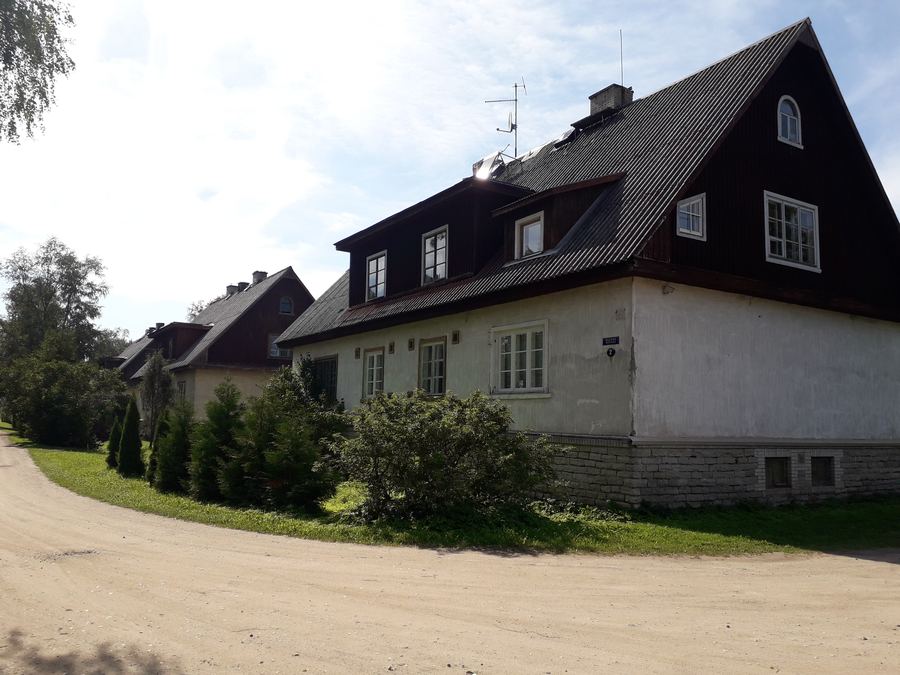
The Estonian Museum Railway is located in the settlement of Lavassaare in the wider regional surroundings of Pärnu, between moorlands and approximately 17 km northwest of Pärnu. Estonia’s most extensive peat extraction areas are located in the Lavassaare moorland.
The Lavassaare Nature Reserve was established in 2016. The Estonian Museum Railway is Estonia’s only narrow-gauge railway museum.
Which landscape characterizes Lavassaare?
The protected habitats in the Lavassaare Nature Reserve include raised bogs, transitional and quaking bogs, beak-sedge communities, species-rich fens, old natural forests and old deciduous forests.
The Lavassaare moorland in the wider regional surroundings includes, among others, the Maima, Elbu, Nurme, Kaisma and Laisma bogs. The Lavassaare restoration area includes remnant bog, drained bog forest and the surroundings of Lake Lavassaare in the Lavassaare moorland.
Lavassaare Military Cemetery is also located in a peat extraction area. The site has a high groundwater level and vegetation typical of this terrain.
What does the history of peat extraction tell us?
The present-day settlement of Lavassaare emerged in 1919 with the establishment of the Lavassaare (Jõõpre) peat industry. The historic peat industry settlement included a workshop, an office, a depot, storage buildings, officials’ houses and wooden barracks for accommodating workers.
The old Lavassaare peat railway junction was established in 1922. In 1924, the Lavassaare–Pärnu (Pootsi)–Sindi railway line was completed for transporting peat.
During the heyday of peat extraction, Lavassaare grew into a settlement of approximately 450 inhabitants.
The history of the Lavassaare prison camp is also part of the region’s memorial landscape. The Lavassaare prison camp was located in nearby Vana-Lavassaare, two kilometers northwest of the new settlement, from 1941 to 1947. At the site of the demolished barracks, a carved boulder with an inscription commemorating the former camp stands at Ülejõe tänav 6.
What does the Estonian Museum Railway offer?
The indoor exhibition of the Estonian Museum Railway displays more than 700 historical photographs, objects and documents relating to the history of narrow-gauge railways in Estonia.
Between June and September, the museum train runs regularly along a 2 km route between the museum in Müramaa and the village of Lavassaare. A ride takes approximately 25 minutes. Visitors can choose between a steam train, a diesel train and a picnic train.
Which practical points should you plan for?
Swimming and fishing are permitted at Lake Lavassaare as small-scale recreational activities. The approximately 3.5 km path to the lake is marshy and in poor condition.
From the parking area, Lavassaare Military Cemetery can only be reached on foot via a path approximately 250 m long. The path is partly surfaced and secured with wooden planks.
More local pages
Lavassaare, Sauga, Võiste, Tõstamaa, Häädemeeste, Are, Tahkuranna and Kuiaru.
FAQ
Is Lake Lavassaare open to the public?
Lake Lavassaare is a public body of water.
To the higher-level travel overview: Pärnu.

