
Discover Kohila: Karst, Culture and the Keila River Landscape
Accommodation in Kohila
Kohila combines landscapes, regional history, active pursuits and a special insight into local gin production. For your travel planning, this does not result in a single must-do itinerary, but rather a selection of different themes: nature, historic buildings, museum culture, sports and culinary enjoyment.
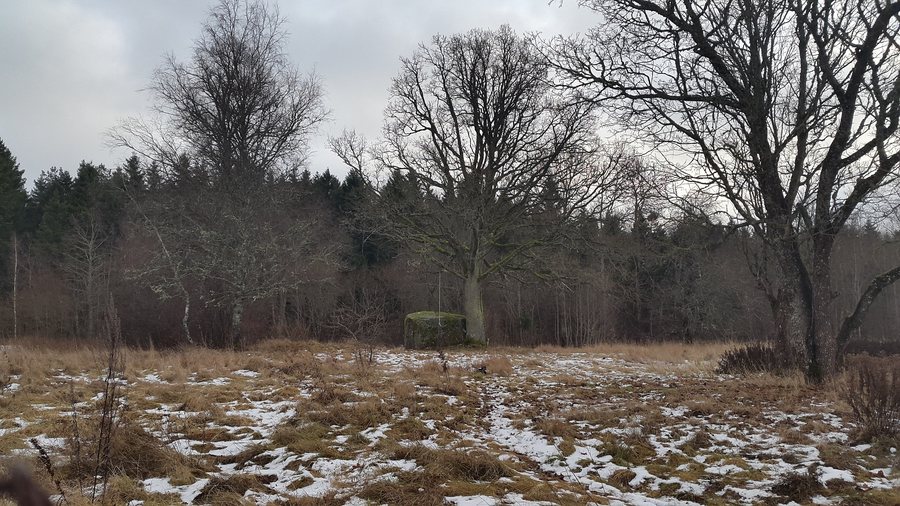 File:Luige tamm rändrahnuga, Aespa alevik, Kohila vald, Raplamaa.jpg
Photo: Toomas Rump via Wikimedia Commons, CC BY-SA 3.0 ee
File:Luige tamm rändrahnuga, Aespa alevik, Kohila vald, Raplamaa.jpg
Photo: Toomas Rump via Wikimedia Commons, CC BY-SA 3.0 ee
Kohila Municipality is characterised by several clearly recognisable karst areas. Around 44 % of its territory is forested, with spruce and pine predominating. Another distinctive landscape feature is the rare deciduous woodland growing on exposed limestone, known as alvar forests. The Rabivere Bog lies in the western part of the municipality and is considered a water reservoir.
The Keila River flows through Kohila in a south-east to north-west direction. It forms the axis of a river landscape of great historical and cultural significance. This combination makes Kohila interesting for travellers who do not want to view nature observation separately from regional history.
Which landscape forms characterise the destination?
The karst theme includes the Aandu Karst Area, a protected karst valley in Kohila Municipality. The Hageri Karst Area was established in 1959 to protect an approximately 300 m-long area with visible surface karst features. The two names refer to different specific landscape contexts: Aandu is defined as a protected valley, while Hageri is associated with a spatially limited area of visible surface karst features.
The forests also complement this picture. In addition to the predominant spruce and pine, Kohila has rare deciduous woodland growing on exposed limestone. The alvar forests thus add another landscape type to the regional perspective. Together with Rabivere Bog and the Keila River landscape, they create a natural profile that cannot be reduced to a single type of terrain.
Which cultural sites merit closer consideration?
The Hageri Museum presents the permanent exhibitions “Maa-apteek” and “Kihelkonnakeskus Hageri!”. Visitors can also play the traditional Kohila board game “Angerja aare” there. The two exhibitions and the game combine factual topics with more direct engagement on site, without requiring an exclusively historical approach.
Hageri is also home to St. Lambertus Church, a spacious, well-maintained historicist rural church designed by the architect Erwin Bernhardt. Its altar wall dates from 1713 and is attributed to Christian Ackermann and Johann Valentin Rabe. The church and altar wall thus represent two different periods: the historicist architecture of the church building and a considerably older furnishing element from the early 18th century.
Which historic buildings form part of the regional landscape?
The Angerja vassal castle was built in the 14th or 15th century and is one of the oldest stone buildings in Rapla County. At Loone Fortress (Lohu Jaanilinn), by contrast, the dimensions of the complex take centre stage: its courtyard covered a total of 6,500 m², while the rampart is 300 m long and up to 6 m high.
Kohila Manor also adds a long history of development to the destination. It was first mentioned in 1438. The Neoclassical main building was constructed at the beginning of the 19th century, burned down in 1905 and was subsequently rebuilt in an altered form without a portico. Its present appearance can therefore only be understood in conjunction with the architectural changes throughout its history. Kohila Manor is currently privately owned.
What connects Tohisoo with culinary enjoyment and events?
The modern TOHI Distillery gin distillery is located in the historic vodka distillery of Tohisoo Manor. During tours of TOHI Distillery, visitors can see how gin is made; a gin tasting is also offered.
The historic distillery of Tohisoo Manor in Raplamaa also contains modern event spaces. Tohisoo therefore represents not only a culinary theme, but also the combination of historic buildings and contemporary use. For your travel planning, this site can therefore be given a different emphasis from the karst areas, the bog or the history of churches and castles.
What facilities does the Kohila Sports Centre offer?
The Kohila Sports Centre has two sports halls, an athletics track, a gym and an aerobics hall. The facilities therefore accommodate various forms of indoor sports, strength training and athletics activities. The sports that can specifically be practised there are summarised in the FAQ section.
For regional orientation, in addition to Lohu, Urge and Kohila, you can also include Rapla, Märjamaa, Vigala, Järvakandi Vald and Käru in your further consideration.
FAQ
When is the Hageri Museum open?
The Hageri Museum is open Tuesday to Friday from 10 a.m. to 5 p.m. From April to September, it is also open on the first and third Saturdays from 10 a.m. to 2 p.m.
Which sports can you play at the Kohila Sports Centre?
Volleyball, basketball, football, tennis, badminton and floorball can be played at the Kohila Sports Centre.
What were the dimensions of Loone Fortress?
Loone Fortress (Lohu Jaanilinn) had a courtyard covering a total of 6,500 m². Its rampart is 300 m long and up to 6 m high.
Who currently owns Kohila Manor?
For the higher-level travel overview: Rapla.

