
Rapla Between Moorland and Cultural History
Accommodation in Rapla
Rapla combines bog landscapes, unusual natural formations and cultural sites with a variety of historical focuses. The Jõepromenaad in Rapla was completed in 2006 and is a popular place for walking. This makes the region suitable for both short stays and longer days spent exploring museums, hiking trails and natural landscapes.
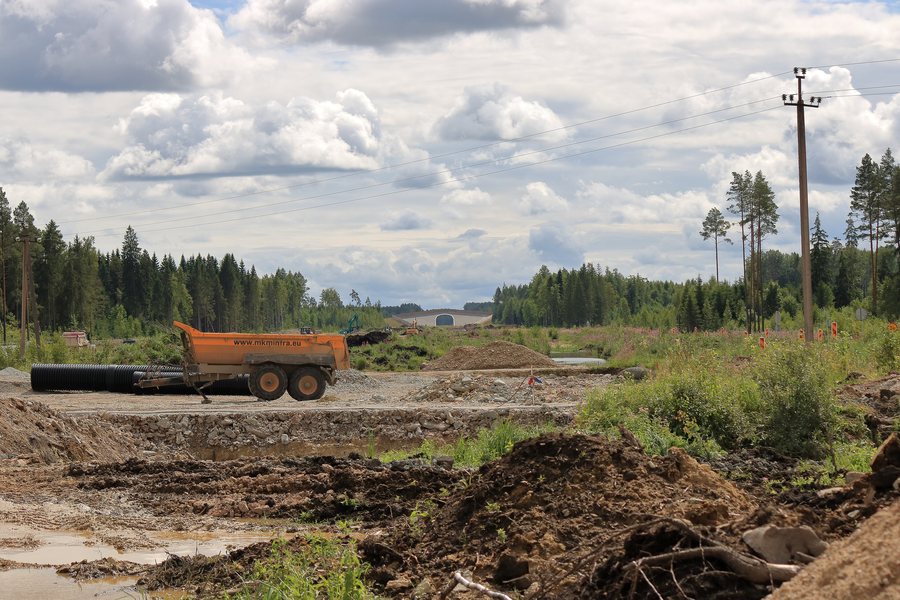 File:Construction of Rail Baltica in Rapla county, Estonia - July 2026 (1).jpg
Photo: Karljohan29 via Wikimedia Commons, CC BY-SA 4.0
File:Construction of Rail Baltica in Rapla county, Estonia - July 2026 (1).jpg
Photo: Karljohan29 via Wikimedia Commons, CC BY-SA 4.0
Among the defining natural attractions are the 2.2-hectare Mukri Lake, with its islets and water lilies, and Mukri Bog, which formed around 10,000 years ago and is one of Estonia’s oldest bogs. The Paluküla-Loosalu Nature Trail connects Hiiemäe, at 106 metres the highest peak in western Estonia, with the Loosalu bog island. The Kuimetsa karst area, with its collapsed valleys, sinkholes, hollows, channels and caves, also offers a distinctive type of landscape.
Which cultural sites reveal the history of the region?
The Varbola Stronghold was used from the 12th to the 14th century. Its inner bailey served as a cemetery from the 15th to the 17th century; the inner bailey covers about 2 hectares, while the rampart is approximately 580 metres long. The Mahtra Peasant Museum offers another insight into the past, with everyday objects and tools from the 19th century, as well as information about and events from the Mahtra War of 1858.
The Sillaotsa Farm Museum presents the life and customs of the Velise parish from the 19th century to modern times. It covers a 17-hectare site with nearly 200 different species of trees and shrubs. The Järvakandi Glass Museum focuses on the history of the glass industry in Järvakandi and Estonia. The first glass workshop in Järvakandi was established in 1879; today, the museum offers instruction in the fundamentals, methods and technologies of glassmaking and displays exhibits in a new exhibition building. Rapla Maarja-Magdaleena Church was built in 1901 and is Estonia’s only rural church with two towers.
Which nature experiences suit different types of travel days?
The Mukri Nature Trail leads to an 18-metre-high observation tower with views across the entire bog. In the Kuimetsa karst area, five caves are large enough to enter on foot; one of them is 12 metres long and 8 metres wide. These two destinations offer contrasting experiences: the bog is defined by panoramic views of the landscape, while the karst area reveals its formations and accessible cavities.
What should you consider when choosing your accommodation?
When choosing a hotel in Rapla, you can first compare it with the type of days you have planned. The Jalase Nature Trail is an approximately one-kilometre-long boardwalk through the Sõbessoo Bog to Lake Jalase and is accessible to wheelchair users and people with pushchairs. The Paluküla-Loosalu Nature Trail is a circular route of approximately 15 kilometres; allow 4 to 5 hours for the hike. At the Loosalu end, there is a campfire site and picnic area with firewood and a dry toilet.
The Atla-Eeru Tavern also offers a distinctive experience: it is the only surviving farm tavern in Estonia, and visitors can bake their own bread there. At the Sillaotsa Farm Museum, horseback rides or carriage rides are available by prior arrangement. The Rapla County section of the Follow the Water itinerary begins in Rapla County and includes a ride in a raft sauna on the Vigala River. These clearly different experiences can help you assess the location and type of accommodation according to your planned daily rhythm.
For further regional orientation: Rapla, Kehtna Parish, Vigala, Kuusiku, Saunaküla, Kastna, Märjamaa, Järvakandi Vald, Kohila, Käru, Käru, Kõrbja, Märjamaa and Rappel.
FAQ
How long is the Paluküla-Loosalu Nature Trail?
The circular route is approximately 15 kilometres long. Allow 4 to 5 hours for the hike.
Is the Jalase Nature Trail accessible with a pushchair?
Yes. The approximately one-kilometre-long boardwalk through the Sõbessoo Bog is accessible to wheelchair users and people with pushchairs.
What is included in the Follow the Water itinerary section?
The section begins in Rapla County and includes a ride in a raft sauna on the Vigala River.
For the higher-level travel overview: Estonia.

.jpg)