
Szajk: Churches, Chapels, and Harangvölgyi Promenade
Accommodation in Szajk
Szajk brings together several religious buildings from different centuries and the Harangvölgyi Promenade.
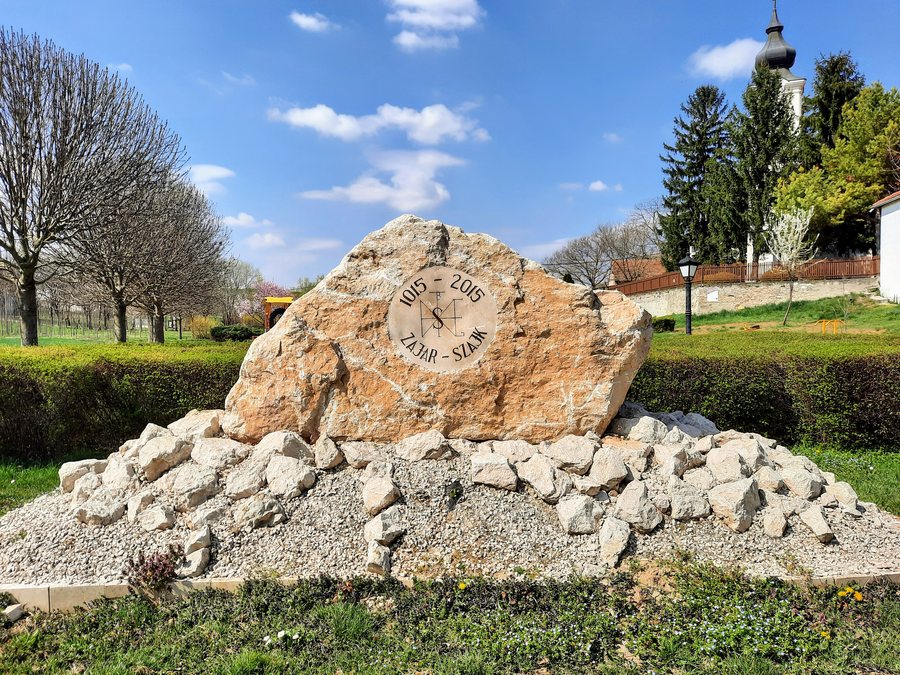
Quick facts about Szajk
- The Catholic church in Szajk was built in 1753 in honor of the Apostle Andrew.
- The Baroque cemetery chapel was dedicated to Saint Vendel in 1760.
- The Krisztus Feltámadása Chapel on Szajker Kálvária was built in 1861.
- The Harangvölgyi Promenade is also one of Szajk’s attractions.
Which buildings define Szajk?
The three religious buildings differ in when they were built and to whom they were dedicated. The Catholic church is dedicated to the Apostle Andrew. The Baroque cemetery chapel was dedicated to Saint Vendel; its dedication in 1760 should be distinguished from the construction of the church. The Krisztus Feltámadása Chapel stands on Kálvária and was built in 1861. A look at Szajk’s buildings therefore reveals three distinct sites with different names and historical dates.
If you are interested in church architecture and the history of religious sites, these dates provide a specific point of reference. The Harangvölgyi Promenade is another part of the local attractions. Together, these places show different facets of what visitors can discover in Szajk, without needing to be linked into a particular route.
What cultural attractions are there in the wider Baranya destination?
In the wider Baranya destination, Pécs broadens the cultural picture with the Early Christian Necropolis of Sopianae. Its 4th-century tombs include underground burial chambers and above-ground memorial chapels; the burial chambers are decorated with Christian wall paintings. Also in Pécs, the Zsolnay Cultural Quarter features the Golden Age of Zsolnay and Pink Exhibition displays, as well as an exhibition on the history of the family and the factory. These themes offer different points of interest for travelers interested in archaeological remains or the history of a family and its factory.
The children’s offerings at the Zsolnay Cultural Quarter include outdoor playgrounds, an interactive lab, a planetarium, the Bóbita Puppet Theatre, a ceramics painting workshop, and classes at the Hercules Workshop. The quarter’s outdoor area is freely accessible and free to use during opening hours. The wider Baranya destination therefore offers a choice of both exhibitions and hands-on, playful activities.
What nature and landscape experiences add to the options?
The Ős-Dráva Visitor Center near Szaporca combines an interactive exhibition with a farm demonstration area where farming practices are shown in a practical way. Three themed educational trails cover traditional farming, the Ős-Dráva Program, and the wildlife along the Drava. The farm area features native Hungarian domestic animals, including Hungarian Grey cattle, Mangalica pigs, and Hucul horses, as well as heritage sheep and poultry breeds. This provides a specific range of topics for anyone interested in farming and wildlife.
The wilderness trail along the Old Drava has a birdwatching and bird-ringing station, a lookout point, a photography hide, a covered activity area, and several rest stops. The Kikerics Panoramic Trail focuses on a different aspect: it allows visitors to move safely along the cliff edge while protecting the park’s plant life from trampling. At Nagyharsány Sculpture Park, the Art in Nature program includes a guided tour. These examples from the wider Baranya destination differ clearly in focus: birdwatching, protecting plant life, and art outdoors.
How do culture and local cuisine come together in Baranya?
In Villány’s cellar row, visitors can go from cellar to cellar and sample wines and food throughout the year. This adds a culinary focus to the museum and landscape themes. When weighing different interests in planning a trip, you can consider cultural visits, nature-related activities, and tastings as separate options in the wider Baranya destination.
Siklós Castle is also part of the wider Baranya destination. It is one of Hungary’s best-preserved military complexes and also one of the country’s most significant Renaissance buildings. Modernization of the museum wing made the Gothic section, previously inaccessible to visitors, accessible. Alongside its Renaissance significance, the castle therefore offers a glimpse into a Gothic part of the complex.
What should you consider when searching for hotels in Szajk?
When searching for hotels in Szajk, you can first consider which themes matter for your trip: the local religious buildings, other cultural attractions, or nature and landscape experiences in the wider Baranya destination. Compare hotels based on the details and conditions that matter for your trip.
Discover more destinations: Majs, Somberek, Mohács, Erdősmárok, Hímesháza, Görcsönydoboka, Bóly and Palotabozsok.
FAQ
What historic buildings are there in Szajk?
The Catholic church was built in 1753 in honor of the Apostle Andrew. The Baroque cemetery chapel was dedicated to Saint Vendel in 1760, and the Krisztus Feltámadása Chapel on Kálvária was built in 1861.
What attractions does Szajk have besides its religious buildings?
The Harangvölgyi Promenade is also one of the attractions in Szajk.
What different experiences does the wider Baranya destination offer?
The options mentioned include cultural attractions in Pécs, educational trails and wildlife observation around the Ős-Dráva Visitor Center, Nagyharsány Sculpture Park, and wine and food tastings in Villány.
See the wider travel overview: Mohácsi.

