
Jászszentandrás: Thermal Bath, Culture and History
Accommodation in Jászszentandrás
Jászszentandrás combines thermal waters, cultural history and an annual event. These different aspects of the town can help you choose what to focus on when planning your trip: perhaps art and local history, the bath, or a visit around the start of the season.
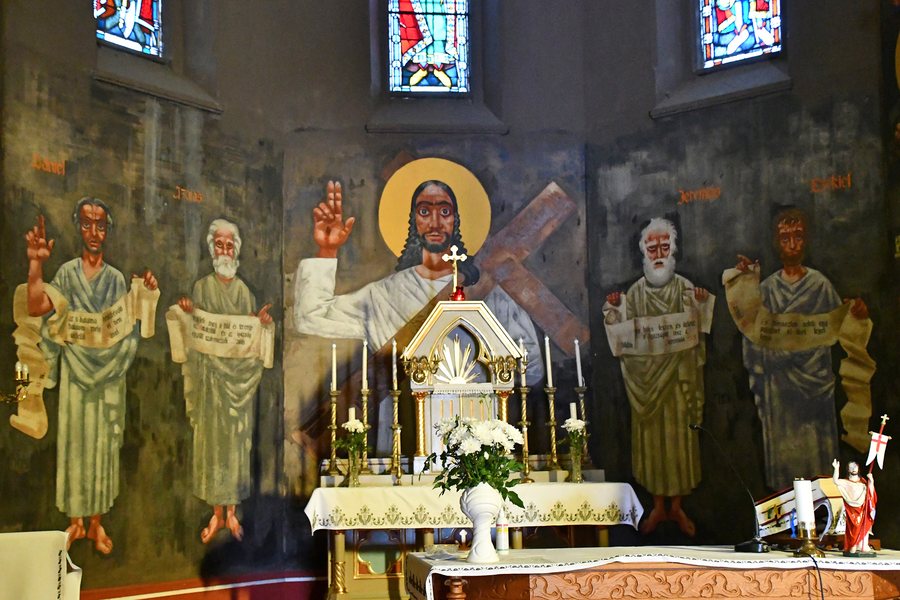 File:Jászszentandrás, római katolikus templom belső tere 2021 04.jpg
Photo: Pasztilla aka Attila Terbócs via Source, CC BY-SA 4.0
Quick facts about Jászszentandrás
- The Tájház is housed in the former Szent József elemi népiskola and contains an ethnographic collection.
- The frescoes in the Roman Catholic church were created in 1933 by Aba-Novák Vilmos and Chiovini Ferenc.
- The Jászszentandrási Nemzetközi Rendőrszövetség-emlékpark was handed over in 2000.
- The bath has a three-lane slide, which was handed over in 2008.
- The Magyar Szarvasgombász Szövetség holds its annual season-opening event in Jászszentandrás.
What shapes the town’s culture and history?
The Jászszentandrási tájház is located in the building of the former Szent József elemi népiskola. It houses an ethnographic collection. The combination of a former school building and a collection gives the house a distinctive local history: it preserves both the building’s former use and ethnographic materials under one roof.
The frescoes in the Roman Catholic church offer a different cultural perspective. They were created in 1933 and painted by Aba-Novák Vilmos and Chiovini Ferenc. Together with the ethnographic collection, they offer a glimpse of different subjects, from folk heritage to religious art.
The memorial park also tells a specific story of its origins. The Jászszentandrási Nemzetközi Rendőrszövetség-emlékpark was handed over in 2000; its creation is attributed to local resident Stuchlik László. The statue there depicts the association’s founder, Arthour Troop. Visitors interested in memorial sites will find here both a connection to the park’s origins and to the person commemorated by its statue.
What is known about the bath and its surroundings?
Thermal water was discovered underground in Jászszentandrás in the 1960s. The bath’s iron-rich thermal water is considered suitable for treating rheumatic conditions and musculoskeletal disorders. This information is not individual medical advice.
For families, the three-lane slide is a clearly stated feature: it was handed over in 2008 and provides summer entertainment for children. Before your trip, check which bathing facilities are available for your dates. The bath is set in a spacious, well-kept park with scattered trees. A campsite is located right next door. If you are considering staying there, confirm its current availability in advance.
What travel opportunities does the annual event offer?
The Magyar Szarvasgombász Szövetség’s annual season-opening event is a recurring occasion in Jászszentandrás. Check the specific event date before planning your trip around it. This lets you consider the event as a possible focus in its own right, alongside the bath and cultural history, without linking it to a particular travel period.
Discover more destinations: Jászberény, Jászalsószentgyörgy, Jászdózsa, Jásztelek, Jászárokszállás, Jászboldogháza and Jászapáti.
FAQ
Where is the ethnographic collection located?
The Jászszentandrási tájház is housed in the former Szent József elemi népiskola building and contains the collection.
What is special about the slide at the bath?
The three-lane slide was handed over in 2008 and is intended to provide summer entertainment for children. Before your visit, check which bathing facilities are currently available.
Is there an annual season-opening event in Jászszentandrás?
Yes. The Magyar Szarvasgombász Szövetség holds its annual season-opening event in Jászszentandrás. Check the specific date before your trip.
Will the campsite next to the bath be available for my dates?
The campsite is located next to the bath. Confirm its current availability before planning an overnight stay.
Go to the overview of the wider area: Jászberényi.

