
Drégelypalánk: Church, Traditions and Hiking Trail
Accommodation in Drégelypalánk
Drégelypalánk brings together Baroque architectural history, living traditions and a hike along the Apródok útja educational trail towards Drégelyvár. Church and festival traditions are paired with a specific route option. Visiting the relic of Saint Elizabeth requires prior arrangement.
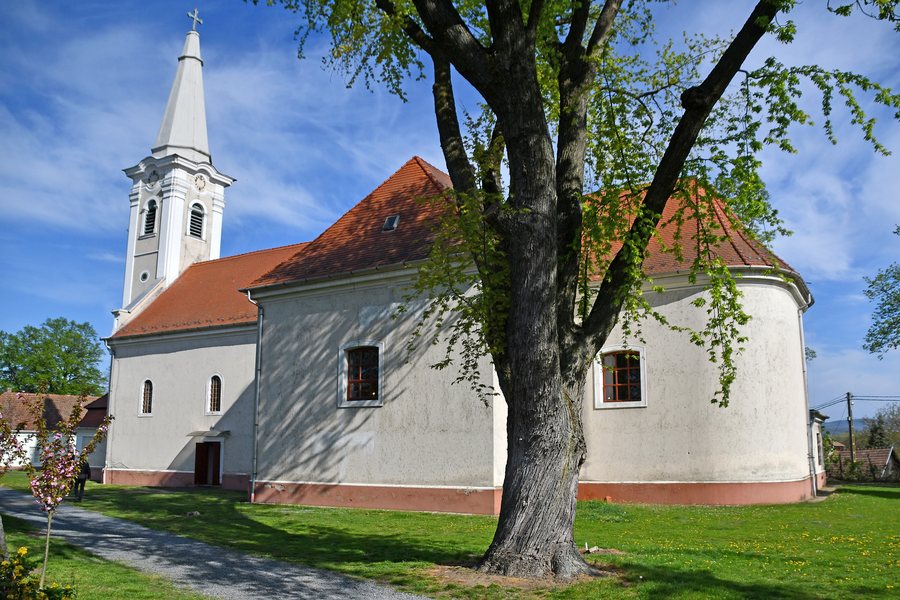 File:Drégelypalánk, római katolikus templom 2026 04.jpg
Photo: Pasztilla aka Attila Terbócs via Wikimedia Commons, CC BY-SA 4.0
Drégelypalánk at a glance
- The Baroque church was rebuilt in 1792 on the site of a church built in 1658.
- A bone fragment of Saint Elizabeth is kept in its reliquary; the relic can be viewed by prior arrangement.
- Living traditions include, among others, the spring-welcoming kiszézés, harvest processions and Christmas nativity plays.
- You can hike from the village centre towards Drégelyvár along the Apródok útja educational trail.
- Drégely Castle stands on a 444-metre-high rocky peak in the northern Börzsöny and is equidistant from Drégelypalánk and Nagyoroszi.
- The Holy Trinity statue in Drégelypalánk was erected in 1762.
Which traditions shape Drégelypalánk?
The living traditions include various festivals and community customs. These include carnival celebrations, the spring-welcoming kiszézés and Easter egg painting, as well as pünkösdke-járás, harvest processions and the vendégségi búcsú. Christmas nativity plays and Szentcsalád-járás are also part of the tradition.
The customs are spread across different occasions throughout the year. The festivals mentioned give you an idea of the range, but individual dates may vary. If you want to experience a particular festival, don’t plan based on its name alone; check the date in advance.
What do the church and religious heritage tell us?
The Baroque church was rebuilt in 1792 on the site of an older place of worship built in 1658. These dates distinguish the history of the present church building from that of its predecessor. The Holy Trinity statue in Drégelypalánk also has its own historical date: it was erected in 1762.
A distinctive feature of the church’s heritage is the reliquary containing a bone fragment of Saint Elizabeth. The relic can be viewed by prior arrangement. Keep this condition in mind when planning; it applies to viewing the relic and should not be confused with the historical dates of the church building.
How does the trail lead towards Drégelyvár?
You can hike from the village centre towards Drégelyvár along the Apródok útja educational trail. Alongside local cultural attractions, this offers a route that starts in the village and heads towards the castle hill.
Drégely Castle is located on a 444-metre-high rocky peak in the northern Börzsöny. The castle is equidistant from Drégelypalánk and Nagyoroszi. For orientation, the key details are the starting point in the village centre and the direction towards Drégelyvár.
What cultural attractions are there in the wider destination of Neuburg?
If you look beyond the wider destination of Neuburg, you’ll find other cultural attractions in different places. Hollókő is a Palóc settlement in Nógrád County in northern Hungary and a deliberately preserved, living example of rural life before the 20th-century agricultural revolution. This glimpse of a living settlement culture differs from the museum-based insights available elsewhere.
In Csesztve, the permanent exhibition at the Madách Imre Memorial House focuses on the history of the Madách family and on Az ember tragédiája. The permanent literary history exhibition at the Mikszáth Kálmán Memorial Museum in Horpács is titled “MIKSZÁTH”. In Pásztó, the permanent and temporary exhibitions of the Pásztó Museum are housed in a Baroque Cistercian monastery building that was rebuilt in 1717–1718.
The Pásztó Museum also presents a medieval glassworks and blacksmith’s workshop as an open-air exhibition. They are considered a unique industrial heritage monument in Hungary. Together, these examples show different ways to experience culture in the wider destination of Neuburg: a living Palóc settlement, literary exhibitions and an archaeological open-air attraction.
If you’d like to discover more destinations: Bercel, Szanda, Terény, Hont, Balassagyarmat, Érsekvadkert, Nógrádmarcal and Szügy.
FAQ
When was the Baroque church rebuilt?
It was rebuilt in 1792 on the site of a church built in 1658.
How can you view the relic of Saint Elizabeth?
A bone fragment of Saint Elizabeth is kept in the church reliquary. The relic can be viewed by prior arrangement.
What leads from Drégelypalánk towards Drégelyvár?
You can hike from the village centre towards Drégelyvár along the Apródok útja educational trail.
To the wider travel overview: Balassagyarmati.

