
Discover Szügy: Village Museum and Architectural Heritage
Accommodation in Szügy
Szügy brings together a layered local history, a village museum, a Baroque church and distinctive places of remembrance. Its stories range from Slovak dishes and traditional living to playfully designed experiences.
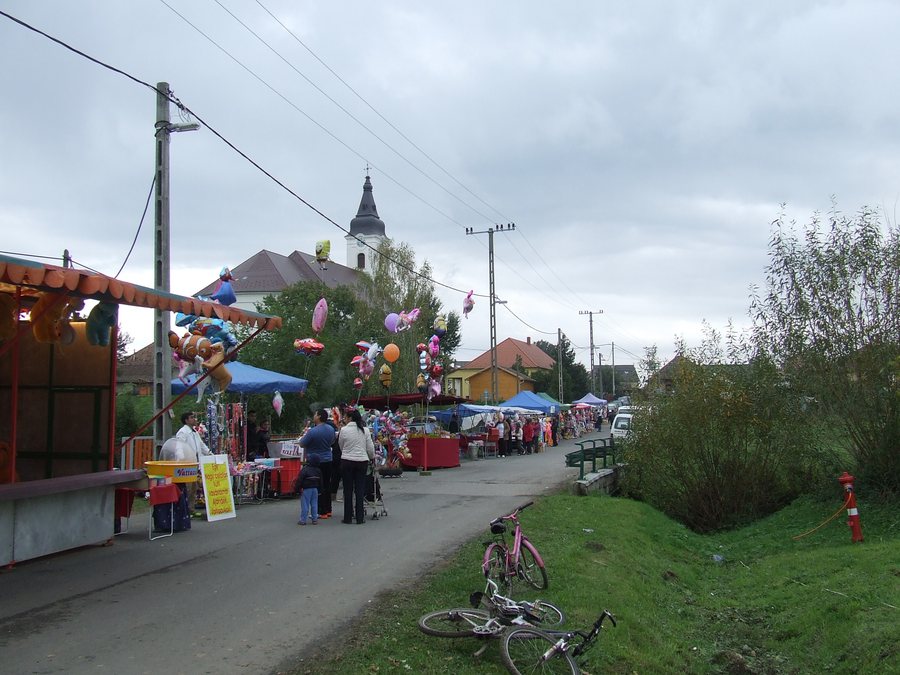
Szügy at a glance
- The Evangelical church was built in the Baroque style from 1774 to 1781 and is a protected monument.
- The village museum features a traditional home and preserves more than 600 registered items, including dolls in folk costumes.
- Simonyi Castle was built in 1755 in the Late Baroque style; its park is protected as a nature reserve and is described as privately owned.
What architectural history can you discover in Szügy?
The Evangelical church tells a story of resilience after repeated destruction: it burned down in 1795, 1823 and 1844, and was rebuilt each time. Notable interior details include a small bell from the 12th century and a spacious gallery supported by four columns. The construction period from 1774 to 1781 and the Baroque style also place the building within a clearly defined era.
Other places commemorate people and events from the local history. On the square in front of the former county hall stands a monument by Attila Bobály to the victims of the First and Second World Wars from the surrounding area. In the cemetery in Alsó-Szügy, the funerary chapel built by Éva Merwaldt in 1799 over the grave of her husband, Sámuel Beniczky, can now be seen only as a ruin; it has been declared a monument. The Hanzély crypt on Béke Street, in front of the new cemetery, was built in the 1890s for László Hanzély and his wife.
Simonyi Castle also represents a specific period of construction: the Simonyi family had it built in 1755 in the Late Baroque style. The protected park, described as privately owned, is home to a red-flowering magnolia six metres tall, with a crown five metres wide, as well as two giant sequoias from California. The castle and its park offer a shared perspective on architecture and trees.
What can you learn about everyday life and cuisine at the village museum?
The Szügyi Falumúzeum house consists of a living room, a kitchen, a back room and a cellar. The property also includes a shed where farm tools were kept. The exhibition therefore offers insights not only through individual objects, but also through the layout of a traditional home. The collection comprises more than 600 registered objects, including dolls in folk costumes; the number of items may change over time.
One special item in the collection is the bride doll: her fringed shawl is nearly 100 years old, and her myrtle wreath is original. In the village museum courtyard, visitors can sample traditional Slovak dishes and take an active part in preparing them. Check current visiting and participation options before your trip.
What experiences were presented for Szügyelő?
Several Szügyelő experiences were presented on 24 September 2026. The presentation described the following format for the Felfedező Gallery at the Szügyelő Élmény turistaház: participants moved among hanging image banners, answered questions and then solved the game using letters. The six-pointed Palóc Virág was described as a playful way of sharing local values. The Esszencia Őrző was described as a shared time capsule in which thoughts, messages and good wishes could be placed in small recycled glass vials.
The presentation described the three Névőrző trees—Álmok, Közösség and Természet Őrzője—as an opportunity to symbolically become part of the Szügyelő story. The nature experience was presented as a task involving three stations with playful riddles. In the task as described, the answers formed the code for a treasure chest at the viewpoint; the code could be used to open the chest, and participants could take small gifts. These experiences differ in whether they are based on questions, personal messages or a riddle trail.
Discover more destinations: Nógrádmarcal, Csitár, Érsekvadkert, Szanda, Balassagyarmat, Terény, Drégelypalánk, Bercel.
FAQ
When was the Evangelical church in Szügy built?
It was built in the Baroque style between 1774 and 1781 and is a protected monument. It was rebuilt after fires in 1795, 1823 and 1844.
What can visitors do in the village museum courtyard?
Visitors can sample traditional Slovak dishes there and take part in preparing them. Check current visiting and participation options in advance.
How does the puzzle work in the Szügyelő nature experience?
At the presentation on 24 September 2026, the nature experience was described as follows: tasks at three stations provided letters for the code to a treasure chest at the viewpoint. The code could be used to open the chest, and participants could take small gifts.
For the broader travel overview: Balassagyarmati.

