
Discover Pásztó
Accommodation in Pásztó
Pásztó combines the history of its monastery and town with museums, a watermill and the traditions of its districts.
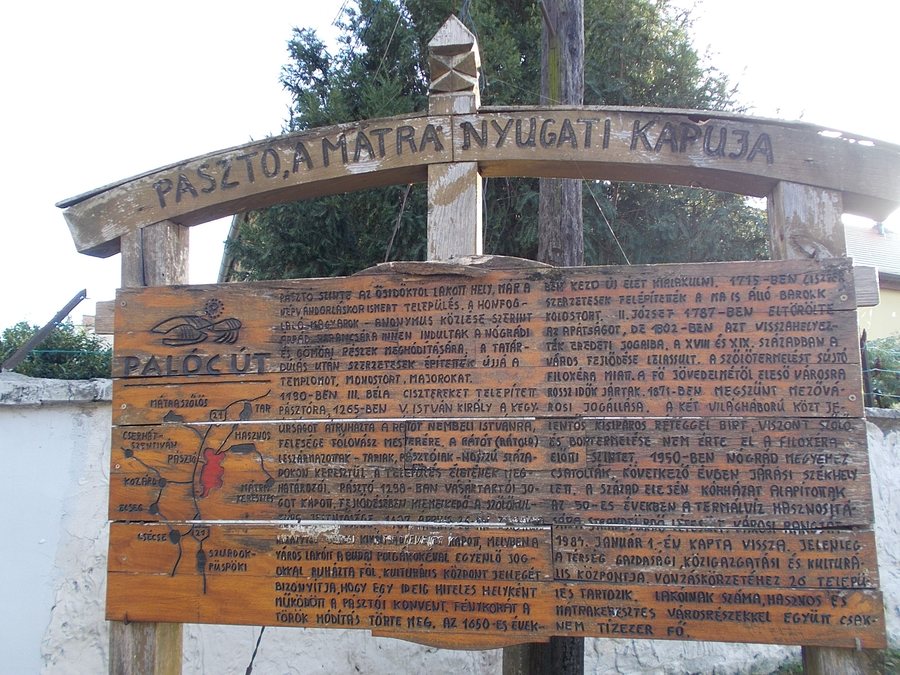 File:Deák Ferenc Straße, 'Pásztó, das Westtor von Mátra' und 'Palóc-Straße' Tafel, 2023 Pásztó.jpg
Photo: Globetrotter19 via Source, CC BY-SA 4.0
File:Deák Ferenc Straße, 'Pásztó, das Westtor von Mátra' und 'Palóc-Straße' Tafel, 2023 Pásztó.jpg
Photo: Globetrotter19 via Source, CC BY-SA 4.0
Pásztó at a glance
- The former Cistercian monastery was built between 1715 and 1720 on the foundations of the medieval monastery.
- The Scola magister, or Oskolamester háza, is Hungary’s only surviving burgher house in a market town; a document mentions it as early as 1428.
- Hasznos is home to a Catholic church dating from the 15th century, including its buttressed choir.
- Mátrakeresztes is known for its hiking trails and the handcraft and machine production of wooden spoons.
What traces of the town’s history can you discover?
The former Cistercian monastery in Pásztó brings together several strands of history in one place: it was built between 1715 and 1720 using the foundations of the medieval monastery. The building houses the local history museum and a memorial room for Rajeczky Benjámin, a musicologist and the last prior of Pásztó. The monastery complex thus brings together the history of its architecture and the memory of a figure from religious and musical life.
The Scola magister, also known as Oskolamester háza, offers another view of the past. This surviving burgher house represents the architectural history of a market town; a document mentions it as early as 1428. Nearby, medieval ruins of the Cistercian church, a glassworks and a forge have been turned into open-air exhibition sites. The forge is considered a unique industrial heritage monument in Hungary. These places highlight different aspects: residential and settlement history sit alongside crafts and the industrial past.
What can you see at the museum, gallery and mill?
The Csohány Kálmán Gallery is dedicated to the life and graphic and ceramic works of the artist Csohány Kálmán. He was from Pásztó and received the Munkácsy Prize twice. The layout of the exhibition also offers a tangible way to explore his work: the first room displays works directly connected to his birthplace, while the second features his graphic series.
A permanent exhibition at the Szalay Mill traces the mill’s almost thousand-year history and its importance as a key site in medieval Pásztó, a trading centre. The watermill, fully restored in 2021 and operational, welcomes visitors. If you plan a visit, check the current visitor arrangements beforehand. The mill’s history and the practicalities of visiting today are two separate matters: the exhibition describes the site’s long development, while the mill is also presented as a visitor attraction.
What makes the districts distinctive?
Hasznos and Mátrakeresztes are part of Pásztó and add their own themes to the impressions of the historic town centre. The Catholic church in Hasznos was built in the 15th century; its buttressed choir dates from the same period. Those interested in medieval religious architecture will find a clearly defined point of interest here.
Mátrakeresztes is known for its microclimate, beautiful hiking trails and wooden spoon production. Local craftsmanship includes both handcrafting and machine production and draws on the area’s proximity to the forest. This offers a different perspective on the region: alongside architectural and museum history, the focus here is on the landscape and craft traditions. Wooden spoon production is described as a local tradition; no workshop visit is associated with it.
How can you choose the focus of your stay?
To plan your stay, you can first decide which topics interest you most: the history of the monastery and town, art, the history of the mill or the traditions of the districts. The places and exhibitions mentioned offer different points of interest, without requiring you to combine every theme. Check the watermill’s current visitor arrangements in advance.
Discover more destinations: Felsõtold, Kozárd, Vanyarc, Garáb, Szurdokpüspöki, Alsótold, Buják and Bér.
FAQ
What is the Scola magister?
The Scola magister, also known as Oskolamester háza, is Hungary’s only surviving burgher house in a market town. A document mentions it as early as 1428.
What can you see at the Csohány Kálmán Gallery?
The gallery presents the life and graphic and ceramic works of the artist, who was from Pásztó. The first room displays works directly connected to his birthplace, while the second features his graphic series.
What is known about the Szalay watermill?
Its permanent exhibition covers the mill’s almost thousand-year history and the site’s importance in medieval Pásztó, a trading centre. The mill, fully restored in 2021 and operational, welcomes visitors; check the current visitor arrangements before your trip.
For the broader travel overview: Pásztó District.

