
Discover Pusztazámor
Accommodation in Pusztazámor
Pusztazámor lies at the foot of Zámor Hill, between hills and the Érd Plateau. If you would like to combine landscape and architectural history when planning your trip, you will find tangible points of interest here, from a Baroque hermitage to a garden park just outside the village boundary.
Pusztazámor at a glance
- The village lies on both sides of the Zámori Stream, at the foot of Zámor Hill.
- The Zámor Hill Hermitage is a Baroque monument complex with a bell house and monks’ cells.
- Barcza Castle lies about half a kilometer outside the village boundary.
What characterizes the landscape around Pusztazámor?
The location is associated with several clearly identifiable landscape features: Pusztazámor lies at the foot of Zámor Hill and on both sides of the Zámori Stream. The village is situated between the hills of Etyek and the Érd Plateau. This geographical context helps you locate Pusztazámor on a map without conflating its different landscape features.
What architectural history does the Zámor Hill Hermitage tell?
The Zámor Hill Hermitage, located in Pusztazámor’s cemetery, brings together architectural forms from different periods. Mihály Mentler, chief magistrate of Nagyszombat, had the chapel built in 1758. After Ottoman rule, he had the village resettled. Remains of a 13th-century Romanesque church were used in the construction of the hermitage: the church was horseshoe-shaped and measured 11 meters long and 6.5 meters wide. The older church and the later chapel are thus part of a specific architectural history that can be traced through their location and dimensions.
The complex also includes a bell house built next to the chapel and monks’ cells, which together form an architectural unit with the hermitage. It is regarded as a distinctive Baroque monument complex. Pusztazámor’s community bell tower stands separately: it was built in 1930 to mark the 900th anniversary of the death of Saint Prince Imre. For travelers planning a trip around particular interests, this offers two distinct points of interest: the hermitage’s architectural unity and the bell tower’s own history.
What other historic places and details are worth exploring?
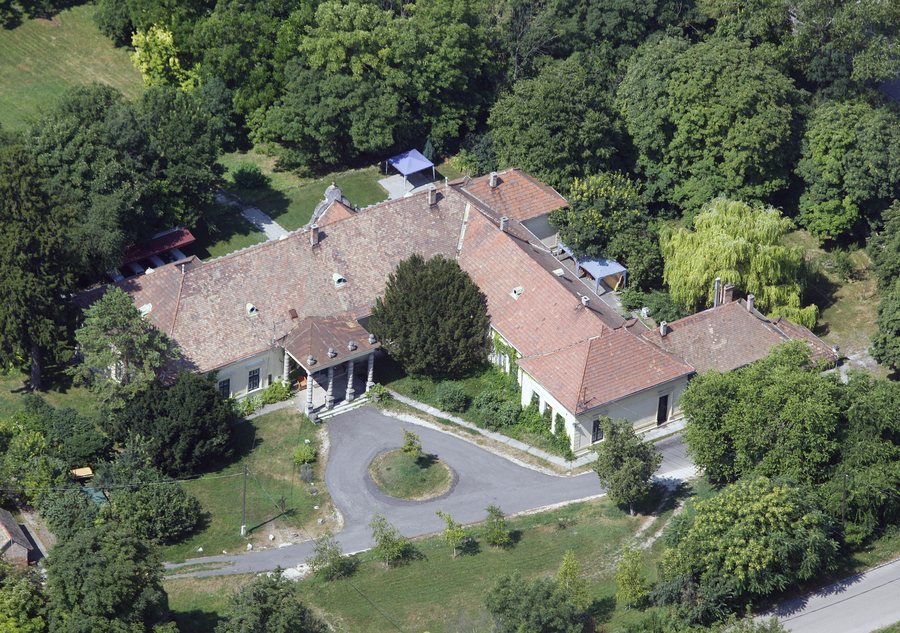
Barcza Castle lies about half a kilometer outside the village boundary, on the right bank of the Zámori Stream. It stands in a three-hectare old park laid out like an arboretum. At the end of the main clearing is a small pond; opposite it, on a small peninsula, stands a classically styled garden pavilion. The terrace, open toward the garden, offers a view of the pond. If you would like to include the castle in your plans, check access before visiting.
A votive cross and a chapel statue also each tell their own story. The Barcza Imre Meadow Votive Cross was erected in 1926 by landowner Imre Barcza to commemorate the birth of his son and the full recovery of his wife, Henriette Széchenyi. The auxiliary chapel in Pusztazámor contains a white marble statue of Christ, made in Venice in the last century. Together with the hermitage and bell tower, these historic points of interest span the remains of a 13th-century church to a cross dating from 1926.
How do you choose suitable accommodation?
If you are looking for a hotel, compare options according to the interests that bring you to Pusztazámor: its setting by the stream, its architecture, or the garden park outside the village boundary. Compare the location details for each listing with your own plans; details about specific accommodation and availability are provided during the booking process. This keeps your choice aligned with your intended itinerary, rather than inferring unverified accommodation features from the sights.
Discover more destinations: Budajenő, Telki, Törökbálint, Páty, Budakeszi, Biatorbágy, Sóskút and Herceghalom.
FAQ
Where is Pusztazámor?
Pusztazámor lies at the foot of Zámor Hill on both sides of the Zámori Stream, between the hills of Etyek and the Érd Plateau.
What is special about the Zámor Hill Hermitage?
The chapel, built in 1758, was constructed using the remains of a horseshoe-shaped 13th-century Romanesque church. The hermitage, bell house, and monks’ cells form an architectural unit.
Is Barcza Castle within Pusztazámor?
No. The castle lies about half a kilometer outside the village boundary. Check access before planning a visit.
Go to the overview of the wider region: Budaörs.

