
Monor
Accommodation in Monor
Monor brings together themes that can help shape your travel plans: Hungarian viticulture, two churches with different architectural features, and a lookout point with views of Monor and the surrounding area. You can consider whether you would like to focus your stay on viticulture and scenery, church architecture, or a panoramic view.
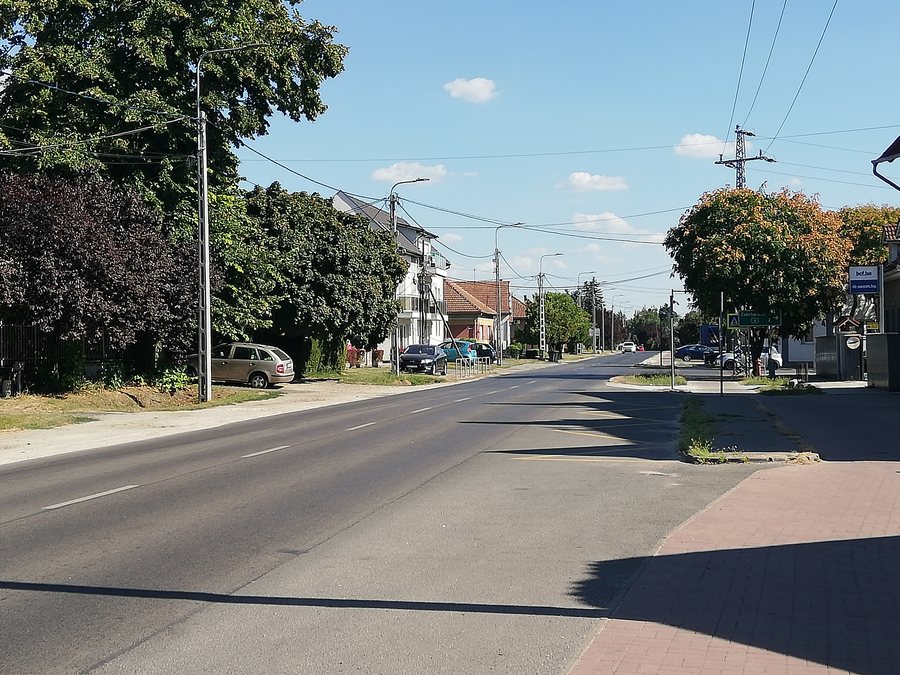 File:Monor főutcája a gombai elágazástól kelet felé nézve 20240809 160003(1).jpg
Photo: Solymári via Source, CC0
File:Monor főutcája a gombai elágazástól kelet felé nézve 20240809 160003(1).jpg
Photo: Solymári via Source, CC0
Key facts about Monor
- The Ezer Pince Szőlészeti és Borászati Tanösvény opened in 2009 in Monor’s wine cellar village.
- The Reformed Great Church, at the corner of Kossuth L. út and Bocskai utca, is Monor’s oldest building.
- The Roman Catholic Nagyboldogasszony Church was consecrated in 1806; it has a single nave and is late Baroque.
- The Strázsahegyi kilátó has three viewing levels.
What can you learn about viticulture and the surrounding area?
The Ezer Pince Szőlészeti és Borászati Tanösvény introduces visitors in an engaging way to the fundamentals of Hungarian viticulture and oenology. It also covers Hungarian grape varieties with Hungarikum status, as well as natural and architectural monuments in the area around Monor. The educational trail therefore covers several topics: viticulture and wine knowledge alongside regional grape varieties and features of the surrounding area.
Which churches shape the townscape?
The Reformed Great Church is Monor’s oldest building. It stands at the corner of Kossuth L. út and Bocskai utca. Its significance as a landmark in Monor comes from its status as the oldest building and its specific location at this street corner. Visitors interested in a place’s history and architecture can consider it a distinct point of interest alongside the educational trail and lookout point.
The Roman Catholic Nagyboldogasszony Church is a different architectural landmark: it has a single nave and is late Baroque. It was consecrated in 1806 and also has a centrally positioned tower. Its design, style, consecration, and tower are clear features that distinguish it from the Reformed Great Church. Together, the two churches illustrate different aspects of Monor’s architectural history without needing to be treated as a single architectural ensemble.
What views does the Strázsahegyi kilátó offer?
The Strázsahegyi kilátó has three viewing levels. From there, you can see the wine cellar village, Monor, surrounding settlements, and the Buda Hills. On a clear day, the Northern Hungarian Mountains are also visible in the distance. The view therefore extends from the nearby sights named here to more distant landscapes; clear weather is specifically necessary to see the Northern Hungarian Mountains.
The lookout offers a different way to explore your interests than the educational trail or the churches: the focus here is on views of places and landscapes. Its three levels and the sights mentioned above are the destination’s main features. If you are weighing up different interests for your stay while looking for a hotel in Monor, viticulture, church architecture, and views can help guide your choice as separate themes, without implying that any of them require a particular accommodation or location.
For other destinations to compare, see Gyömrő, Vecsés, Ecser, Gomba, Vasad, Maglód, Nyáregyháza and Pilis.
FAQ
What does the Ezer Pince Szőlészeti és Borászati Tanösvény cover?
It covers the fundamentals of Hungarian viticulture and oenology, Hungarian grape varieties with Hungarikum status, and natural and architectural monuments in the area around Monor.
Which church is Monor’s oldest building?
The Reformed Great Church at the corner of Kossuth L. út and Bocskai utca is Monor’s oldest building.
What can you see from the Strázsahegyi kilátó?
You can see the wine cellar village, Monor, surrounding settlements, and the Buda Hills. On a clear day, the view also reaches the Northern Hungarian Mountains in the distance.
For the broader travel overview: Monori.

.jpg)