
Discover Nyáregyháza
Accommodation in Nyáregyháza
The Nyáry-kúria is considered the first known castle of the Nyáry family; Nyáry Pál began construction of the Mannó-kastély in 1844. The former Wekerle-kúria was built in the neoclassical style in 1830.
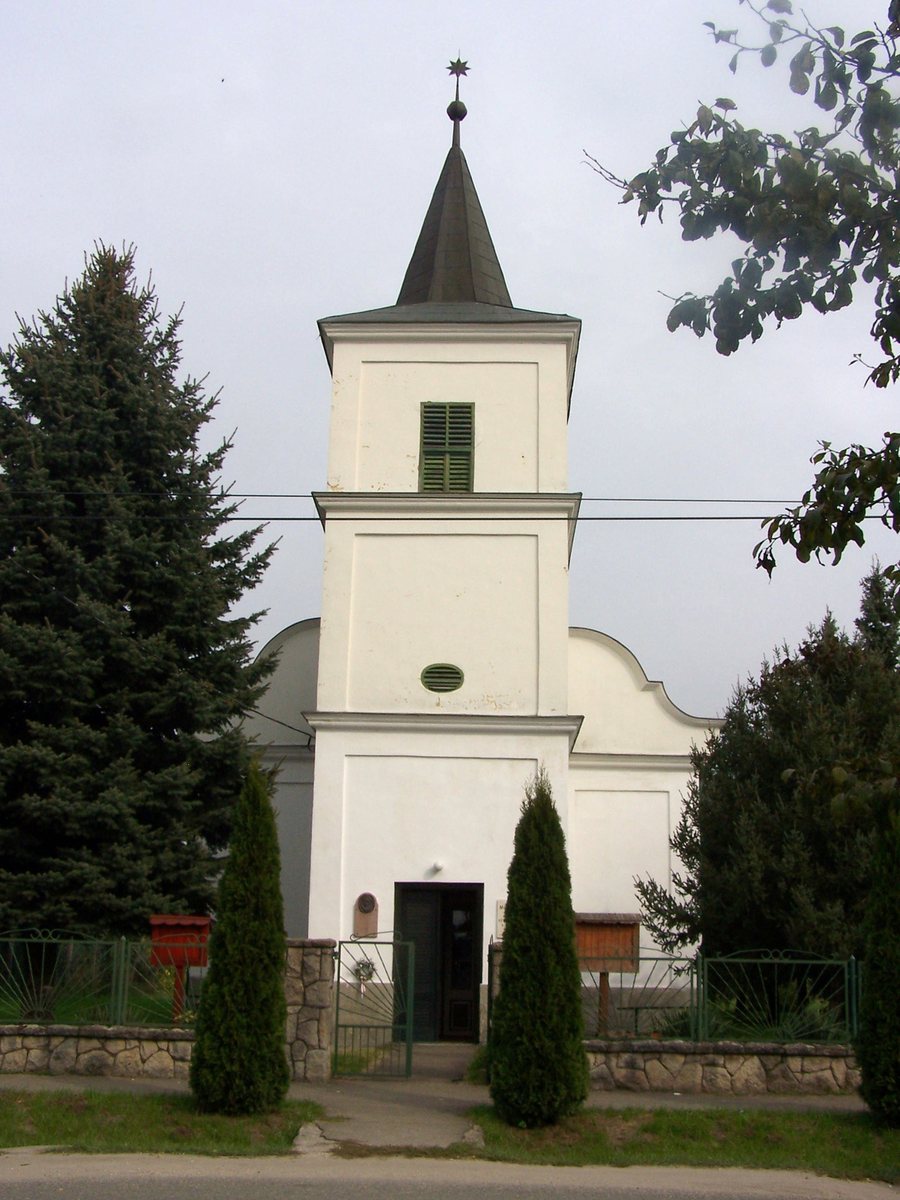 File:Református templom (7188. számú műemlék).jpg
Photo: rlevente via Wikimedia Commons, CC BY-SA 2.5 hu
File:Református templom (7188. számú műemlék).jpg
Photo: rlevente via Wikimedia Commons, CC BY-SA 2.5 hu
Nyáregyháza at a glance
- The statue of Schodelné Klein Rozália stands in front of Nyáry Pál Általános Iskola.
- The Roman Catholic church was consecrated and blessed on 21 August 2001 in honour of “Két Szív”.
- The tower of this church is 30 metres high and houses three bells.
- The church built jointly by the Reformed and Lutheran congregations was consecrated in 1892.
- The Nyáry estates and the exhibition add further cultural and historical themes to the churches.
Which chapters of local history interest you?
The religious buildings can be viewed through their different dates. The church built jointly by the Reformed and Lutheran congregations was consecrated on 18 September 1892. The Roman Catholic church was consecrated and blessed on 21 August 2001 in honour of “Két Szív” by Ferenc Keszthelyi, Bishop of the Diocese of Vác. These dates refer to two distinct historical events and should not be conflated into a single building history.
The statue of Schodelné Klein Rozália is also part of the picture of local cultural history: it stands in front of Nyáry Pál Általános Iskola. Together with the churches, it opens up different themes, from a specifically named commemorative statue to religious buildings and their consecration histories. The 30-metre-high tower of the Roman Catholic church, with its three bells, adds a striking architectural detail to these historical milestones.
How do the Nyáry-kúria and the Mannó-kastély differ?
The construction details for the two Nyáry estates begin at different points. The Nyáry-kúria is considered the family’s first known castle and was built in the late 18th century. Nyáry Pál began construction of the Mannó-kastély in 1844. The former Wekerle-kúria was built in the neoclassical style in 1830. The dates therefore relate to different kinds of information—a rough construction period, the start of construction, and a specific year of construction.
If you are interested in architecture, this distinction helps you avoid treating the three entries as equivalent dates. For the Nyáry-kúria, the focus is on its place in the family’s history; for the Mannó-kastély, on the start of the work; and for the Wekerle-kúria, on the combination of year and style. This turns the brief date references into a guide to the topics you may want to explore when planning your trip.
What does the exhibition history include?
The “Ezredvég Múzeum és Babagyűjtemény” exhibition opened in the former town hall in November 2010. It includes artworks created or collected by the artist herself, as well as folk objects. This exhibition adds a collection perspective to the history of the buildings and churches: here, the focus is on works and objects rather than buildings and historical dates.
These different themes give you a simple starting point for planning your own trip. Consider whether you are most interested in the history of the churches, the Nyáry buildings or the contents of the exhibition. Keeping these focuses distinct can help you clarify your expectations for a stay and connect your accommodation search with your personal interests, without assuming any particular location or amenities.
Discover more destinations: Pilis, Gomba, Maglód, Vecsés, Vasad, Monor, Gyömrő, Ecser.
FAQ
When was the Roman Catholic church consecrated?
It was consecrated and blessed on 21 August 2001 in honour of “Két Szív”.
What is known about the Nyáry estates?
The Nyáry-kúria was built in the late 18th century; Nyáry Pál began construction of the Mannó-kastély in 1844.
What does the “Ezredvég Múzeum és Babagyűjtemény” exhibition include?
It includes artworks created or collected by the artist herself, as well as folk objects.
To the parent travel overview: Monori.

.jpg)