
Kaposújlak: Bell Tower, Remembrance and Copper Relief
Accommodation in Kaposújlak
The ecumenical bell tower, a marble plaque bearing the names of the victims of the world war, and a dated copper relief give Kaposújlak tangible cultural landmarks. For natural attractions, it is worth distinguishing the town from the wider travel destination of Balaton South.
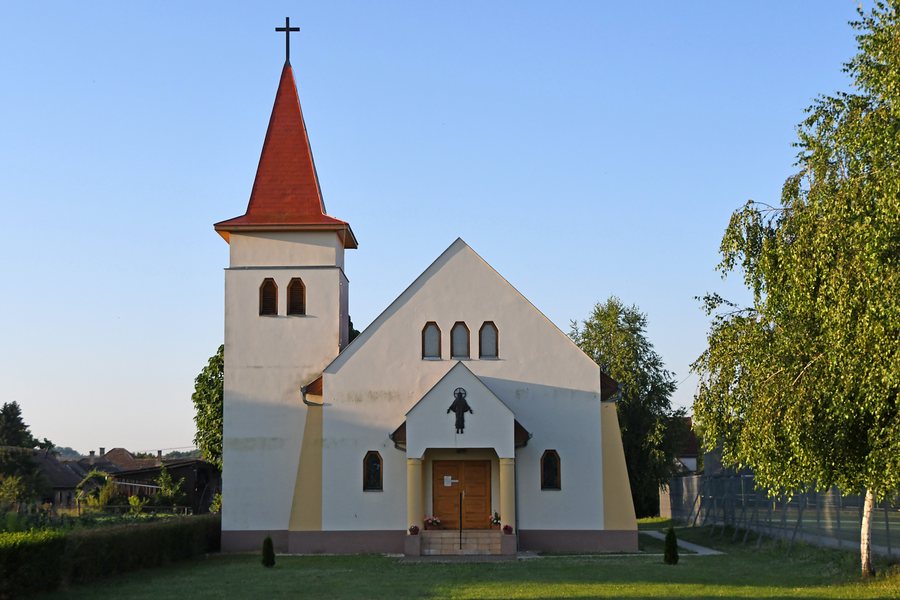 File:Kaposújlak, római katolikus kápolna 2023 01.jpg
Photo: Pasztilla aka Attila Terbócs via Wikimedia Commons, CC BY-SA 4.0
Quick facts about Kaposújlak
- The ecumenical bell tower stands at a road junction in the central part of the village.
- A marble plaque bearing the names of the victims of the world war is attached to the tower.
- The copper relief “Mesebeli Falu” by Dabóczi József was ceremonially unveiled on 19 August 2010.
Which cultural landmarks define Kaposújlak?
The ecumenical bell tower stands at a road junction in the central part of Kaposújlak. A marble plaque bearing the names of the victims of the world war is attached to the tower. At this specific location, a structure with ecumenical significance and a memorial come together. For anyone interested in local culture, this offers a clear starting point for exploring the village’s character and its commemorations.
Another point of interest is the copper relief “Mesebeli Falu” by Dabóczi József, ceremonially unveiled on 19 August 2010. It complements the tower’s commemorative significance with a named public artwork. The title, artist and unveiling date identify the relief as a distinct work. By contrast, the marble plaque focuses on the names of the victims: these two details show different ways in which culture and remembrance take shape in Kaposújlak.
What natural attractions are part of the wider Balaton South region?
In the wider travel destination of Balaton South, the Zselici Tájvédelmi Körzet received the International Dark Sky Park title in 2009 because of its low light pollution. The Zselici Csillagpark was established in the heart of the protected area. This brings together an award recognizing dark skies and a star park within the protected area—a regional theme for travelers interested in nature and the stars.
Somogy County includes, among other places, Kis-Balaton, the Zselici Tájvédelmi Körzet, Barcsi Ősborókás and Babócsai Basakert. Baláta lies between Kaszó and Szenta and is among Somogy’s most highly valued natural assets. These details provide specific names and a geographic orientation for the regional perspective, without replacing the focus on Kaposújlak’s local cultural landmarks.
One water-related theme is the cross-regional Dráva network for active tourism. Its section in Somogy County includes stops for water tourism; individual facilities may change as the network develops. If these stops are important to your plans, check the latest information in advance. This helps distinguish nature and protected-area themes from water infrastructure as separate regional highlights.
How should you factor Kaposújlak into your accommodation search?
This question separates the local significance of the bell tower, marble plaque and relief from the regional themes of protected areas, natural assets and water tourism.
Discover more destinations: Zselickisfalud, Kaposfő, Hencse, Kaposmérő, Kaposszerdahely, Nagybajom, Szenna, Bárdudvarnok.
FAQ
Where is the ecumenical bell tower?
It stands at a road junction in the central part of Kaposújlak. A marble plaque bearing the names of the victims of the world war is attached to the tower.
What is “Mesebeli Falu”?
“Mesebeli Falu” is a copper relief by Dabóczi József. It was ceremonially unveiled on 19 August 2010.
Which natural attractions are mentioned for Balaton South?
The Zselici Tájvédelmi Körzet received the International Dark Sky Park title in 2009 because of its low light pollution; the Zselici Csillagpark was established in the heart of the protected area.
For the wider travel overview: Kadarkúti.

