
Discover Zselickisfalud
Accommodation in Zselickisfalud
Zselickisfalud can be explored through two stops on Vadvirág út and two churches built in different years. The plant motifs and the village’s history help you distinguish local themes from the broader nature and activity offerings of the Lake Balaton – South destination.
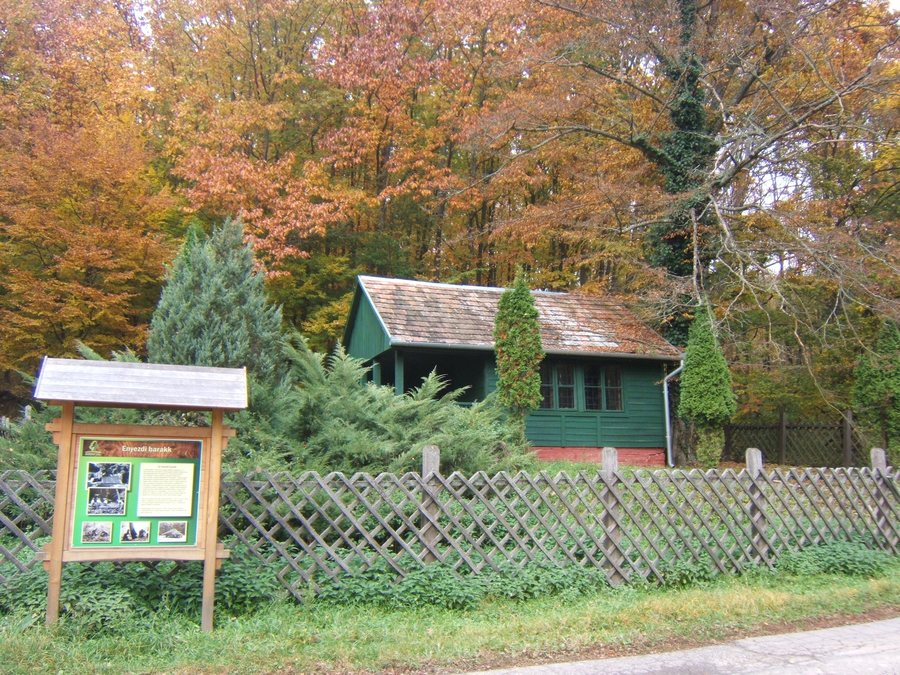
Zselickisfalud at a glance
- The first stop on Vadvirág út features the plant Erdei gyöngyköles and is located at the bend before the Catholic church.
- The second stop is opposite the Reformed church and features Méhbangó.
- The Catholic church was completed in 1953 and dedicated to the Virgin Mary.
- The current Reformed church was completed in 1884 and is regularly maintained.
What do the two stops on Vadvirág út feature?
The two art stops can be distinguished by their motifs and locations. The stop featuring Erdei gyöngyköles is at the bend before the Catholic church; opposite the Reformed church, the second stop features Méhbangó. In this way, Vadvirág út connects two distinct plant motifs with clearly identifiable landmarks in the village. If you are interested in local art, look for this combination of plant name and location: it makes it possible to identify the motif at each stop without confusing the two.
What stories do the churches tell?
The churches complement the plant motifs with two different historical details. The Catholic church was completed in 1953 and dedicated to the Virgin Mary. The current Reformed church was completed in 1884 and is regularly maintained. The dates therefore mark different completion years; the Catholic church also has the distinct religious designation of being dedicated to Mary. These details are more useful for comparison than a general description of both buildings, since their construction dates, dedication, and maintenance each relate to different aspects.
How does the village fit into Lake Balaton – South?
In the wider Lake Balaton – South destination, the Zselici Tájvédelmi Körzet was awarded International Dark Sky Park status in 2009 because of its low levels of light pollution. The Zselici Csillagpark was built in the heart of the protected area. Programs at the Csillagpark take place partly in the observatory building and partly in the surrounding forest. If you plan to attend a specific program, check the operator’s current schedule. These regional nature and program offerings provide a broader context than the art stops and churches in Zselickisfalud. The regional Dráva network for active tourism also includes water-tourism stops along its section in Somogy County. Individual facilities may change as development continues; check the operators’ current information when making specific plans.
Which focus suits your trip plans?
If you want to explore local art and architectural history, the two stops and the information about the churches offer specific themes for a stay in Zselickisfalud. For broader trip planning, you can also consider nature and activity offerings across Lake Balaton – South. You can weigh these aspects separately when choosing a hotel: first decide whether the local setting or the wider regional context is more important for your trip, then tailor your search accordingly.
Discover more destinations: Nagybajom, Kaposfő, Bárdudvarnok, Kaposszerdahely, Kaposmérő, Hencse, Szenna, Kaposújlak.
FAQ
Which plant motifs do the stops on Vadvirág út feature?
The first stop features Erdei gyöngyköles, and the second features Méhbangó. They are located at the bend before the Catholic church and opposite the Reformed church, respectively.
When were the two churches completed?
The Catholic church was completed in 1953 and dedicated to the Virgin Mary. The current Reformed church was completed in 1884 and is regularly maintained.
Where do programs at the Zselici Csillagpark take place?
Programs take place partly in the observatory building and partly in the surrounding forest. For specific dates, please check the operator’s current information.
See the wider travel overview: Kadarkúti.

