
Balatonszentgyörgy: Culture, Rail and Water
Accommodation in Balatonszentgyörgy
Balatonszentgyörgy offers several distinct points of interest to help you plan your trip: the history of Csillagvár, the architecture and railway function of the station, the waterscape, and a cycling route toward Keszthely. This lets you assess the town according to the themes that matter to you when choosing a destination and a hotel.
Quick facts about Balatonszentgyörgy
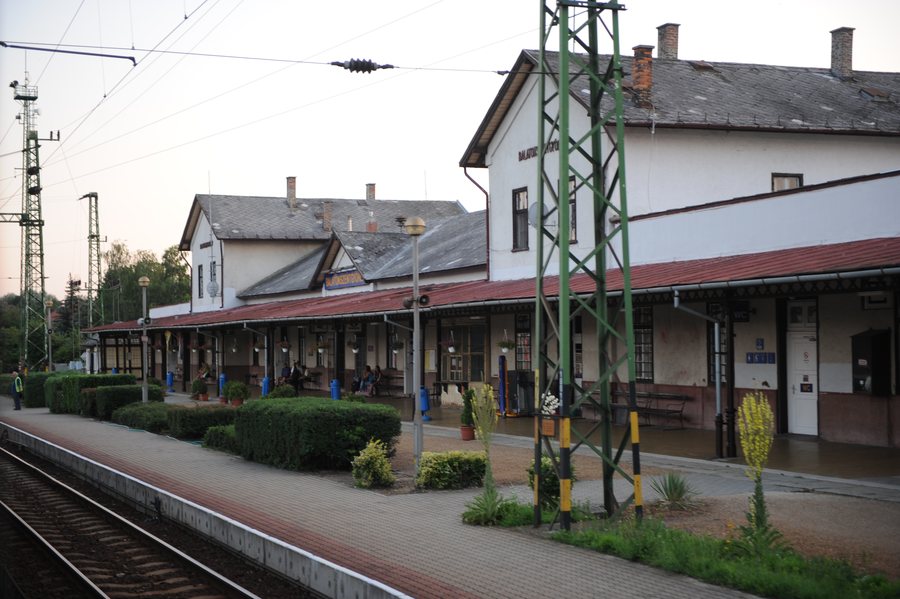
The exhibitions at Csillagvár offer insights into the Ottoman occupation in the 16th century and the lives of the border fortress soldiers, depicted in a diorama. The railway station was built in 1895 and completely renovated with heritage protection in mind. Two important passenger rail routes meet there: Budapest–Székesfehérvár–Gyékényes and Balatonszentgyörgy–Tapolca–Ukk. Part of the town’s outer area belongs to Balaton-felvidék National Park; 359 hectares of Lake Balaton lie within Balatonszentgyörgy. The estuary of the Zala River covers 4,797 m² within the town. A cycle path toward Keszthely has also been built.
What does Csillagvár tell you about the town’s history?
The exhibitions bring together two perspectives that raise different questions: the Ottoman occupation places the period depicted in the 16th century, while the lives of the border fortress soldiers focus on the people who served in this historical role. Their lives are depicted in a diorama. For your trip planning, Csillagvár is therefore a specific cultural highlight if you would like to consider history alongside landscape or railway interests.
The connection between the period and everyday life makes the subject tangible without making the two aspects tell the same story: the period of occupation provides the historical context, while the border fortress soldiers are at the heart of the depiction of their lives. If cultural history is among your travel interests, you can take this highlight into account when deciding whether to visit Balatonszentgyörgy.
What makes the railway station interesting for your plans?
The railway station has both a historical and an infrastructural aspect. The building dates from 1895 and was completely renovated with heritage protection in mind. At the same time, two important passenger rail routes meet here: Budapest–Székesfehérvár–Gyékényes and Balatonszentgyörgy–Tapolca–Ukk. The year it was built and its renovation give the station its own historical dimension; the two named routes show its role in passenger transport.
If you plan to travel by train, check the current timetable before your journey. This will let you compare the route overview with the connections available on your travel date. The station is therefore both a feature of the town’s history and a practical reference point for planning your arrival, although the routes alone do not indicate a specific timetable.
How do the lake, river estuary, and protected area differ?
The water-related figures refer to two different areas: 359 hectares of Lake Balaton lie within Balatonszentgyörgy, while the estuary of the Zala River covers 4,797 m² there. The area figures therefore do not describe the same part of the landscape. In addition, part of Balatonszentgyörgy’s outer area belongs to Balaton-felvidék National Park. The lake, river estuary, and protected-area designation are thus three different aspects that can help you understand the town’s landscape.
When comparing travel interests, it helps to distinguish between these aspects: the figure in hectares refers to Lake Balaton within the town, the figure in square metres to the Zala estuary, and the national park designation to part of the outer area. Together, they offer different spatial perspectives rather than describing just one landscape feature.
What can you weigh up when choosing a destination?
The local highlights offer different ways to get your bearings. Csillagvár represents cultural history, the station combines a historic building with two named passenger rail routes, and the lake, river estuary, and national park designation provide the landscape setting. The cycle path built toward Keszthely adds cycling to the mix. For a specific bike ride, plan a route to suit your plans.
Discover more destinations: Nagyszakácsi, Balatonújlak, Balatonberény, Vörs, Böhönye, Kelevíz, Nikla, Varászló.
FAQ
What do the exhibitions at Csillagvár show?
The exhibitions offer insights into the Ottoman occupation in the 16th century and the lives of the border fortress soldiers, depicted in a diorama.
Which railway routes meet at the station?
The Budapest–Székesfehérvár–Gyékényes and Balatonszentgyörgy–Tapolca–Ukk routes meet there for passenger transport.
Which bodies of water are mentioned for Balatonszentgyörgy?
359 hectares of Lake Balaton lie within the town; the estuary of the Zala River covers 4,797 m² there.
For the broader travel overview: Marcali.

