
Nagyberény: Vineyards and Culture
Accommodation in Nagyberény
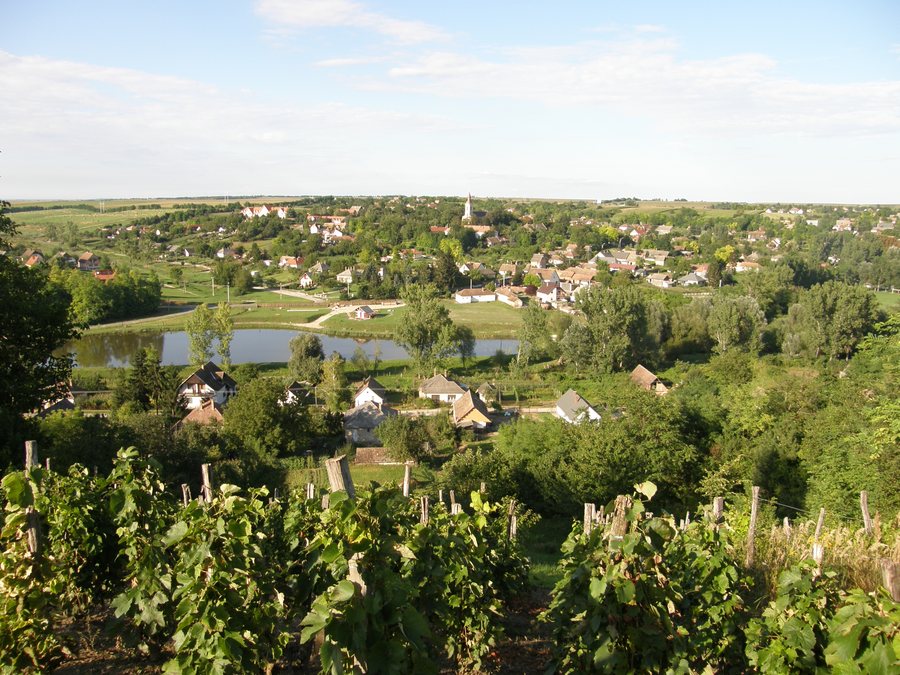
Nagyberény combines a layered local history with vineyards whose heights offer views of the eastern basin of Lake Balaton. The church, historic earthworks and landscape give you different points of reference for getting to know the town on your trip.
Nagyberény at a glance
- A monument in the town centre commemorates ethnologist Zsuzsanna Erdélyi, who received the Kossuth Prize and the title “Artist of the Nation.”
- Remains of two earth forts, Zsidódomb and Kerekhegy, lie to the southeast.
- A church dedicated to Saint George existed by 1232 at the latest.
- The Roman Catholic church was built in the Baroque style between 1759 and 1762.
- Several vineyards offer views of the eastern basin of Lake Balaton from their heights.
What historical traces shape Nagyberény?
A key local landmark is the monument to Zsuzsanna Erdélyi. The ethnologist received the Kossuth Prize and the title “Artist of the Nation.” The monument therefore commemorates a clearly identified person and her honours; Erdélyi is remembered for more than just a place name.
The town’s church history also reaches far back: a church dedicated to Saint George existed in Nagyberény by 1232 at the latest. The town’s Roman Catholic church was built much later, between 1759 and 1762, in the Baroque style. The historical accounts thus mention both an early religious dedication and a Baroque building with a specific construction date. The two dates refer to different points in history.
Remains of two earth forts, known as Zsidódomb and Kerekhegy, lie southeast of the town. These historical traces differ from the church: here, the focus is on the remains of earth forts, while the church is a building with a named style and construction period. Together, the monument, church and earthworks offer Nagyberény different cultural points of reference, rather than representing just one chapter of the town’s history.
How do the landscape and local history come together?
Nagyberény has several vineyards. From their heights, you can see the eastern basin of Lake Balaton. This landscape view complements the town’s historical themes: the vineyards point to the surrounding area, while the monument, church and earth-fort remains reveal different aspects of local history.
These themes can serve as different points of focus when planning your trip. If you are primarily interested in architectural history, the Baroque church is a specific point of reference. If you would rather explore the town through its history, you can also visit the early church of Saint George and the earth-fort remains. The vineyards, in turn, connect Nagyberény with views of the eastern basin of Lake Balaton. Thermal water extracted in Nagyberény is also used at the spa in Siófok; the spa itself is located in Siófok.
What regional perspective complements Nagyberény?
The wider destination of Lake Balaton – South offers other landscape and nature attractions. In 2009, the Zselici Tájvédelmi Körzet (Zselic Landscape Protection Area) was awarded International Dark Sky Park status because of its low light pollution. The Zselici Csillagpark (Zselic Star Park) was established in the heart of the protected area. These details relate to the wider destination and do not describe Nagyberény itself.
Somogy County includes Kis-Balaton, the Zselici Tájvédelmi Körzet, Barcsi Ősborókás and Babócsai Basakert, among other places. Baláta, between Kaszó and Szenta, is also among Somogy’s most valued natural assets. For water tourism, the regional Dráva network has stopping points along its stretch in Somogy County. Individual facilities may change as the network develops.
If you are looking for a hotel in Nagyberény, you can start by choosing what interests you most about the trip: local history, vineyards overlooking the eastern basin of Lake Balaton, or the wider Lake Balaton – South destination.
If you would like to compare other destinations, you can also find Som, Töreki, Zamárdi, Balatonszabadi, Siofok, Balatonendréd, Ádánd and Ságvár here.
FAQ
Which historical periods can you encounter in Nagyberény?
A church dedicated to Saint George existed by 1232 at the latest. The Roman Catholic church was built in the Baroque style between 1759 and 1762; remains of two earth forts can also be found in the southeast.
What honours did Zsuzsanna Erdélyi receive?
The ethnologist received the Kossuth Prize and the title “Artist of the Nation.” A monument to her stands in the centre of Nagyberény.
How is the Siófok spa connected to Nagyberény?
Thermal water extracted in Nagyberény is also used at the spa in Siófok. The spa is located in Siófok.
For the wider travel overview: Siófoki.

