
Alsóújlak – Churches and Architectural History
Accommodation in Alsóújlak
When looking for a hotel in Alsóújlak, the local religious buildings provide a concrete cultural point of reference for planning your trip. The Szent István templom stands in the village center and has Gothic origins; the Szent Péter és Pál-temetőkápolna is on Szelenkás Hill, southwest of the present-day village. Their different locations and building histories help you place the local sights more precisely.
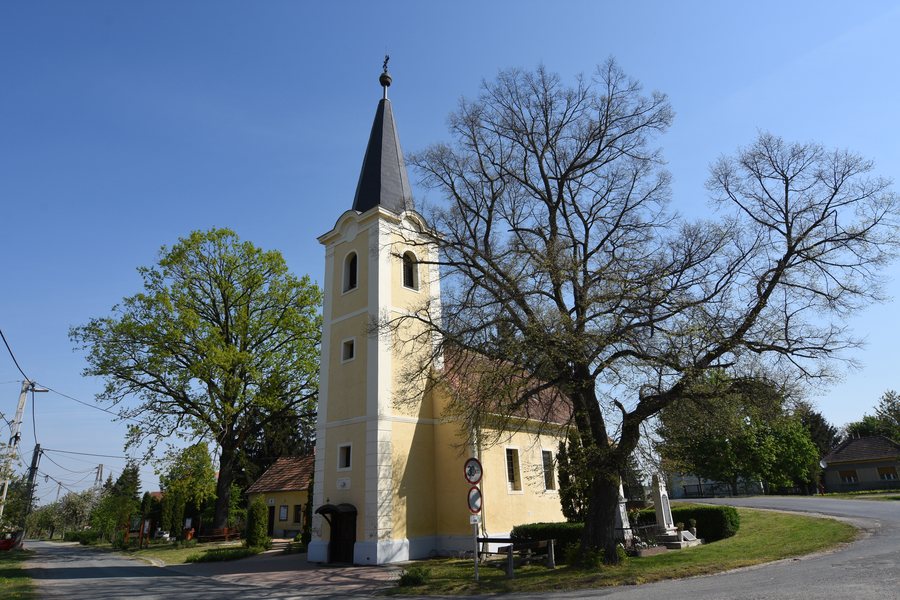
Alsóújlak at a glance
- The Szent István templom is in the village center and has Gothic origins.
- The Szent István király templom was probably built in the 14th or 15th century in the Gothic style and remodeled in the Baroque style in 1775.
- The Szent Péter és Pál-temetőkápolna stands on Szelenkás Hill, in the middle of the old cemetery and about 1,500 meters southwest of the present-day village.
What does the church reveal about its architectural history?
The Szent István király templom is thought to date from the 14th or 15th century and was therefore built in the Gothic style. It was remodeled in the Baroque style in 1775. The two dates refer to different building phases: the 14th or 15th century marks its probable construction, while 1775 marks the later Baroque alteration.
If you are interested in church architecture, this sequence offers a concrete way to understand the building’s history: Gothic origins and a dated Baroque remodeling. The estimated construction period is a chronological indication and should not be confused with the year of the later alteration.
Where is the cemetery chapel located?
The Szent Péter és Pál-temetőkápolna is on Szelenkás Hill, in the middle of the old cemetery. It is about 1,500 meters southwest of the present-day village. The parish church and the chapel therefore also differ in location: one stands in the village center, while the other is situated on the hill, in the cemetery southwest of the village.
If you include both religious buildings in your own travel plans, treat them as separate locations. The village center is the reference point for the parish church; for the chapel, the reference points are Szelenkás Hill and its location relative to the present-day village. The distance given is an approximate guide.
What does the wider destination of Vas County offer?
For broader trip planning, the wider destination of Vas County offers other cultural and landscape themes. Írottkő Nature Park is in the northwestern part of Vas County; it includes the entire 4,303-hectare Kőszeg Landscape Protection Area. Őrség National Park was established on March 1, 2002, to preserve and present the natural, ethnographic, and cultural-historical values of Őrség. Vas County therefore offers different protected-area settings to explore.
Architectural history can also be explored further across the wider destination of Vas County. The Romanesque Church of St. Michael in Csempeszkopács was built around 1250; the Romanesque church of Ják Abbey was consecrated in 1256. These dates and the Romanesque style provide historical points of reference distinct from the Gothic origins and Baroque remodeling of the church in Alsóújlak.
The Vasi Skanzen offers another perspective: it presents the rural way of life and folk architecture of Vas County from the past two centuries. Since opening in 1973, the open-air museum has rescued and rebuilt 43 buildings from 27 settlements. The cultural perspective in the wider destination of Vas County thus ranges from individual churches to regional everyday life and architecture.
For travelers interested in cycling, the Termál Kerékpáros Túraút in Vas County leads to five thermal bath complexes and combines cycling with visits to architectural and natural attractions, as well as other thermal baths. The Sárvári Gyógy- és Wellnessfürdő offers a wide range of medical, health-promoting, and wellness services. These regional themes can be considered separately from the churches and their architectural history in Alsóújlak when planning your trip.
Discover more destinations: Hegyhátszentpéter, Csehimindszent, Rábahídvég, Sárfimizdó, Gersekarát, Petőmihályfa, Püspökmolnári, Szemenye.
FAQ
Where is the Szent István templom?
It stands in the village center of Alsóújlak and has Gothic origins.
When was the Szent István király templom built?
It was probably built in the 14th or 15th century in the Gothic style and remodeled in the Baroque style in 1775.
Where is the Szent Péter és Pál-temetőkápolna?
It stands on Szelenkás Hill, in the middle of the old cemetery and about 1,500 meters southwest of the present-day village.
For the wider destination overview: Vasvári.

