
Hegyhátszentpéter: Folk House, Farmstead and Landscape
Accommodation in Hegyhátszentpéter
Hegyhátszentpéter combines a setting shaped by hills and forests with the rural cultural heritage of the Tájház. The village can be approached through two distinct interests: the surrounding landscape and the specific buildings of the farmstead. When planning your accommodation, you can first consider which of these aspects matters more to you.
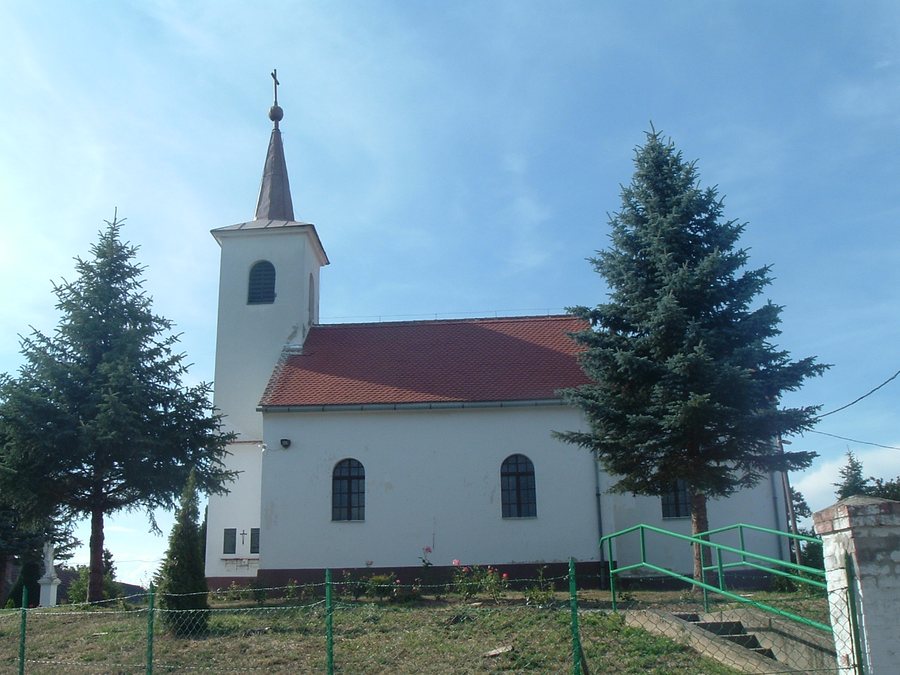
Hegyhátszentpéter at a glance
- Hills and forests surround the village; to the south, the Sárvíz stream and its marshy meadow form the boundary.
- The furnished farmhouse and farm buildings convey the folk traditions of Vasi-Hegyhát.
- Master carpenter Tőke János made the carved and painted gable of the Tájház.
- Near the well in the courtyard are a belfry relocated from Győrvár and a communal smithy from Püspökmolnári.
What makes the Tájház farmstead special?
Together, the furnished farmhouse and its farm buildings convey the folk traditions of Vasi-Hegyhát. The farmhouse does not stand alone: the farm buildings are also part of this cultural landmark. One particularly tangible detail is the carved and painted gable. It was made by Tőke János, identified as a master carpenter; the name and craft connect this architectural feature to a specific person.
Two other features can be distinguished in the courtyard. Near the well stands a belfry that was relocated from Győrvár. A communal smithy from Püspökmolnári is also located near the well. The belfry and the smithy are therefore part of the same courtyard, but each comes from a different place. Together with the farmhouse and the gable, they offer several specific points of interest if you are interested in regional architecture and folk traditions.
How do the landscape and village character shape travel choices?
The landscape description encompasses the entire edge of the village: hills and forests surround Hegyhátszentpéter on all sides. To the south, the Sárvíz and its marshy meadow form a distinct boundary. Two different landscape features are therefore found side by side: the surrounding hills and forests, and the stream with the wet meadow area at the southern edge.
When choosing a destination, you can consider the landscape and cultural heritage as separate points of interest. The Tájház appeals to those interested in rural traditions, farm buildings and craft details; the description of the hills, forests and Sárvíz shapes the picture of the surrounding area.
What other themes does the wider destination of Vas County offer?
The wider destination of Vas County offers a range of themes, from protected areas to historic architecture. The Írottkő Nature Park is in the northwestern part of Vas County and includes the entire 4,303-hectare Kőszeg Landscape Protection Area. Őrség National Park was established on 1 March 2002 to preserve and present the natural, ethnographic and cultural-historical values of Őrség.
The Vasi Skanzen has a distinct focus of its own: it presents the rural way of life and folk architecture of Vas County over the past two centuries. Since opening in 1973, it has rescued and rebuilt 43 structures from 27 settlements. Two other historical landmarks are noted for sacred architecture: the Church of St. Michael in Csempeszkopács was built around 1250 in the Romanesque style; the Romanesque church of Ják Abbey was consecrated in 1256.
If you would like to compare broader landscape or architectural themes rather than individual farm buildings, you can include these varied themes from the wider destination of Vas County in your travel plans. For an active way to explore the area, the Termál Kerékpáros Túraút in Vas County leads to five thermal bath complexes and combines cycling with visits to architectural and natural attractions, as well as other thermal baths. The Vulkán Tour leads to Kis-Somlyó, Ság-hegy and Belső-hegy. These regional themes complement the close-up view of Hegyhátszentpéter without replacing the village’s farmstead traditions and landscape.
If you would like to compare other destinations, also discover Szemenye, Csehimindszent, Alsóújlak, Püspökmolnári, Rábahídvég, Gersekarát, Sárfimizdó and Petőmihályfa.
FAQ
Who made the carved gable of the Tájház?
Master carpenter Tőke János made the carved and painted gable.
Which buildings are near the well in the courtyard?
A belfry relocated from Győrvár and a communal smithy from Püspökmolnári stand there.
Which historical cultural themes are mentioned for Vas County?
These include, among other things, rural architecture at the Vasi Skanzen and the Romanesque churches in Csempeszkopács and Ják.
For the wider travel overview: Vasvári.

