
Kővágóörs – Sea of Stones, hiking route and churches
Accommodation in Kővágóörs
Kővágóörs combines a protected Sea of Stones, a 5 km hiking route and churches associated with different historical periods. For your travel planning, specific visiting conditions are also important: the Tájház is not open continuously; visits are possible by appointment or during events.
Kővágóörs at a glance
- The Sea of Stones in Kővágóörs is a protected remnant of once-extensive stone ridges.
- A two-hour hiking route covers 5 km to the Sea of Stones, Kis-Hegyestű and the ruins of Pusztapalota, and back; the elevation difference is 20 m.
- The Protestant church dates from 1264 and features richly decorated Baroque woodwork.
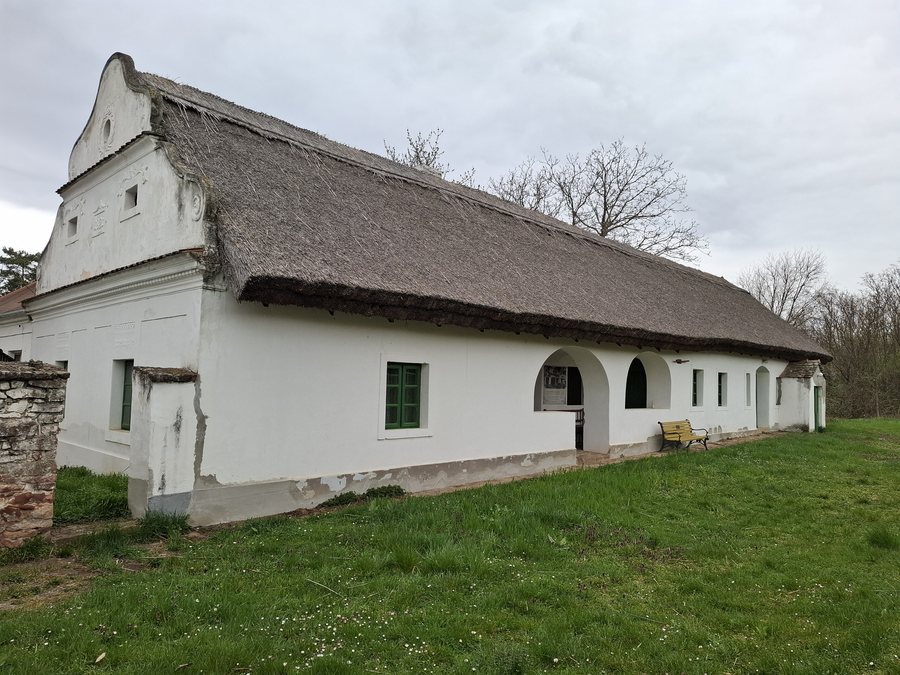
- The Tájház, run by the municipality, can be visited by prior arrangement or during events.
What natural attractions define Kővágóörs?
The protected Sea of Stones in Kővágóörs is a remnant of once-extensive stone ridges. A 5 km hiking route leads from Kővágóörs via the Sea of Stones and Kis-Hegyestű to the ruins of Pusztapalota and back to Kővágóörs. The hike is listed as taking two hours, and the elevation difference is 20 m. The distance, duration and elevation difference give you concrete points of reference when you want to include the route in your day’s plans.
A nature trail runs east of Kővágóörs, past the flat stone slabs of Kő-hát. In spring, flowers there include pasque flowers and bee orchids. The flat pastures stretch toward the basin as far as Kornyi-tó, which covers 20 hectares. A population of several hundred ground squirrels lives around the lake.
Which churches and architectural landmarks can you explore?
The whitewashed, listed Protestant church stands on a hill with exceptional panoramic views. It was built in 1264 and features especially richly decorated Baroque woodwork. The Catholic church in Kővágóörs is another testament to the town’s history: it was built in 1773 during the Counter-Reformation, with support from Károly Eszterházy, Bishop of Eger.
Church ruins are also among the historic sights. The ruin of the church at Ecsérpuszta in Kővágóörs is a protected architectural monument and an archaeological site. The church dates from the 12th century. It was first mentioned in 1334, remodeled in the 13th and 14th centuries, and enlarged after 1430.
The church ruin at Sóstókál preserves a church from the 13th century that was remodeled in the Gothic style in the 14th century. Together with the churches in Kővágóörs, it illustrates different phases of construction and remodeling. If you are interested in religious architecture, you will find both a church with Baroque woodwork and examples of medieval architectural history here.
What should you know before visiting the Tájház?
The Tájház, a local history museum, is run by the municipality of Kővágóörs. It is not open continuously; visits are possible by prior arrangement or during events. The Bajcsy-Zsilinszky Emlékház is also run by the municipality. Visits there are likewise possible by prior arrangement or during events. Bear these conditions in mind if you plan to include either house in your itinerary.
What else is part of Kővágóörs?
Pálköve is a district of Kővágóörs. It has a beach run by the municipality, for which an ongoing need for development has been noted. If you would like to compare other destinations in the directory, you can also visit Balatonederics, Nemesgulacs, Köveskál, Badacsonytördemic, Szentbékkálla, Balatonhenye, Kapolcs and Badacsonyörs.
FAQ
How long is the hiking route via the Sea of Stones?
The route is 5 km long, is listed as taking two hours, and has an elevation difference of 20 m. It leads via the Sea of Stones and Kis-Hegyestű to the ruins of Pusztapalota and back to Kővágóörs.
When can you visit the Tájház or the Bajcsy-Zsilinszky Emlékház?
Neither of the houses run by the municipality is open continuously. Visits are possible by prior arrangement or during events.
What are the distinctive natural features of Kornyi-tó?
Kornyi-tó covers 20 hectares. A population of several hundred ground squirrels lives around it.
For the main travel overview: Tapolcai.

