
Káptalantóti
Accommodation in Káptalantóti
In Káptalantóti, a marked hiking trail meets the architectural history of St. Martin's Church.
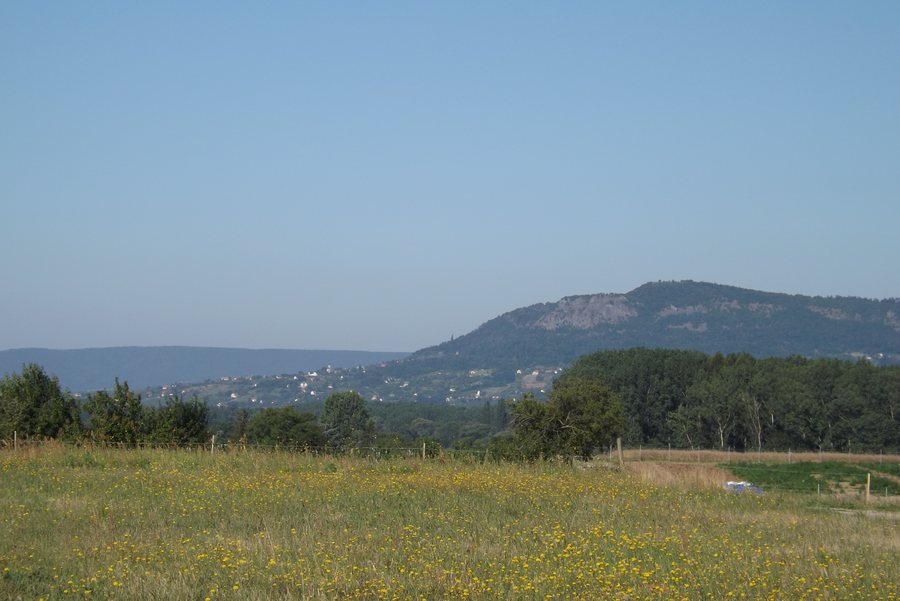 File:Káptalantóti, látkép.JPG
Photo: Kossuthzsuzsa at Hungarian Wikipedia via Wikimedia Commons, CC BY-SA 3.0
File:Káptalantóti, látkép.JPG
Photo: Kossuthzsuzsa at Hungarian Wikipedia via Wikimedia Commons, CC BY-SA 3.0
Key facts about Káptalantóti
The Tótikék nature trail is a 6.3 km-long hiking trail in Káptalantóti. It runs along village streets, dirt tracks and forest paths, as well as through vineyards, and is marked with blue feather symbols. St. Martin's Church stands in the village centre on a small hill surrounded by a retaining wall. East of the village, on the northern slope of Sabar Hill, are the ruins of Sabar Hill Church: built of rubble stone, they are in a ruinous condition.
What can you expect on the Tótikék nature trail?
The 6.3 km-long Tótikék nature trail alternates between village streets, dirt tracks and forest paths. It also passes through vineyards. This can help you decide whether the trail suits the landscape and hiking interests of your trip.
The blue feather symbols are another distinctive feature of the trail. Its length, surfaces and markings provide different points of reference to help you decide whether to include it in your plans.
What story does St. Martin's Church tell?
St. Martin's Church was built in its present form in 1714. It is likely that walls from the medieval predecessor building were used. The church was extended under Parish Priest István Szabó between 1757 and 1773; construction work ended in 1773. Its location on the small hill surrounded by a retaining wall in the village centre also makes it an easy landmark.
The ruins of Sabar Hill Church offer another historical point of interest nearby: they lie east of Káptalantóti on the northern slope of Sabar Hill.
What other experiences are there in North Balaton?
In the wider North Balaton destination, Tapolca Lake Cave combines an exhibition with a boating activity: boat trips are offered there, along with the guided exhibition “Csodálatos karszt” (“Wonderful Karst”). The cave is part of an underground cave system beneath the town, which has so far been explored over a length of 14.6 kilometres.
Hegyestű offers a distinctive geological experience. The 337-metre-high hill lies between Zánka and Monoszló and exposes the inside of a basalt volcano that was active around 8 million years ago. From the viewpoint at the western edge of the quarry site, visitors can use a panoramic information board to identify the surrounding hills. Hegyestű also has a rock garden featuring characteristic rock types from Transdanubia.
For culture enthusiasts, Herend and Tihany offer distinctly different themes: the Herend Porcelain Museum features a permanent exhibition and changing exhibitions on the history of the manufactory. In workshops at the Mini-Manufactory, visitors can handle porcelain paste and a brush for painting. The Levendula Ház presents an interactive exhibition on the formation of the Tihany Peninsula and lavender cultivation; it also has a craft workshop and a garden with activities.
The Veszprém Zoo features, among other things, dinosaur models in its Dinosaur Park. Children can take part in a real archaeological dig there. The zoo welcomes visitors of all ages and offers experiences across six continents throughout the year. For those more interested in landscapes and wine, Badacsony, a volcanic mountain, offers hiking trails and panoramic views. Special grapes are grown on its slopes and used to make Badacsony wine.
When looking for accommodation, you can first consider whether the nature trail or the church history in Káptalantóti interests you most, and which other themes appeal to you in the wider North Balaton destination. Discover more destinations: Balatonrendes, Balatonhenye, Szigliget, Mindszentkálla, Köveskál, Nemesgulacs, Nemesvita and Lesencetomaj.
FAQ
How long is the Tótikék nature trail?
The Tótikék nature trail is 6.3 km long and runs along village streets, dirt tracks and forest paths, as well as through vineyards.
How can you recognise the Tótikék nature trail?
It is marked with blue feather symbols.
When was St. Martin's Church built in its present form?
The church was built in its present form in 1714 and extended between 1757 and 1773 under Parish Priest István Szabó.
To the wider travel overview: Tapolcai.

