
Berhida
Accommodation in Berhida
Churches from different periods, a walking route along the Séd Stream and a cultural park that hosts events give Berhida several specific points of interest for a trip. When looking for a hotel, you can consider whether you are most interested in architectural history, paths along the stream, or cultural and family events.
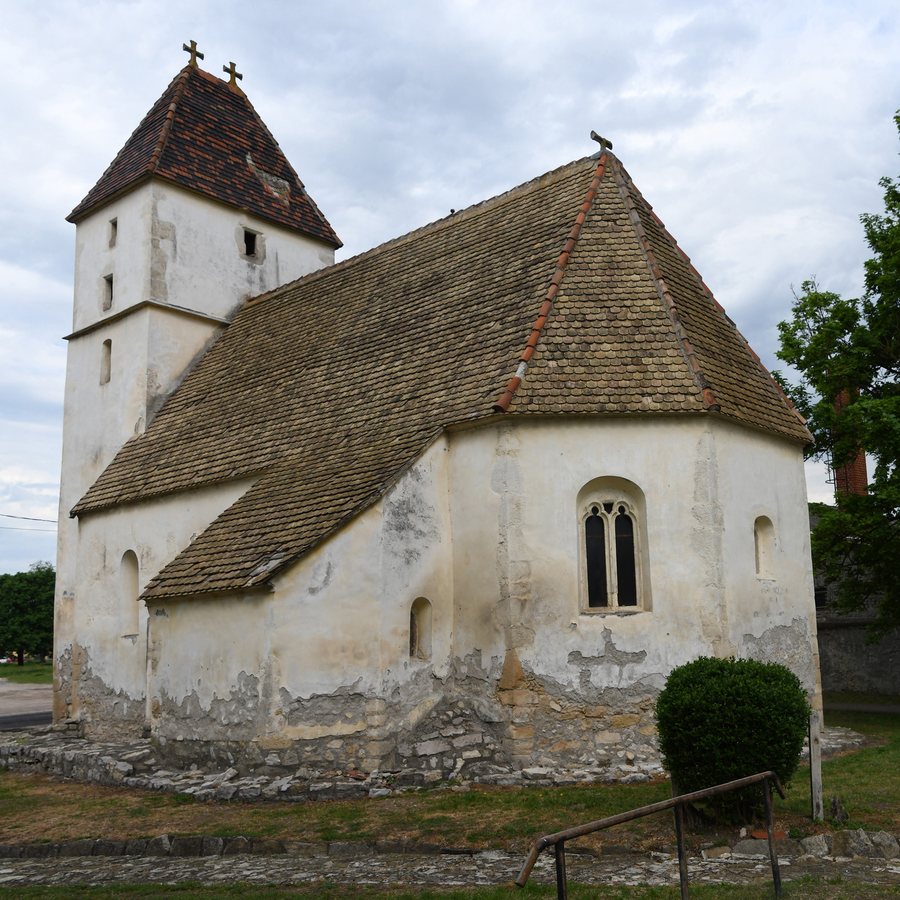 File:Berhida, középkori római katolikus templom 2021 05.jpg
Photo: Pasztilla aka Attila Terbócs via Wikimedia Commons, CC BY-SA 4.0
File:Berhida, középkori római katolikus templom 2021 05.jpg
Photo: Pasztilla aka Attila Terbócs via Wikimedia Commons, CC BY-SA 4.0
Berhida at a glance
Notable buildings include the late Romanesque and early Gothic Szent Kereszt Kistemplom, the Baroque Szent László Catholic Church and the Berhidai Református Templom. The Séd Stream flows through Berhida and forms a walking route. Next to the stream is the Kistó Cultural Park, established in 2016, which serves as a venue for cultural events and family activities.
Which churches define Berhida?
The Szent Kereszt Kistemplom was built around the turn of the 13th and 14th centuries. Its design combines late Romanesque and early Gothic elements; its double stone roof structure is particularly distinctive. In these features, the building differs from Berhida’s Baroque churches. Visitors interested in historic religious architecture will find a specific example here from the transition between two architectural styles.
The Baroque Szent László Catholic Church has frescoes by Johann Ignaz Cimbal. The Berhidai Református Templom was built in the Baroque style in 1768 by the Boronkay family. Berhida therefore offers two distinct examples of Baroque church architecture: the frescoes are a notable feature of the Catholic church, while the construction date and patron are recorded for the Reformed church. Those interested in cultural history can find examples in Berhida ranging from the transition between Romanesque and Gothic architecture to Baroque building and painting.
What do the Séd Stream and Kistó Cultural Park offer?
The Séd Stream, which flows through Berhida, forms a walking route. If you want to include some exercise in your trip, you can consider this route as a point of interest in its own right. No details about its length or course are provided, so practical day planning should be guided by your own preferences and current conditions.
The Kistó Cultural Park was established beside the Séd Stream in 2016 and serves as a venue for cultural events and family activities. It complements the historic churches with a different focus: here, the emphasis is not on the architectural history of an individual building, but on the park’s use as an event venue. When planning your trip, it is helpful to distinguish between general interest in visiting the park and interest in specific events.
Which family events are described?
Children’s programmes are held in the Kistó Cultural Park on Children’s Day. For several years, local associations and communities have taken part in the event organised by the Berhidai Művelődési Ház és Könyvtár, contributing their own programmes. Another children’s event included horse-riding opportunities and horse-drawn carriage rides offered by members of the Berhidai Lovasok Sport Egyesület.
If you would like to compare Berhida with other destinations, you can also find information here about Tés, Jásd, Várpalota and Pétfürdő.
FAQ
Which churches are particularly relevant for visitors interested in culture?
The Szent Kereszt Kistemplom, with its stone roof structure, as well as the Baroque Szent László Catholic Church and the Berhidai Református Templom, built in 1768, offer a range of historical points of interest.
Is there a walking route in Berhida?
The Séd Stream, which flows through Berhida, forms a walking route.
What family activities take place in the Kistó Cultural Park?
Children’s programmes are held there on Children’s Day. Horse-riding opportunities and horse-drawn carriage rides were also offered at one children’s event.
For the broader travel overview: Várpalotai.

