
Várpalota: Thury Castle, Mining History and Culture
Accommodation in Várpalota
The castle, mining history and church architecture offer different perspectives on Várpalota. St. Stephen’s Church in the eastern district of Inota adds a distinctive example of medieval architecture to a visit to the area.
Várpalota at a glance
- Visitors can try an escape room at Thury Castle; check the latest details before your trip.
- The Várpalota Mining History Collection presents the history of coal mining, which began in Várpalota in 1876, across four rooms.
- St. Stephen’s Church in today’s eastern district of Inota retains its medieval form. Later additions include the sacristy, modern-era round-arched windows and a façade tower.
- Many people in Várpalota made the cifraszűr, a richly decorated Hungarian shepherd’s cloak.
What can you discover at Thury Castle?
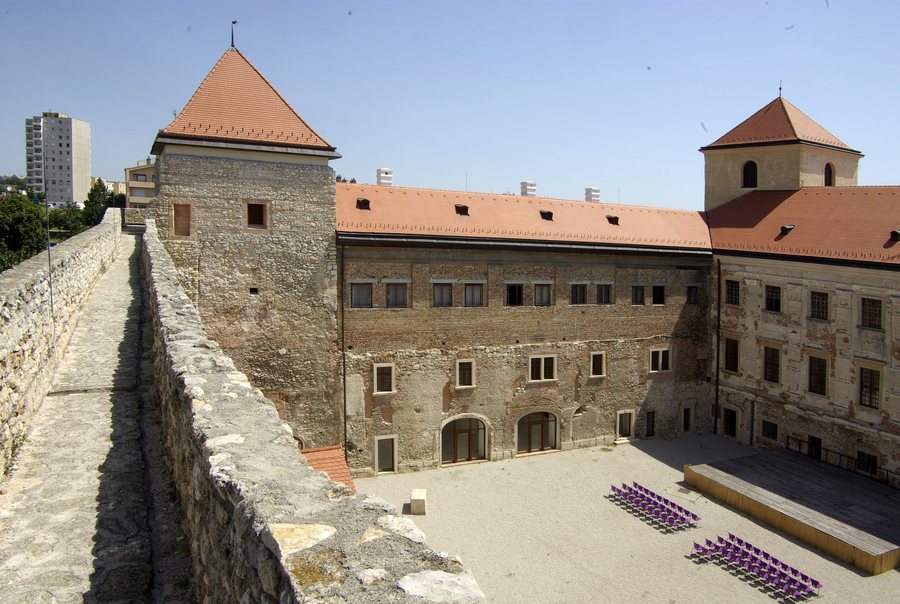
Thury Castle offers a range of exhibitions for visitors of all ages and with different interests. An escape room offers a different kind of activity from the exhibition spaces. The Várpalota Mining History Collection focuses on a specific historical topic: its four rooms tell the story of coal mining in Várpalota, which began in 1876. The castle thus brings a visitor activity and a look at local industrial history together.
If you are including the castle in your plans, it is useful to distinguish between the individual offerings: the escape room and the collection are separate points of interest, while the mining history exhibition has a clearly defined scope of four rooms. Information about the collection’s opening hours may not reflect its current operations. Before planning a visit, check the latest visitor information for the collection and the details of the escape room.
What traces of local history can be found in Inota?
St. Stephen’s Church stands in today’s eastern district of Inota. It retains its medieval form, while the sacristy, modern-era round-arched windows and façade tower are later additions. This lets visitors see the traditional architectural form alongside later additions, rather than reducing the church to a single building phase.
The making of the cifraszűr reveals another side of local history. This richly decorated Hungarian shepherd’s cloak was made by many people in Várpalota. The church and the craft tradition thus offer two different insights: one focuses on a building with a medieval form, the other on a garment and its production. Information about the cifraszűr describes a historical local craft tradition.
What other themes shape the broader North Balaton destination?
In the broader North Balaton destination, cultural history is joined by other, distinct perspectives. Boat trips are offered in the Tapolca Lake Cave, which also features the guided exhibition “Csodálatos karszt” (“Wonderful Karst”). The cave is part of an underground cave system beneath the town, which has so far been explored over a length of 14.6 kilometres.
Hegyestű offers a different geological perspective: this 337-metre-high mountain lies between Zánka and Monoszló. The interior of a basalt volcano that was active around eight million years ago is exposed there. At the lookout point on the western edge of the quarry site, visitors can identify the surrounding hills with the help of a panoramic information board. A rock garden featuring characteristic rock types from Transdanubia adds to this view of the region’s geology.
Crafts and regional products are also among the themes of the broader North Balaton destination. The Herend Porcelain Museum has a permanent exhibition and changing exhibitions on the history of the manufactory. In workshops at the Herend Porcelain Manufactory’s mini-manufactory, visitors can handle porcelain clay and a brush for painting. Special grapes are grown on the slopes of Badacsony and used to make Badacsony wine. The region’s attractions thus range from karst and basalt to porcelain and viticulture.
Discover more destinations: Tés, Jásd, Berhida and Pétfürdő.
FAQ
What is the Mining History Collection?
It occupies four rooms in Thury Castle and presents the history of coal mining in Várpalota, which began in 1876. Check the latest visitor information in advance.
Where is St. Stephen’s Church?
It is located in Várpalota’s present-day eastern district of Inota.
What is a cifraszűr?
A cifraszűr is a richly decorated Hungarian shepherd’s cloak. Many people in Várpalota made this garment.
To the broader travel overview: Várpalotai.

