
Discover Barnag: Nature and Village History
Accommodation in Barnag
Barnag combines a distinctive village setting with nature and cultural experiences. The Mocsolya liget wetland invites visitors to explore the landscape along a wooden boardwalk and a signposted walking trail. The village streetscape is shaped by stone houses with a characteristic porch running along the length of each house.
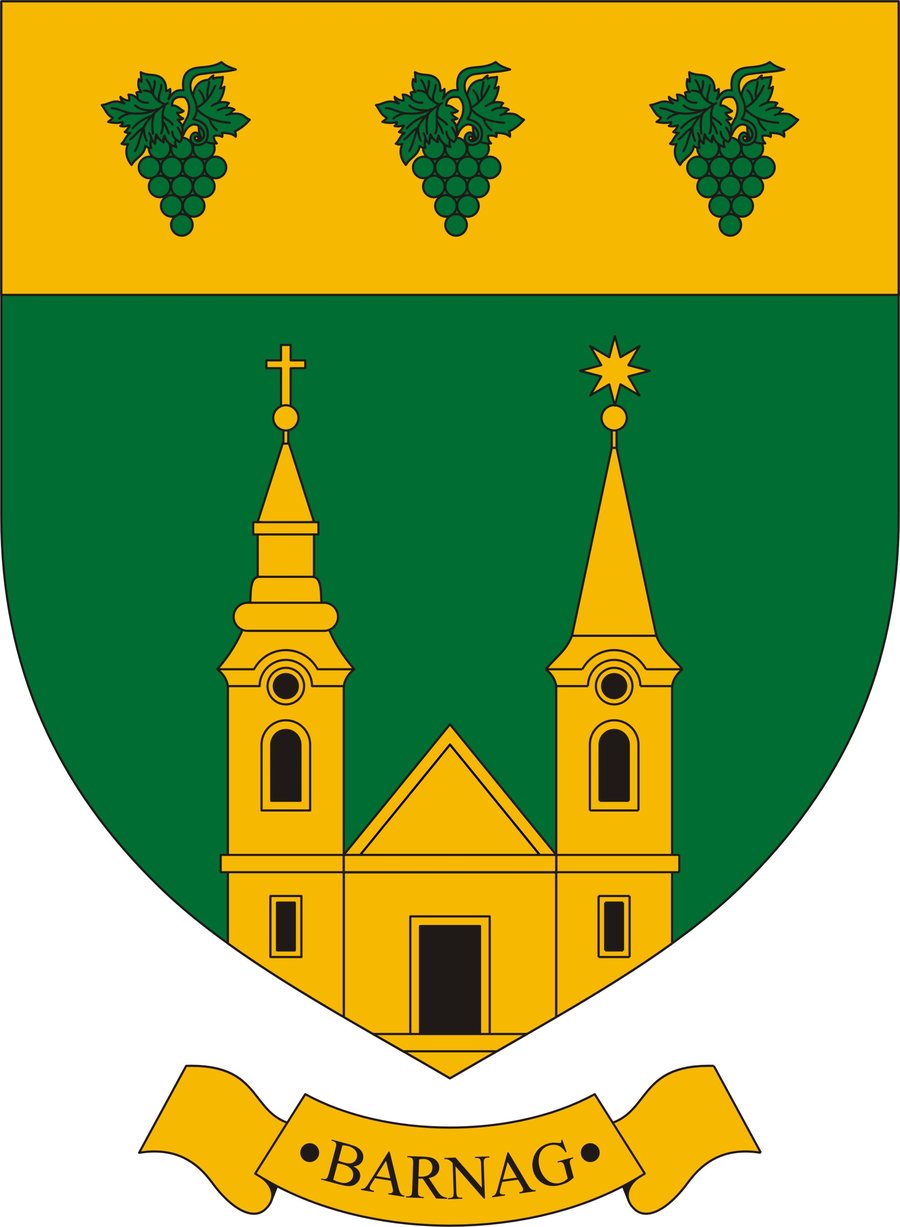 File:HUN Barnag COA.jpg
Photo: Nemzeti Fejlesztési Minisztérium via Wikimedia Commons, Public domain
File:HUN Barnag COA.jpg
Photo: Nemzeti Fejlesztési Minisztérium via Wikimedia Commons, Public domain
Barnag facts at a glance
- Mocsolya liget lies at Barnag’s lowest point and is a natural, marshy wetland.
- The area is used as a public park and can be explored via a wooden boardwalk.
- Signs along the walking trail introduce native plant species.
- Barnag’s unified village character took shape in the 18th and 19th centuries.
- Magyarbarnag and Németbarnag merged to form Barnag in 1947.
What can you discover at Mocsolya liget?
Mocsolya liget combines the character of a natural, marshy wetland with its use as a public park. Its high ecological value is an integral part of this natural area, as is its location at Barnag’s lowest point. The wooden boardwalk leads through the area; the marked walking trail has information boards to help visitors learn about the native plant species found there.
A visit offers a chance to take in two aspects: the wetland landscape itself and the plants introduced along the trail. If you would like to include nature in your travel plans, Mocsolya liget is a specific place to visit in Barnag.
What shapes Barnag’s village character and history?
Barnag’s unified appearance developed in the 18th and 19th centuries. The streetscape is dominated by stone-built houses with a similar appearance. One distinctive feature is the “lopott tornác,” also known as a Gádor: it runs along the long side of the house. As you walk through the village, you can look out for this recurring architectural feature rather than viewing each house only as an individual building.
The village’s history also includes the merger of two settlements: the Reformed Magyarbarnag and Catholic Németbarnag were united in 1947. This historical context complements the picture of the unified village character that had already taken shape in the 18th and 19th centuries.
Which historic sites are in and around Barnag?
The Barnagi Kálvária is on the northeastern edge of the village. It is considered the oldest Way of the Cross in Veszprém County, preserves many archaic features and is a rarity among sacred buildings. Its sequence of stations follows a field path that begins behind the Catholic church: an opening chapel is followed by three stations. Another four stand along a footpath that branches off towards the cemetery.
Unlike the Kálvária, the ruins of Zádor Castle are outside Barnag, between Barnag and Pécsely, in the outlying area of Pécsely. This distinction separates two different historical points of interest: the Way of the Cross on the outskirts of Barnag and the castle ruins in the neighbouring village of Pécsely. When finding your way around, it is worth keeping these locations distinct.
What else does the wider Lake Balaton - North destination have to offer?
Other destinations in the wider Lake Balaton - North area offer further nature, geology and culture experiences. Tapolcai-tavasbarlang offers boat trips and a guided exhibition about karst. It is part of a cave system beneath the town that has so far been explored to a length of 14.6 kilometres.
Another geological highlight is Hegyestű, a 337-metre-high mountain between Zánka and Monoszló. There, a quarry wall reveals the interior of a basalt volcano that was active around eight million years ago. At the western edge of the quarry grounds, visitors can identify the surrounding hills with the help of a panorama board; Hegyestű also features a rock garden with characteristic rock types from Transdanubia. In Herend, the Porcelain Museum presents a permanent exhibition and changing exhibitions on the history of the manufactory.
These regional destinations are distinct from Barnag’s local village character. When looking for hotels in Barnag, you can first consider whether you would like to focus your stay on nature, village history or sacred heritage. Discover more destinations: Hárskút, Veszprémfajsz, Bánd, Szentgál, Nemesvámos, Veszprém, Herend, Tótvázsony.
FAQ
Is Mocsolya liget accessible as a park?
The wetland is used as a public park and can be explored via a wooden boardwalk. A walking trail with information boards runs past native plant species.
Where are the ruins of Zádor Castle?
The ruins lie between Barnag and Pécsely, in the outlying area of Pécsely—not within Barnag itself.
What is special about the Barnagi Kálvária?
It is considered the oldest Way of the Cross in Veszprém County, preserves many archaic features and is located on the northeastern edge of Barnag.
To the wider travel overview: Veszprémi.

