
Discover Tótvázsony
Accommodation in Tótvázsony
Tótvázsony can be understood through its church history and named cultural traditions.
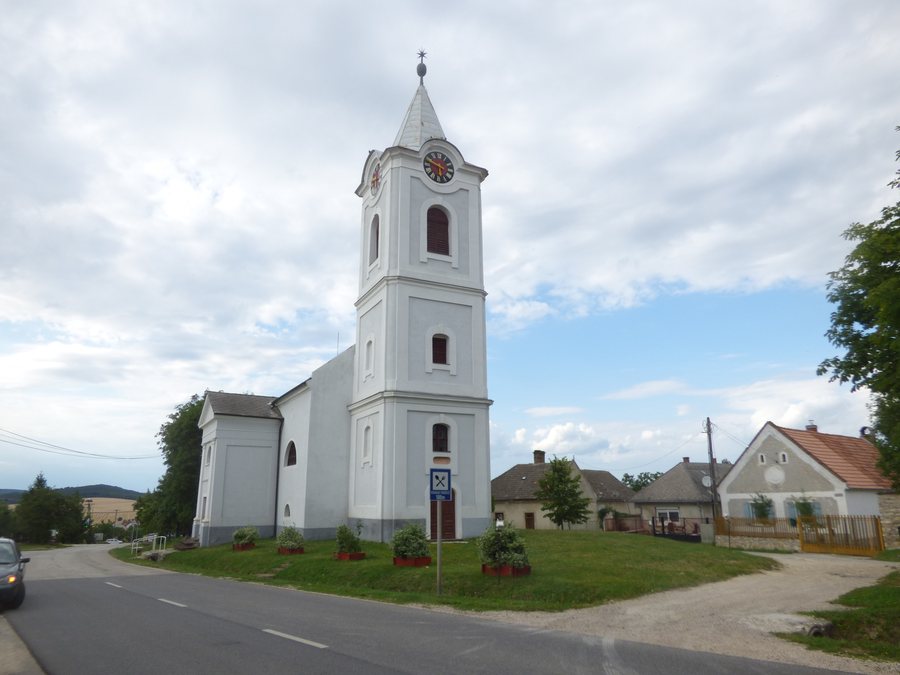
Tótvázsony at a glance
- A medieval church dedicated to Saint Wenceslas stood on the site of today’s Reformed church; it is documented as early as 1350.
- The Catholic church is a late Baroque building with Neoclassical influences, dating from 1816 to 1818.
- The cultural life includes the Christkindl play, rooted in Swabian heritage, and the Úrnapi Pirger-Díszgruppe.
How can the church history be understood?
The two churches represent different historical and architectural reference points in Tótvázsony. The site of today’s Reformed church has a history stretching back to a medieval place of worship dedicated to Saint Wenceslas. The Catholic church, built between 1816 and 1818, represents a much later period. Its Neoclassical influences within a late Baroque building make the combination of different styles a tangible feature of the town’s history.
The grave of Savanyó Jóska is another of the historical points of interest mentioned: he was buried in Tótvázsony in 1907, next to the Catholic cemetery. His grave is considered a tourist attraction. This adds another clearly located connection to the town’s history alongside the churches.
Which cultural traditions are part of Tótvázsony?
The Christkindl play is associated with the community’s Swabian roots and is part of its cultural life. The Úrnapi Pirger-Díszgruppe is another of the local cultural traditions. Those interested in local customs can therefore find named cultural connections alongside the architectural heritage, extending beyond church architecture.
What other themes does the Balaton North region offer?
The Tapolcai-tavasbarlang offers a different focus in the wider Balaton North travel destination: boat trips are available there, as well as the guided exhibition “Csodálatos karszt” (“Wonderful Karst”). The cave is part of a cave system beneath the town that has so far been explored over a length of 14.6 kilometers. Alongside local historical and cultural connections, visitors can choose regional themes such as a cave experience and an exhibition about karst.
Hegyestű is a geological point of interest in the wider Balaton North travel destination: a 337-meter-high mountain between Zánka and Monoszló. Its inner side reveals what lies within a basalt volcano that was active about eight million years ago. At the viewpoint on the western edge of the quarry, a panoramic sign helps visitors identify the surrounding hills; Hegyestű also features a rock garden with characteristic rock types from Transdanubia. These details offer a different regional comparison to Tótvázsony’s churches and traditions.
Cultural interests can also be pursued further in the wider Balaton North travel destination. The Herend Porcelain Museum presents a permanent exhibition and changing exhibitions about the history of the manufactory. The visitor center explains porcelain production, techniques, and applied arts traditions. In workshops, visitors can handle porcelain clay and a brush for painting. By comparison, the Pannon Csillagda in Bakonybél focuses on space travel and astronomy through an interactive exhibition.
How can you use these themes when looking for hotels?
First, consider which subjects matter for your trip: the churches and cultural traditions in Tótvázsony, or regional themes such as caves, geology, porcelain, and astronomy in the wider Balaton North travel destination. Compare hotels using the specific details in each listing and consider which places and interests you want to include in your plans. The attractions mentioned cover different themes; in themselves, they say nothing about the amenities or location of individual accommodations.
To compare other destinations, you can also visit Barnag, Herend, Hárskút, Nemesvámos, Szentgál, Pula, Veszprém and Bánd.
FAQ
Who was the medieval church on the site of today’s Reformed church dedicated to?
It was dedicated to Saint Wenceslas and is documented as early as 1350.
When was the Catholic church in Tótvázsony built?
The late Baroque building with Neoclassical influences was built between 1816 and 1818.
Which cultural traditions are associated with Tótvázsony?
The cultural life includes the Christkindl play, rooted in Swabian heritage, and the Úrnapi Pirger-Díszgruppe.
What makes Hegyestű distinctive in the wider Balaton North travel destination?
The 337-meter-high mountain between Zánka and Monoszló reveals the inner side of a basalt volcano that was active about eight million years ago.
To the regional travel overview: Veszprémi.

