
Discover Olaszfalu
Accommodation in Olaszfalu
You can get to know Olaszfalu through its cultural heritage and natural surroundings. The following points of reference can help you identify your interests for your trip and accommodation search.
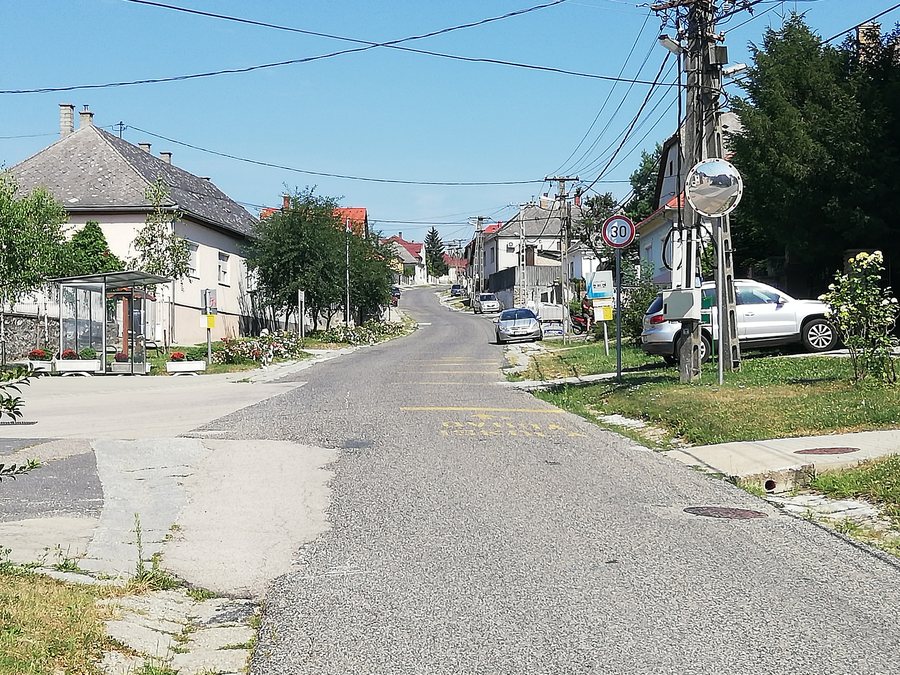
Olaszfalu at a glance
- Its cultural heritage includes a Baroque church and a statue of Ferdinánd Villax.
- The Holy Trinity Church stands in the centre of the village and faces east.
- A Calvary hill with 14 stations was built north of the church in the 19th century.
- Its natural surroundings include the geological features of Eperjes-hegy and the forests of the Bakony.
- Olaszfalui Házias Ízek produces fresh cabbage salads and sauerkraut on its own premises.
What cultural history can you encounter in Olaszfalu?
The Holy Trinity Church stands in the centre of the village. Its sanctuary, or altar area, is narrower than the nave and has a polygonal end. A tower with a pyramidal roof rises above the western entrance portal; auxiliary rooms flank the sanctuary. The church’s east–west orientation is another of its described features.
To the north, along the perimeter wall, lies a Calvary hill built with 14 stations in the second half of the 19th century. The Baroque church and the statue of Ferdinánd Villax are also part of Olaszfalu’s cultural heritage. The village’s features thus bring together religious architecture, a historic site and a named monument.
Another historic site is the ruin of Alsóperei templomrom in Alsóperepuszta, Olaszfalu. It is associated with a church built in the 13th century in the former village of Pere. No medieval written accounts of this church have survived. The ruin is designated as a protected monument and an archaeological site. For those interested in cultural history, it offers another point of connection to the history of the former village of Pere.
What shapes the natural surroundings?
Olaszfalu’s natural surroundings include the geological features of Eperjes-hegy and the forests of the Bakony. Two distinct natural themes therefore feature in the area: geological formations and woodland landscapes. If you would like to take both culture and nature into account when planning your trip, these themes can help guide your interests.
Food production also has a direct connection to the area. Olaszfalui Házias Ízek makes fresh cabbage salads and sauerkraut on its own premises. This adds a glimpse of local production to the cultural and landscape highlights. If you are interested in food production, it offers a specific point of reference for planning your trip.
What else does the wider Balaton North destination have to offer?
As additional context for planning a trip to the wider Balaton North destination, you can explore a range of nature and culture themes. Boat trips are offered in the Tapolcai-tavasbarlang, which also has a guided exhibition called “Csodálatos karszt” (“Wonderful Karst”). The cave is part of a cave system beneath the town that has been explored to a length of 14.6 kilometres so far.
Hegyestű, a 337-metre-high mountain between Zánka and Monoszló, offers another geological theme. The exposed inner side of a basalt volcano that was active about eight million years ago can be seen there. From a viewpoint on the western edge of the quarry, visitors can identify the surrounding hills with the help of a panoramic information board. Hegyestű also has a rock garden featuring characteristic rock types of Transdanubia.
Culture and hands-on activities also add their own highlights to the wider Balaton North destination: the Herend Porcelain Museum presents a permanent exhibition and changing exhibitions on the history of the manufactory. In workshops at the Herend Porcelain Manufactory, visitors can handle porcelain paste and a brush for painting. The Pannon Csillagda in Bakonybél, meanwhile, has an interactive exhibition on space exploration and astronomy. These diverse themes can be considered for further trip planning without attributing them to Olaszfalu itself.
Discover more destinations: Eplény, Lókút, Porva, Csesznek, Borzavár, Dudar, Zirc and Csetény.
FAQ
What architectural features does the Holy Trinity Church have?
Its sanctuary is narrower than the nave and has a polygonal end. A tower with a pyramidal roof stands above the western entrance portal; auxiliary rooms are located on both sides of the sanctuary. The church faces east.
What is known about the ruin of Alsóperei templomrom?
The ruin is a protected monument and an archaeological site. It is associated with a church built in the 13th century in the former village of Pere; no medieval written accounts of it have survived.
How do the Tapolcai-tavasbarlang and Hegyestű differ?
In the wider Balaton North destination, the Tapolcai-tavasbarlang offers boat trips and a guided karst exhibition. Hegyestű offers a geological view of the exposed inner side of an ancient basalt volcano, as well as a viewpoint with a panoramic information board and a rock garden.
What products does Olaszfalui Házias Ízek make?
The business produces fresh cabbage salads and sauerkraut on its own premises.
For the wider travel overview: Zirci.

