
Kaunas
Accommodation in Kaunas
Kaunas combines architectural history with an old castle, Lithuanian music and nature experiences on the Kaunas Lagoon. When planning your trip, you can therefore consider whether you would most like to explore its distinctive architectural heritage, cultural experiences, or landscapes and green spaces.
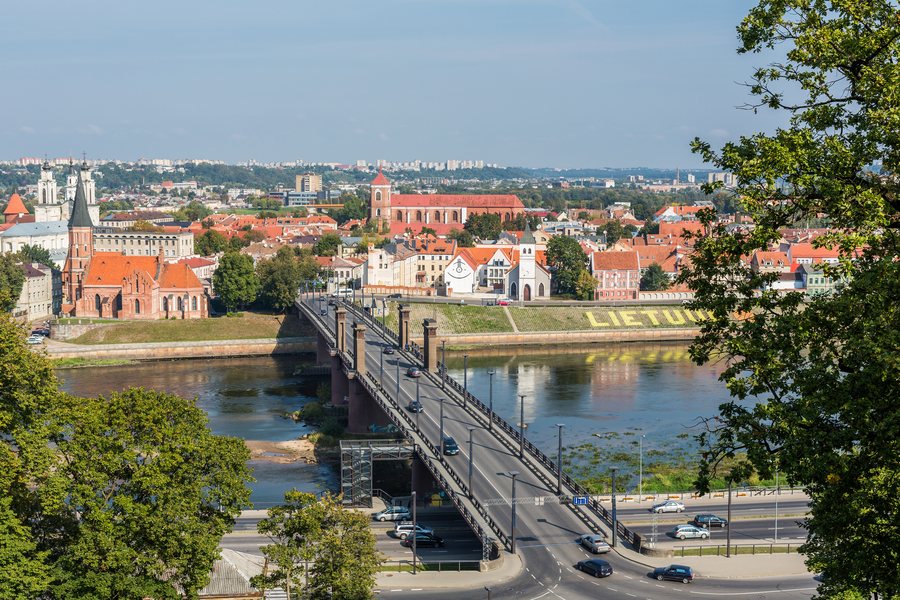 File:Vytautas the Great Bridge from hill, Kaunas, Lithuania - Diliff.jpg
Photo: Diliff via Wikimedia Commons, CC BY-SA 3.0
File:Vytautas the Great Bridge from hill, Kaunas, Lithuania - Diliff.jpg
Photo: Diliff via Wikimedia Commons, CC BY-SA 3.0
Kaunas at a glance
“Modernist Kaunas: Architecture of Optimism, 1919–1939” is a World Heritage site in the centre of Kaunas, in central Lithuania, at the confluence of the Nemunas and Neris rivers. Kaunas Castle dates from the mid-14th century. Nature offers a different focus: the Nature Trail of Pažaislis runs along the shores of the Kaunas Lagoon on the Petrašiūnai Peninsula.
What makes Kaunas’s architecture special?
The World Heritage site “Modernist Kaunas: Architecture of Optimism, 1919–1939” includes around 1,500 surviving administrative, public, industrial and residential buildings. These include wooden buildings erected in Kaunas between 1919 and 1939. For anyone interested in urban history and architectural styles, this provides a specific focus for a stay.
The World Heritage site is in the city centre. The confluence of the Nemunas and Neris rivers is part of its geographical setting in central Lithuania. The name “Architecture of Optimism” and the period 1919–1939 point to a clearly defined architectural theme. This makes it possible to consider Kaunas as a cultural destination, not just through individual historic buildings.
What cultural experiences are there?
Kaunas Castle was built in the mid-14th century and is considered the city’s oldest historic landmark. A virtual reconstruction takes visitors back in time to the castle at the beginning of the 15th century. This brings two distinct historical reference points together: the castle’s construction and the period depicted in the reconstruction.
The Folk Music Museum is dedicated to traditional Lithuanian music and presents it in interactive exhibitions. In September, the same museum’s annual “Dancing L. Zamenhofo Street” event offers another kind of cultural experience: residents and visitors dance outdoors. The museum and the event appeal to different interests—the former presents music through exhibitions, while the latter brings people together to dance.
The city’s history also includes a transport theme: in 1934, the route for a second funicular was prepared. It was intended to connect the centre of Kaunas with Aleksotas Hill. The prepared route is therefore part of the history of a planned connection; as a topic, it complements the history of architecture and the castle with a glimpse into transport planning at the time.
Where can you find nature and relaxation?
The Nature Trail of Pažaislis is on the Petrašiūnai Peninsula, along the shores of the Kaunas Lagoon. It runs through the forest along the shore and slopes. This description brings together three distinct landscape features: water, wooded slopes and stretches of forest. If you do not want to focus your trip solely on architecture and urban history, the trail offers a nature experience in its own right.
In the Žaliakalnis district, Ąžuolynas Park has retained its recreational function, which is protected by law. The park is another aspect of Kaunas’s green spaces. The trail by the lagoon and the park in Žaliakalnis can be seen as different nature experiences: one is a forest route along the shore and slopes; the other is a park with a protected recreational function.
How do you choose Kaunas as a destination and a place to stay?
When looking for a hotel in Kaunas, you can first consider which of these themes matters most for your trip. If you would also like to compare other destinations, you can find Rumšiškės, Prienai, Ringaudai, Čekiškė, Ariogala, Gabšiai and Karmėlava.
FAQ
What is included in the World Heritage site “Modernist Kaunas: Architecture of Optimism, 1919–1939”?
It includes around 1,500 surviving administrative, public, industrial and residential buildings, including wooden buildings erected in Kaunas between 1919 and 1939.
What can you experience at Kaunas Castle?
A virtual reconstruction takes visitors back in time to the castle at the beginning of the 15th century.
What is distinctive about the Nature Trail of Pažaislis?
The trail is on the Petrašiūnai Peninsula by the Kaunas Lagoon and runs through the forest along the shore and slopes.
For the wider travel overview: Kaunas County.
More about the destination
Useful information for planning your trip:

