
Tauragė: City History and Regional Transport
Accommodation in Tauragė
Tauragė offers two distinct points of reference for planning a trip: historical topics with clearly dated connections and a regional electronic ticket that allows unlimited travel throughout the region. This lets you weigh whether to focus primarily on the city’s history or include other municipalities in your plans.
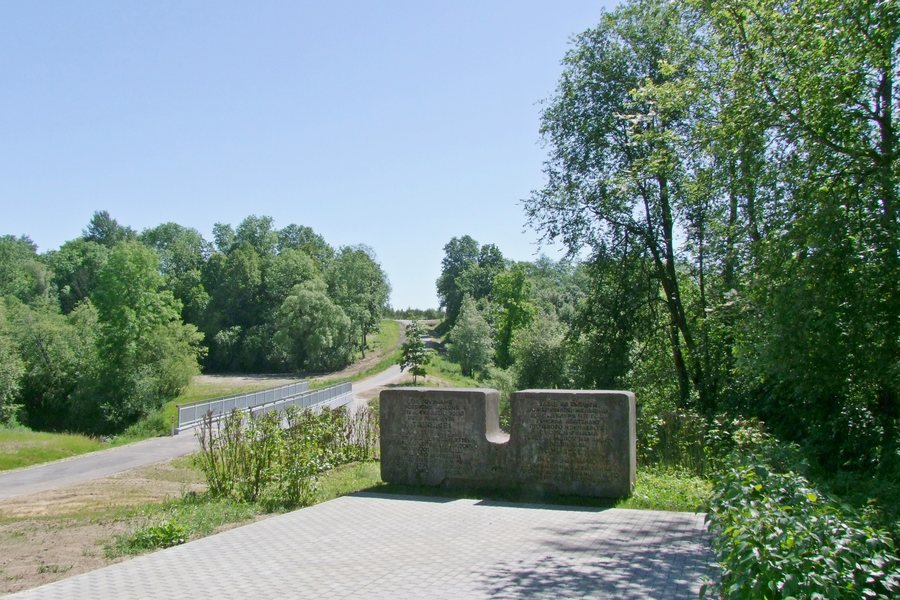 File:Convention of Tauragė (Tauroggen) – Memorial.jpg
Photo: Alta Falisa via Wikimedia Commons, CC BY-SA 4.0
Tauragė at a glance
- The DOT bunker is part of a defensive line whose construction began in 1940.
- People were interrogated and tortured at the former NKVD headquarters from 1944 to 1955.
- A monument to victims of the resistance was erected in the courtyard of the former headquarters in 1993.
- The bank building was designed by A. Funk and M. Songaila in 1935 and features neoclassical elements.
- The electronic ticket covers municipalities in Tauragė, Jurbarkas, and Šilalė Districts, as well as Pagėgiai City Municipality.
What should you know about the regional ticket?
The ticket connects municipalities in Tauragė, Jurbarkas, and Šilalė Districts, as well as Pagėgiai City Municipality. It allows unlimited travel throughout the region. Its coverage is therefore a concrete point of reference if you want to plan destinations beyond a single place.
As coverage may change, check your planned destinations against the operator’s latest information in advance. This lets you factor the regional coverage into your travel plans without assuming a particular connection or fixed timetable.
Which historical themes shape Tauragė?
The DOT bunker is part of a defensive line whose construction began in 1940. It represents a different historical theme from the former NKVD headquarters and the later monument.
People were interrogated and tortured at the former NKVD headquarters from 1944 to 1955. A monument to victims of the resistance was erected in the courtyard of the former headquarters in 1993. The separation in time distinguishes the headquarters’ function at the time from the later act of remembrance.
Architecture offers another way into the city’s history. Designed by A. Funk and M. Songaila in 1935, the bank building features neoclassical elements. Here, the focus is on architectural history and classification, while the bunker and monument address other historical themes.
The dates do not represent a single period: the 1935 bank design and the start of construction on the defensive line in 1940 predate the events at the former headquarters from 1944 to 1955; the 1993 monument belongs to a later period of remembrance. This chronological comparison helps put the different historical points of reference into context.
What does this mean for your hotel and travel plans?
When looking for a hotel for your trip, you can first consider whether Tauragė’s historical themes will be your main focus or whether you want to include other municipalities in your itinerary. The regional ticket is a concrete planning factor for the latter option.
Discover other destinations: Margiškiai, Lumpėnai, Veliuona, Smalininkai, Pagėgiai, Pilis I and Jurbarkas.
FAQ
Which areas does the electronic ticket cover?
It covers municipalities in Tauragė, Jurbarkas, and Šilalė Districts, as well as Pagėgiai City Municipality, and allows unlimited travel throughout the region.
What is the connection between the monument and the former NKVD headquarters?
A monument to victims of the resistance was erected in the courtyard of the former headquarters in 1993.
Which defensive line is the DOT bunker part of?
It is part of a defensive line whose construction began in 1940.
For the broader travel overview: Tauragė District.

