
Ubiškė: Church, River and Pond
Accommodation in Ubiškė
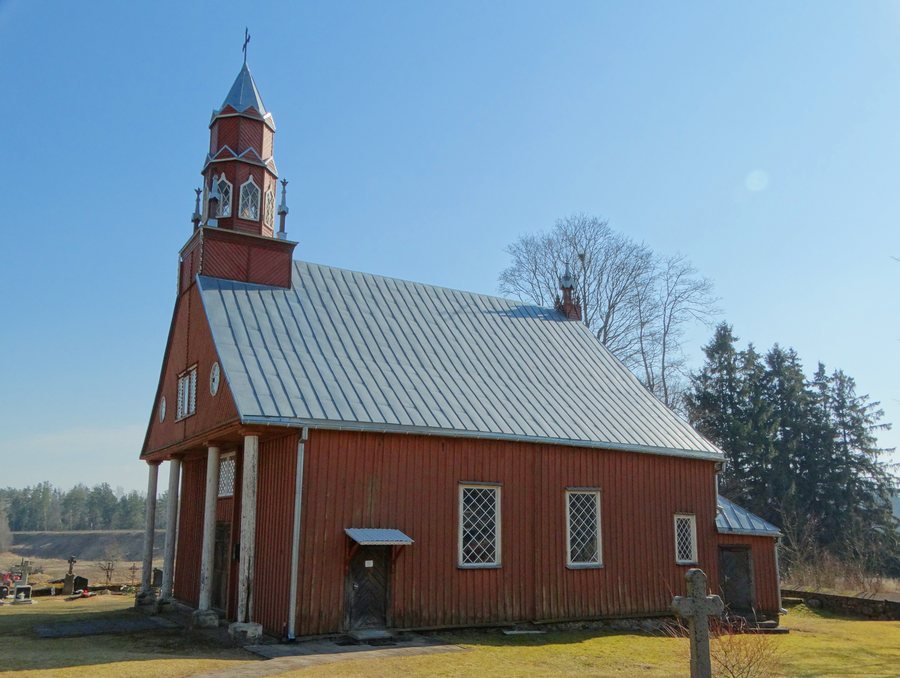
Two topics are helpful for getting an initial sense of Ubiškė: the church complex of the Church of the Guardian Angels and the waters of the Patekla and the pond. The church can be considered both as part of an ensemble and through its architectural details. The waters include a river that flows through the town and a man-made pond.
Key facts about Ubiškė
The church complex comprises a church, a bell tower and a chapel. The church was built in 1851 and features elements of both Neoclassical and vernacular architecture. Its three-aisled interior is pseudobasilical. The higher vaults of the central nave feature niches with round arches that imitate windows. The Patekla River flows through Ubiškė; a pond was created near Ubiškė.
What is included in the church complex?
In addition to the church, the complex includes a bell tower and a chapel. The construction date of 1851 refers to the church; the stylistic features and description of the three-aisled interior also relate to this building. This allows you to distinguish between two levels: the complex describes the group of three components, while the architectural classification applies to the church itself. When considering the building’s history, you can therefore associate the year and other features with the church, while the name “church complex” refers to the ensemble.
How should the church’s architecture be classified?
The church features elements of both Neoclassical and vernacular architecture. The terms refer to different stylistic influences: Neoclassicism generally draws on a classical formal language, while vernacular architecture draws on traditional building methods. For a first look, this means that the church cannot be described using just one style term. The combination offers two ways of viewing the building and provides an accessible introduction, even if you have no specialist knowledge of architectural history.
The technical terms used to describe the interior can also be distinguished. “Three-aisled” describes a layout divided into three aisles; “pseudobasilical” refers to the particular spatial form. This design is evident in the higher vaults of the central nave. They feature niches with round arches that imitate windows. The round arches and window-like niches are specific details alongside the broader stylistic classification. This takes you from the interior’s overall layout to a single design element. You don’t need specialist knowledge: the terms describe the space, while the vaults and niches make the description more vivid.
What bodies of water are there in Ubiškė?
The waters offer a second perspective for getting a sense of Ubiškė. The Patekla flows through the town; a pond was created near Ubiškė. This distinguishes a river that runs through the town from a man-made body of water. Together with the church architecture, these features add a landscape perspective to the view of Ubiškė. If you are weighing cultural and landscape interests when choosing a destination, these offer different points of focus.
How do you choose a hotel in Ubiškė?
FAQ
What does the church complex include?
The complex includes a church, a bell tower and a chapel.
When was the church built?
The church was built in 1851 and features elements of both Neoclassical and vernacular architecture.
What bodies of water are there in Ubiškė?
The Patekla flows through Ubiškė; a pond was created near Ubiškė.
To the broader travel overview: Telšiai District.

