
Discover Witkowo
Accommodation in Witkowo
Witkowo offers a range of points of interest for your trip: sports facilities, sacred art, and local history. Their specific features help you distinguish between these topics.
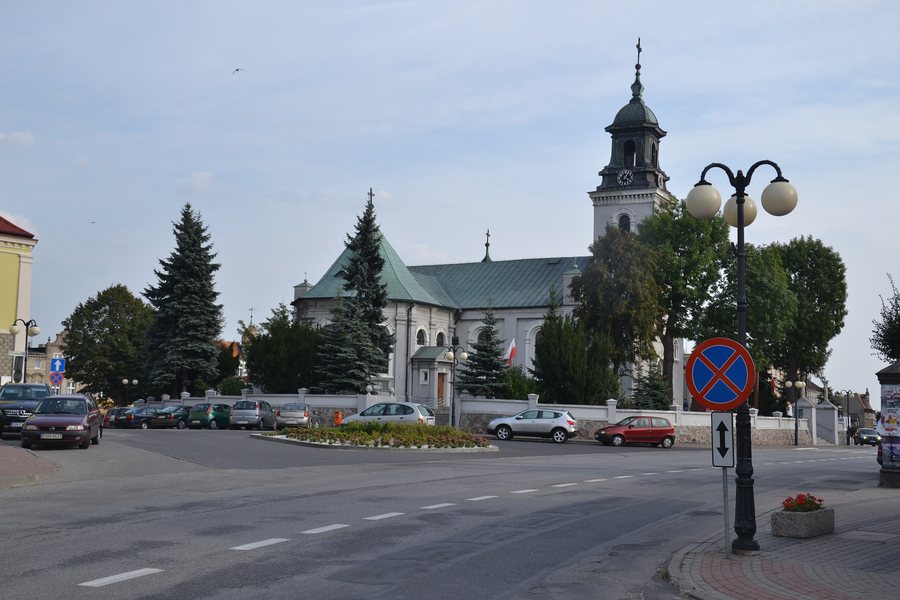 File:Kościół p.w. św. Mikołaja, Witkowo (2).JPG
Photo: Lichen99 via Wikimedia Commons, CC BY-SA 3.0 pl
Witkowo at a glance
- Stadion Miejski has a full-size natural-grass football pitch, an athletics track, and spectator stands.
- The “Moje Boisko – Orlik 2012” complex is located on ul. Wrzesińska and includes artificial-turf football, basketball, and beach volleyball.
- The main altar of St. Nicholas Church is neoclassical, dedicated to St. Nicholas, and dates to around 1840.
- A monument in Kościuszko Park commemorates the insurgents of the Greater Poland Uprising and those who fell fighting to defend their homeland.
- A plaque unveiled on November 11, 1988, commemorates the surrender of a Border Guard company at Stary Rynek 14 on December 29, 1918.
What distinguishes the sports facilities?
Official descriptions published in 2025 list two sports venues with different facilities. Stadion Miejski combines a full-size natural-grass football pitch with an athletics track and spectator stands. Football, athletics, and spectator areas are its clearly specified main features.
The “Moje Boisko – Orlik 2012” complex on ul. Wrzesińska brings together a different combination: an artificial-turf football pitch, a basketball court, and a beach volleyball court. So the comparison is not just between two football pitches with different surfaces, but also between different additional sports areas. If you are choosing based on sports-related interests, the specific facilities and the location given for each can help you decide.
What cultural and memorial sites are there?
The main altar in St. Nicholas Church is dedicated to St. Nicholas. Its neoclassical design and dating to around 1840 place this feature in both a stylistic and historical context. “Around 1840” indicates an approximate period, not an exact year of creation.
A monument in Kościuszko Park commemorates the insurgents of the Greater Poland Uprising and those who fell fighting to defend their homeland. A different memorial, connected with a specific event, can be found at the Bank Spółdzielczy building, Stary Rynek 14: a metal plaque with an uprising cross was unveiled there on November 11, 1988.
The plaque commemorates the surrender of a Border Guard company at this location on December 29, 1918, through which Witkowo regained its freedom. The park monument is dedicated to a group and those who fell; the plaque, by contrast, records a specific event at a precisely identified location. The two memorials therefore differ primarily in what they focus on.
Which topics match your interests?
The sports facilities can be compared by looking at their pitches and other areas. For cultural and historical interests, the altar, park monument, and memorial plaque each offer different points of reference: sacred art, the memory of the uprising and those who fell, and a dated event in the town’s history. This distinction can help you choose which topics to consider more closely when planning your trip.
Discover more destinations: Żydowo, Dębnica, Gniezno, Skorzęcin, Niechanowo, Cielimowo, Węgorzewo, Trzemeszno.
FAQ
What facilities does Stadion Miejski have?
The official description published in 2025 lists a full-size natural-grass football pitch, an athletics track, and spectator stands.
What does the “Moje Boisko – Orlik 2012” complex include?
The complex on ul. Wrzesińska includes an artificial-turf football pitch, a basketball court, and a beach volleyball court.
What altar is in St. Nicholas Church?
The main altar is neoclassical, dedicated to St. Nicholas, and dates to around 1840.
What does the plaque at Stary Rynek 14 commemorate?
The metal plaque with an uprising cross, unveiled on November 11, 1988, commemorates the surrender of a Border Guard company there on December 29, 1918.
For the broader travel overview: Gniezno.

