
Discover Trzemeszno
Accommodation in Trzemeszno
Trzemeszno combines late Baroque architecture with visible Romanesque and Gothic traces and memorial sites from Polish history.
Trzemeszno at a glance
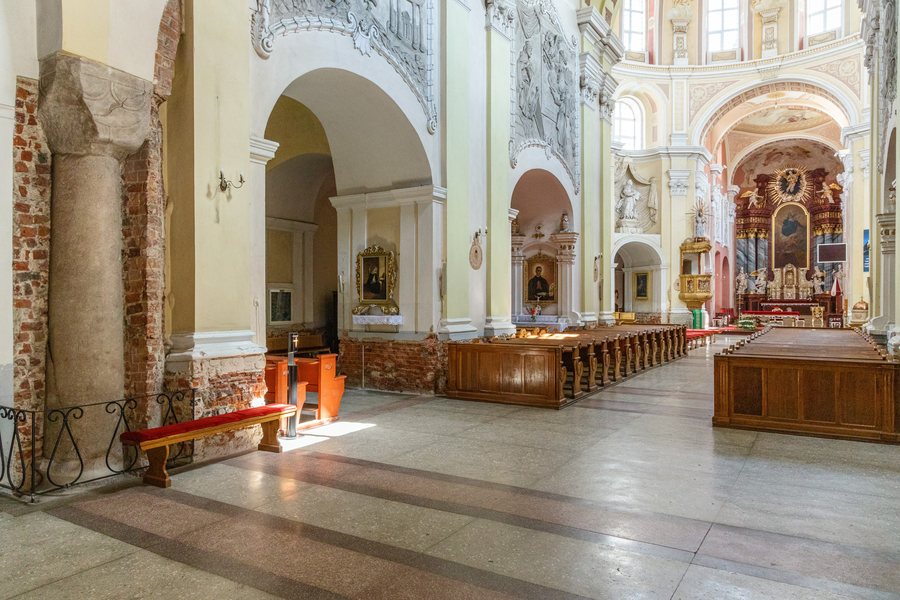
- The Basilica of the Assumption of the Blessed Virgin Mary is late Baroque and preserves Romanesque and Gothic architectural elements.
- The Mauzoleum Powstańców Wielkopolskich commemorates participants in the Greater Poland Uprising of 1918–1919.
- The tourist route “Trzemeszno, miasto siedmiu placów” focuses, among other things, on Poland’s independence and the multicultural history of the period of the Partitions.
- “Dotknij Trzemeszno” features signs bearing a logo and QR code at 12 locations in Trzemeszno and its surrounding area.
What architectural traces can you discover?
The Basilica of the Assumption of the Blessed Virgin Mary offers a tangible way to distinguish different periods of construction within one building: it is late Baroque, but Romanesque columns from the 12th century survive in the western section. A stone tomb slab, previously set in the floor, is on display for visitors beneath the gallery. If you plan to see this exhibition, check access before your visit.
The Alumnat is also a late Baroque building. Abbot Michał Kosmowski founded it as the Collegium Tremesnensis. Together with the basilica, it offers insight into Trzemeszno’s architectural history; the two sites represent different types of buildings and functions. Those primarily interested in surviving older architectural elements will find a particularly tangible connection in the Romanesque columns. The Alumnat, by contrast, is notable for its late Baroque appearance and founding history.
Which memorial sites tell the story of Trzemeszno?
The Mauzoleum Powstańców Wielkopolskich commemorates residents of Trzemeszno and the surrounding area who took part in the victorious Greater Poland Uprising of 1918–1919. They fought for the return of Greater Poland to Poland, which had been reborn after the Partitions. The mausoleum thus links the memory of the uprising to the participants’ local roots.
Another memorial stands on Plac Powstańców: a cross commemorates city residents who took part in uprisings. The Izba Pamięci Jana Kilińskiego is dedicated to Jan Kiliński, who was born in Trzemeszno, and to the shoemaking tradition once widespread in the city. These memorial sites highlight different aspects, from remembrance of uprisings to the city’s history and its crafts.
How can you put the city’s themes into context?
The route “Trzemeszno, miasto siedmiu placów” explores the city’s importance to Poland’s independence, its multicultural history during the Partitions, and its connections to notable figures in Polish and Greater Polish history. “Dotknij Trzemeszno” is a different tourist route: signs bearing a distinctive logo and QR code are located at 12 different points in Trzemeszno and its surrounding area. The two routes can therefore be distinguished by their respective focus: historical themes on the one hand, and marked points with QR codes on the other.
When planning your trip, you can first decide whether you are more interested in architectural history, commemoration, or the themed routes. The sites and attractions mentioned here cover different aspects of the city’s history.
Discover more destinations: Witkowo, Dębnica, Łubowo, Węgorzewo, Gniezno, Żydowo, Niechanowo and Cielimowo.
FAQ
Which older architectural elements have been preserved in the basilica?
Romanesque columns from the 12th century survive in the western section of the late Baroque Basilica of the Assumption of the Blessed Virgin Mary. A stone tomb slab is on display beneath the gallery; check access before your visit.
What do the memorial sites in Trzemeszno commemorate?
The mausoleum commemorates participants in the Greater Poland Uprising of 1918–1919, including residents of Trzemeszno and the surrounding area. A cross on Plac Powstańców commemorates residents who took part in uprisings.
What are the tourist routes about?
“Trzemeszno, miasto siedmiu placów” focuses, among other things, on Poland’s independence and the multicultural history of the period of the Partitions. “Dotknij Trzemeszno” includes 12 locations in Trzemeszno and its surrounding area, where signs bearing a logo and QR code are placed.
For the broader travel overview: Gniezno.

