
Gniezno – Old Town, Culture and Nature
Accommodation in Gniezno
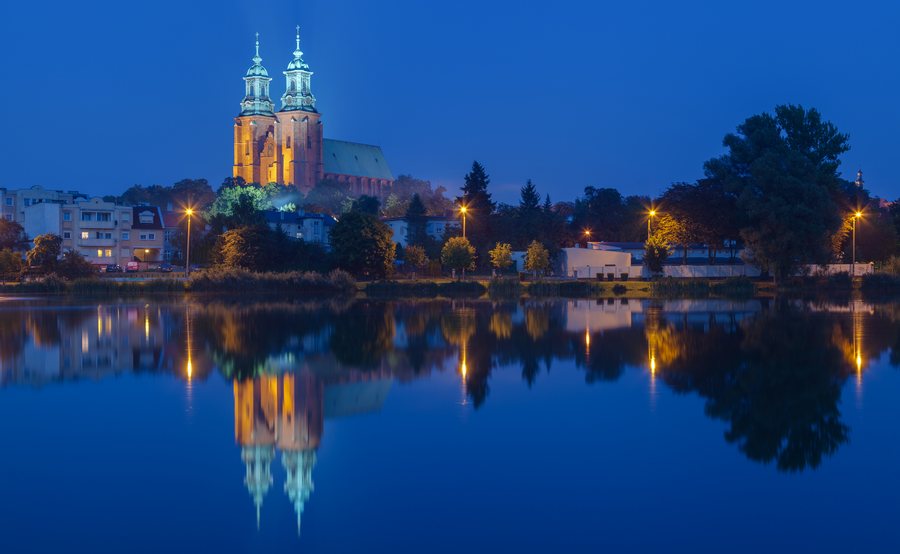
Gniezno combines historic sights with an educational trail and nature topics around Lake Jelonek. If you are looking for accommodation in the city, these varied experiences can help you decide whether Gniezno matches your travel interests.
Accommodation facts at a glance in Gniezno
Cultural highlights include the Old Town, Gniezno Archcathedral, and the Dom Powstańca Wielkopolskiego in the Old Town Hall. The Royal Trail runs through Gniezno; 17 hare sculptures point the way between its stops. Nature enthusiasts can explore the approximately six-kilometre-long Eko Trakt.
Which historic places shape a visit?
Gniezno’s Old Town includes Tumska Street, which leads to the cathedral, the Market Square and its side streets, and part of Bolesław Chrobry Street. The Gniezno Doors are inside the Archcathedral: the bronze doors were cast in the 1170s or 1180s and have been there ever since they were made. Their images depict the life of St. Adalbert. They offer a tangible introduction to religious art and history.
Another historic site is the single-nave Church of St. John the Baptist. It was built in the mid-14th century at the same time as the Gothic cathedral. The presbytery retains an original al-secco polychrome decoration dating from the church’s construction. In the Old Town Hall, the Dom Powstańca Wielkopolskiego is dedicated to the Greater Poland Uprising of 1918/19: the memorial room includes an exhibition about this historic event.
Part of the former city fortifications can also be included in your exploration. The only surviving section of Gniezno’s city wall stands next to the Church of the Holy Trinity and can be seen from Stroma Street. Those interested in historic buildings can thus include a range of landmarks in their explorations without limiting them to a single era.
How can you combine culture and nature?
You can explore the Royal Trail with a free guidebook or the free “Królika Goń” app, available for Android and iOS. The Piast Trail also intersects in Gniezno, and the cathedral is a central point along this route.
The Eko Trakt offers a different focus: this approximately six-kilometre educational trail passes through Gniezno’s most interesting natural areas. At Lake Jelonek, four information boards describe beaver habitats, the lake, reed beds, and a wet meadow. The lake borders the Old Town to the west. Piastowski Park is also located by the lake, with walking paths and an outdoor street-workout area. This gives you both cultural-historical themes and nature observation to consider when planning your trip.
What can help you find your way around Gniezno?
The Gniezno Tourist Information Centre helps visitors find tourist sites, monuments, and attractions, and provides regional maps and guidebooks. If you are arriving by train, the two standard-gauge lines that run through Gniezno are useful infrastructure information: Line 353 runs from Poznań Wschód to Korsze, and Line 281 from Oleśnica to Chojnice.
Find pages for other destinations here: Witkowo, Gniezno, Węgorzewo, Łubowo, Żydowo, Kiszkowo, Skrzetuszewo, Dębnica, Trzemeszno, Cielimowo, Niechanowo and Skorzęcin.
FAQ
How long is the Eko Trakt?
The educational trail is approximately six kilometres long.
What can you use on the Royal Trail?
17 hare sculptures point the way between the stops. You can explore with a free guidebook or the free “Królika Goń” app for Android and iOS.
What topics do the information boards at Lake Jelonek cover?
Four boards cover beaver habitats, the lake, reed beds, and a wet meadow.
For the broader travel overview: Greater Poland.

